


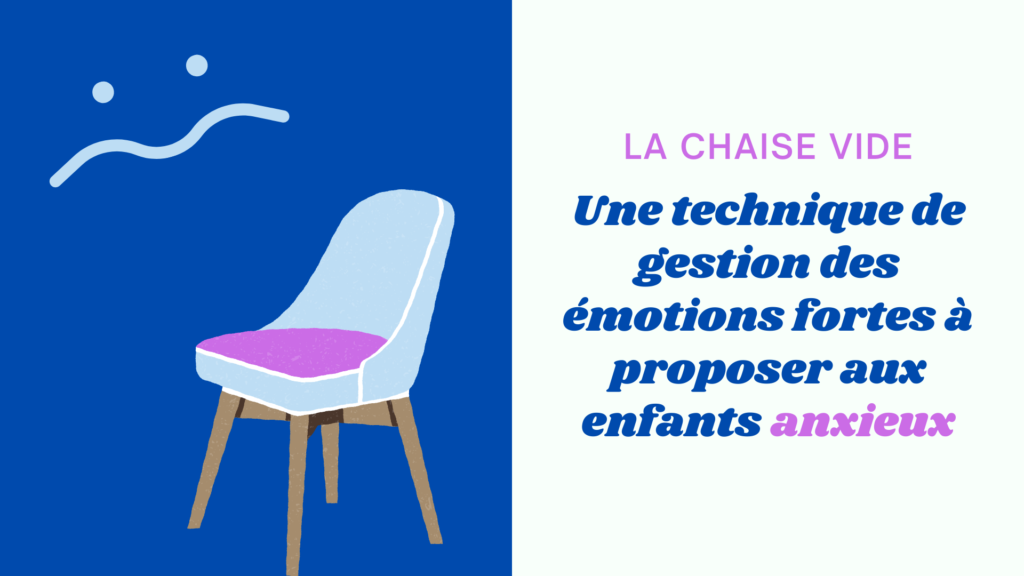
The empty chair technique is a simple, playful way to help an anxious child put a shape and a voice to the feelings that overwhelm them. Instead of asking a worried child to explain what is wrong, you give the worry a seat of its own and let the child speak to it directly.
The approach comes from Gestalt therapy, and it works especially well with unpleasant emotions and anxiety. The core idea is that truths and feelings left unsaid become a major source of anxiety, so giving them somewhere to go can bring real relief.

Quick takeaways
- The empty chair technique gives anxious children a concrete way to face a worry.
- Unspoken feelings and hidden truths are a major source of childhood anxiety.
- The method comes from Gestalt therapy, created by Fritz Perls.
- The child speaks to the worry, not about it, which feels safer.
- A parent can take the chair and play the anxiety if the child agrees.
- Keep sessions calm, short and playful, and let the child lead.
Why Unspoken Feelings Fuel Anxiety
Children often carry worries they cannot name, and those silent worries grow heavier the longer they stay locked inside. A child who is teased, who dreads a maths test or who is grieving a grandparent may not have the words, or the courage, to say what is really going on. Left unspoken, these truths and emotions become a major source of anxiety.
This is where the empty chair technique earns its place. Rather than asking a child to explain a feeling in the abstract, you give the feeling a physical location. The child can then speak to it instead of about it, which feels far less exposing. It is a gentle, concrete first step for a child who tends to hold everything in, and it pairs naturally with calm, patient routines such as removing the diaper or other everyday moments where a child learns to trust their own pace.
A technique rooted in Gestalt therapy
The method was created by Fritz Perls, a Gestalt therapist, and it has since been adapted for children by clinicians who work with fear and worry. The adaptation keeps the structure but adds play, which is what makes it land with younger kids.
Setting Up the Chair
You begin by bringing in an empty chair and inviting the child to imagine that whatever is bothering them is sitting on it. It might be the classmates who mock them, the maths assessment they are dreading, or the grandfather whose death left them sad. The instruction is simply to picture the object of the anxiety sitting there.
Once the worry has a seat, the child installs it there and speaks to it directly. They can tell the emotion how angry it makes them feel, how unpleasant and ever-present it is, and how much it limits their life. They can order it to stop sending frightening images and to leave them alone. This is the heart of the exercise: the child stops being the target of the anxiety and becomes the one addressing it. For children who struggle to sleep or settle, this kind of release can complement the reassurance you already offer around lowering a fever or other worrying physical symptoms. It can also sit alongside gentle bedtime reading about fear and the everyday strain of carrying children.
| Step | What the adult does | What the child does |
|---|---|---|
| Set up | Brings an empty chair and explains the game | Agrees and chooses what to place there |
| Name it | Asks what the worry looks like | Describes the fear, test or person |
| Speak to it | Listens without correcting | Says how angry or tired they are |
| Release | Stays calm and present | Shouts, cries or throws cushions safely |
| Role play | Plays the anxiety, if invited | Directs the scene and answers back |
| Close | Ends on a calm note | Decides when to stop |
Letting the Child Empty Their Heart
The next step is encouragement rather than instruction. Invite the child to let out whatever is on their heart, with no fear of retaliation and no worry about hurting anyone's feelings. Because the chair is not a person, the child is free to be blunt, loud or tearful without consequences.
This freedom is what makes the technique useful for children who are usually careful and compliant. A child who never wants to upset anyone suddenly has permission to be honest. Some children will need several sessions before they really let go, and that is fine; the chair will still be there. If your child tends to bottle things up, small rituals of expression at home, alongside tools like illustrated books that give feelings a name, can keep the channel open between sessions.
When the Parent Takes the Chair
In some cases, and only if the child agrees, an adult can sit on the chair and pretend to be the anxiety itself, or the thing the anxiety is about. The adult follows the child's lead and plays out the child's scenario, letting the child direct the scene.
One clinician describes a session in which a child asked him to play the role of the anxiety and to say, "I'll stop you from sleeping, I'll stop you from having fun." Because the adult followed the instruction faithfully, the child could then pour out their anger at the anxiety and throw cushions at it. Still in role, the adult pretended to be very frightened and promised to leave the child alone. The physical release matters here, so keep the play safe and let the child choose how much energy to use. This kind of active, playful outlet sits comfortably alongside the movement children already get from toys such as firetruck toys or a favourite toy cars collection. As with any calming routine, it also helps to check everyday factors like anti mosquito bracelets and hidden sugars that can affect a child's mood.

Making It Work at Home
Timing matters more than technique. Offer the chair when everyone is calm, not in the middle of a meltdown, and keep the session short. A child who feels pressured to perform will shut down, so frame it as a game and let them stop whenever they want.
Keep the chair in the same spot so it becomes a familiar signal, and let your child decide whether they want to speak, shout or stay quiet. Younger children may prefer to draw the worry and stick it to the chair instead of talking. Older children might like to write a letter to it. Either way, the goal is the same: the worry is out there, and the child is in charge. If your child is anxious about separations, the same principle of naming the fear out loud helps during traveling without parents, when worries tend to surface at bedtime.
My hands-on take
I first tried the empty chair with my own daughter after weeks of bedtime battles that had nothing to do with sleep and everything to do with a worry she would not name. I set a chair by her bed, told her the worry could sit there, and she stared at me like I had lost my mind. So I sat down instead and asked her to tell me what the worry would say. She whispered, "You won't be able to do it," and then, without prompting, told the chair to be quiet.
It was not a miracle cure, and we still had hard nights. But it gave her a way to talk about the fear without it being about her, and that small distance made all the difference. My advice is to keep it light, expect nothing the first few times, and let your child decide how much to say.
Frequently asked questions
What age is the empty chair technique suitable for?
It works best with children old enough to imagine something sitting on a chair, which usually means school age and up. Younger children can join in if you let them draw the worry or use a puppet instead of talking.
Should I do this during a tantrum?
No. Wait until your child is calm and choose a quiet moment. The technique is a way to release stored feelings, not a tool for interrupting an active meltdown.
What if my child refuses to talk to the chair?
That is completely fine, and pushing will backfire. Offer alternatives such as drawing the worry, writing it down or letting a parent play the role, and try again another day.
Is this a replacement for professional help?
No. It is a supportive home practice that can sit alongside other approaches. If your child's anxiety is intense or long-lasting, speak to a doctor or child therapist.
Product Reviews
 Best Toys for Dogs With High Prey Drive |
Best Outdoor Toys for 3-4 Year Olds |
Best Outdoor Toys for 6 Year Olds |
Best Harness for Poodle |
Best LEGO Sets for Adults |
Best Travel Toys for 4 Year Olds on Airplane |
Best Toy Stores in Washington DC |
Best Potty Training Toys |
Best Toys for Tripod Dogs |
Maillot equipe de france







