


Exploring emotions with your child starts with simple, honest questions rather than quick reassurance. When feelings are ignored, they tend to grow louder, and the same is true for children navigating a new school year, a move or a family change. Psychologist Susan David calls the alternative "emotional agility": making real room for the full range of feelings a period brings, then responding in line with your values.
This approach is not about forced positivity. Bottling up emotions and pretending everything is fine are rigid responses, and psychologists describe the result as amplification: what we refuse to feel ends up steering us. Naming a feeling out loud, by contrast, gives a child a handle on it.

Quick takeaways
- Ignored emotions grow stronger; naming them reduces their grip.
- Emotional agility means accepting the full range of feelings, not forcing positivity.
- Difficult feelings often signal values or unmet needs worth acting on.
- Ask one or two questions at a time and answer them yourself first.
- Reviewing past experience builds confidence for the next transition.
- Keep conversations open and revisit them without pressure.
Why Emotional Agility Matters During Change
Change rarely arrives as a single clean feeling. A new class can bring excitement, dread and grief for what is left behind, all in the same week. Emotional agility means letting all of it be present long enough to understand it, instead of rushing a child toward "don't worry" or "it'll be fine".
Difficult emotions often carry information. A person who feels rage while reading the news may value fairness and justice, and that anger points toward action. In the same way, a child's frustration before a transition can signal a need for preparation or reassurance. If you are wondering first three years shape how children learn to handle feelings, the foundations are laid early through co-regulation. There is also much to gain from learning from elders about how patience and perspective are passed down.
The cost of ignoring feelings
Only people who are no longer alive never feel stress, heartbreak or disappointment. Discomfort is the entry price of a life that means something, and children need adults who can sit with that discomfort rather than shut it down. Unexpressed pain tends to surface somewhere, and someone always pays the price: us, our children, our colleagues or our communities. Small rewards, like double VIP points, can also help families mark progress through change.
How to Use the Questions With Your Child
These questions work best as an invitation, not an interrogation. Pick one or two, ask them over a meal or a walk, and answer them yourself first so the exchange feels mutual. A child who hears a parent admit to a big anger or a disappointment learns that all feelings are allowed in the house.
Keep the tone curious and skip the fixing. If a child mentions a fear, you can ask what it might be pointing to instead of explaining it away. Parents who are managing their own stress may find it useful to read about preventing unemployment from affecting a relationship, since adult tension travels quickly to children. For families facing a tighter season, these solidarity initiatives show how communities make sure every child still feels included.
Adapt the questions to age
Younger children do better with concrete prompts about play, laughter and calm, while older ones can reflect on pride, mistakes and what changed in them. Bedtime routines and shared stories help here, and families who read together often find that books by Benji Davies open gentle conversations about big feelings. A child's attitude towards returning to school after time at home can also offer a natural starting point for talking about change.
| Age group | Best question focus | Example prompt |
|---|---|---|
| Preschool | Play, laughter, calm | What did you play today? |
| Early school | Pride, fear, friendship | What was your biggest pride? |
| Preteen | Mistakes, change, trust | What did you learn from a mistake? |
| Teen | Values, love, identity | When did you feel love? |
30 Questions to Explore Emotions
Use this list as a menu across a month or a school term. The first group looks back with warmth, the second names harder feelings, and the third notices what restored the child.
Memories, gratitude and pride
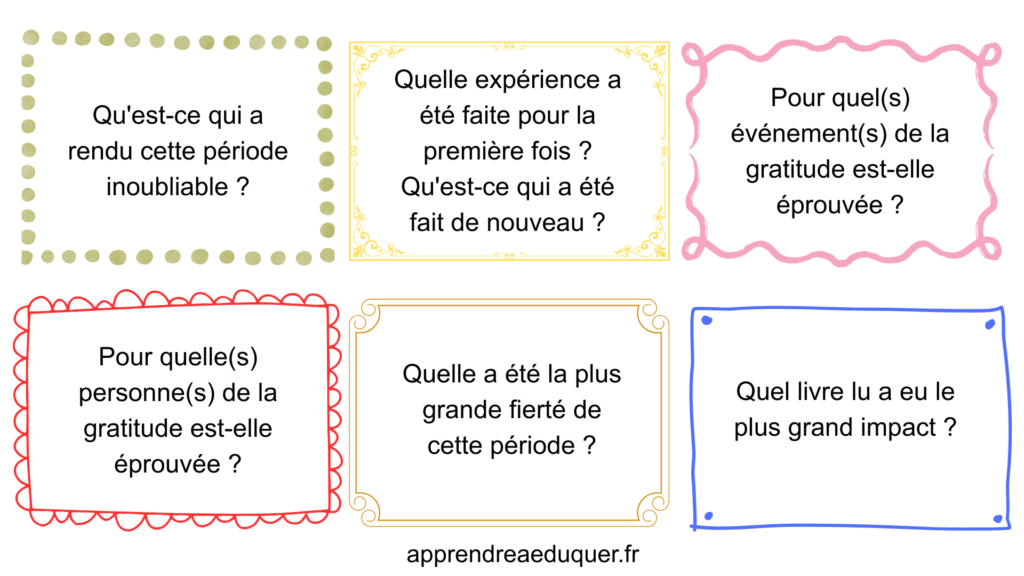
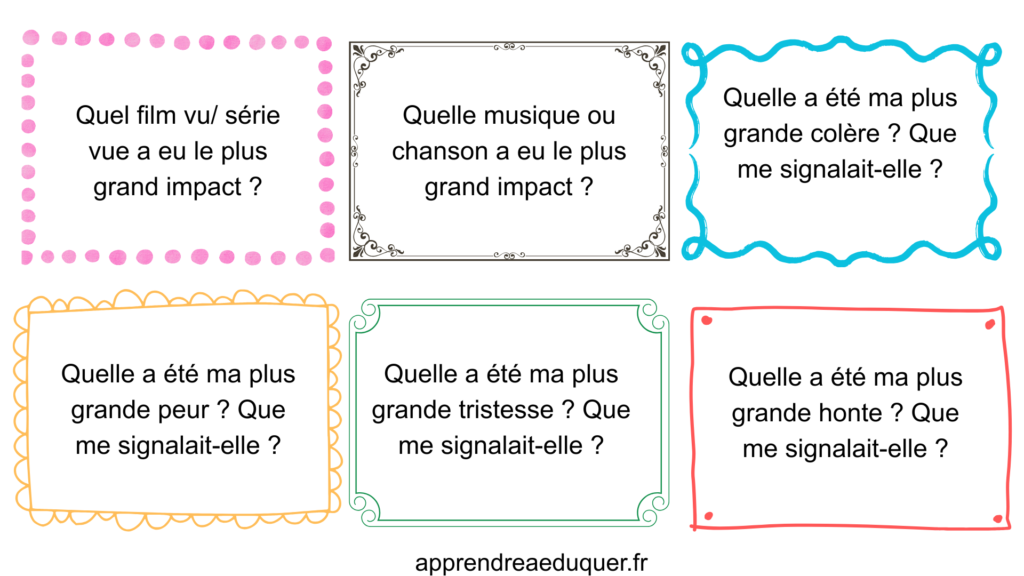
What made this period unforgettable? What did you try for the first time, and what was new? What event are you grateful for, and which person are you grateful for? What was your biggest pride? Which book, film, series or song had the greatest impact on you?
Anger, fear and disappointment
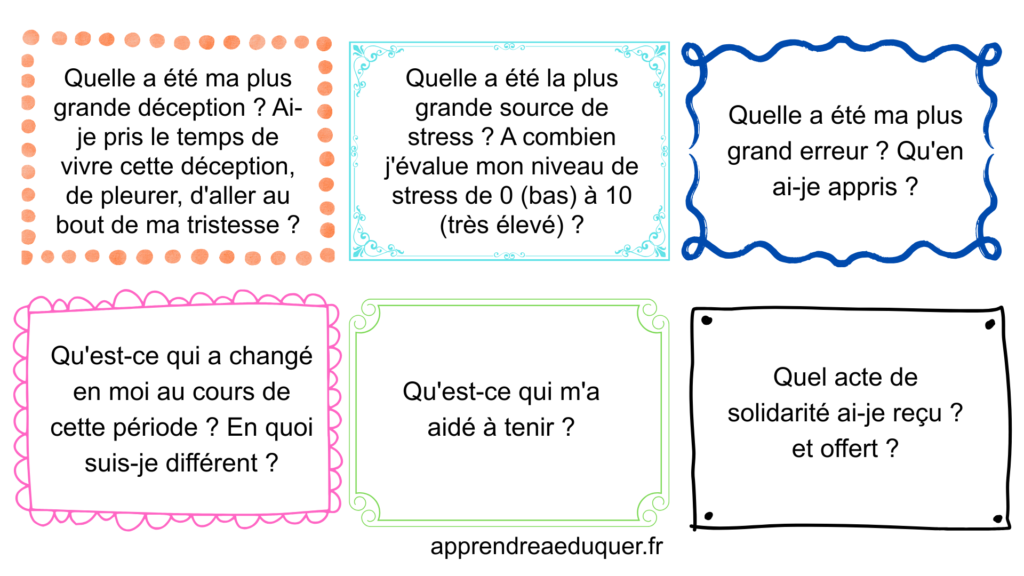
What was your biggest anger, and what was it telling you? Your biggest fear? Your biggest sadness? Your biggest shame? What was your biggest disappointment, and did you take time to live it fully, to cry and go all the way through the sadness? What was the biggest source of stress, and how would you rate it from zero to ten? What was your biggest mistake, and what did you learn from it?
Change, creativity and joy
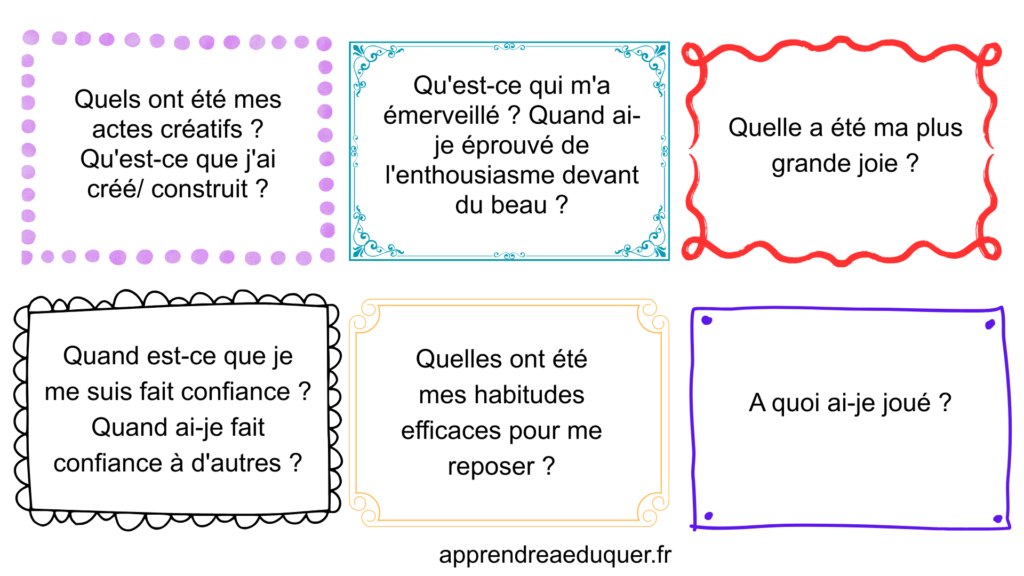
What changed in you during this year, month or period, and how are you different? What helped you hold on? What act of solidarity did you receive, and what did you offer? What did you create or build? What filled you with wonder, and when did you feel enthusiasm before something beautiful? What was your biggest joy?
When did you trust yourself, and when did you trust others? Which habits helped you rest? What did you play? When did you last dance, last sing, last laugh until it hurt? What was your calmest moment, and how could you live it again? Who listened to you, and who did you listen to? When did you feel love, and what could help you feel it more often?
Turning Past Experience Into Confidence
Looking back is not nostalgia for its own sake. Being aware of our mistakes, emotions and skills lets us read the past and begin a new period differently, which lowers the power of the trigger. A parent can say out loud: "I have been through this before, beginnings are a bit frightening, and I have already shown I can manage."
That sentence gives a child a template for self-talk. Play helps too, since children process change through repetition and imagination; simple toys and pretend games let them rehearse a new routine safely, and even a toys for 18-24 month old can support that kind of rehearsal. Creative acts, from drawing to building, also give shape to feelings that are hard to say, and cheap family board games offer another gentle way to practice turn-taking and change together.
Keep the door open
Some questions will land and others will not, and that is normal. What matters is that the child knows the conversation can be reopened later, without judgment and without a lecture.

My hands-on take
I started using a handful of these questions at dinner, and the shift was immediate but not in the way I expected. My first attempts were too broad, and I got shrugs. What worked was answering first: I said out loud what had made me angry that week and what I thought it was telling me. Once I had gone first, the answers came more easily.
I also learned to stop at one question. Early on I treated the list like a checklist and watched my child close up. Now I keep two or three in mind and let the conversation end when it ends, sometimes mid-sentence. The calm-moment question has become our favourite, because it always ends with a plan to do that thing again.
Frequently asked questions
What if my child refuses to answer?
Leave the question open and answer it yourself instead. Children often return to a topic later, once they see that no lecture is coming.
Is this the same as positive thinking?
No. Emotional agility invites difficult feelings in rather than replacing them with cheerful thoughts, which is why it holds up better during real change.
How often should we do this?
A short check-in once a week or at the end of a term is plenty. The goal is a habit of reflection, not a performance review.
Can this help with a move or a new school?
Yes. Reviewing past transitions reminds a child that they have already handled frightening beginnings, which makes the next one feel more manageable.
Product Reviews
 Best Toys for Dogs With High Prey Drive |
Best Outdoor Toys for 3-4 Year Olds |
Best Outdoor Toys for 6 Year Olds |
Best Harness for Poodle |
Best LEGO Sets for Adults |
Best Travel Toys for 4 Year Olds on Airplane |
Best Toy Stores in Washington DC |
Best Potty Training Toys |
Best Toys for Tripod Dogs |
Maillot equipe de france







