


Correcting toddler speech errors feels like the responsible thing to do, yet constant correction can quietly work against a child who is learning to talk. Many parents instinctively jump in when a child mispronounces a word or mixes up animals, believing that quick fixes speed up language development.
There is a gentler, more effective approach: trusting the child's own learning process and modelling language instead of policing it. This article explores why unsolicited correction often backfires, and how to support a young talker without turning conversation into a lesson.

Quick takeaways
- Unsolicited correction can feel rude, much like correcting a foreign guest.
- Constant correction breeds inhibition and a fear of speaking.
- Children learn correct words by hearing them used naturally.
- Independent discovery improves memory and builds self-trust.
- Corrections are often heard as reproaches or lack of trust.
- Respect a child's "no" and give them time to think.
Why Constant Correction Can Feel Rude
Imagine a distinguished visitor from another country staying in your home. Even if they were eager to learn your language, you would not pounce on every mistake they made in conversation. Doing so would seem impolite and unwelcoming.
Children deserve the same courtesy. A toddler attempting a new word is doing something brave and difficult, and treating that attempt as a social exchange rather than an exam respects their effort. This same respectful stance shows up in many areas of parenting, from how we gentle discipline choices to how we handle everyday frustrations.
When we hold back, we signal that the child's voice matters more than its perfection. That message builds the kind of confidence that later supports bigger challenges, such as the ones described in motivating young children.
The Risk of Discouragement
Think about learning a foreign language as an adult. If native speakers corrected every mistake you made, you would eventually become inhibited, afraid to open your mouth at all. Children learning their first language face the same emotional risk.
It is far better to welcome and acknowledge the attempt as an intellectual effort. A child who calls a sheep a cow will, after hearing the people around them say "sheep" often enough, work out the correct word independently.
Imitation Does the Teaching
Simply using language yourself gives the child all the help they need. Children learn through imitation, and interference in their learning, or even their play, often brings it to a halt. The same principle applies to physical milestones, which is why encouraging crawling toys work best when a baby explores freely.

| Situation | Correcting approach | Modelling approach |
|---|---|---|
| Child says "cow" for sheep | "No, that's a sheep." | "Yes, look at the sheep!" |
| Child mispronounces a word | Repeat the error back to fix it | Use the word correctly in reply |
| Child refuses a suggestion | Insist or coax | Say "okay" and let it go |
| Child is mid-thought | Cut in with the answer | Wait and let them finish |
| Child leaves an activity | Call them back | Allow them to go |
Understanding Things Independently
A child will almost always prefer to figure something out alone. This independent understanding carries two clear benefits: the child remembers better what they worked out themselves, and they gain trust in their own ability to make sense of the world.
That growing self-trust is the foundation of autonomy. It is the same quiet confidence that helps a child take on new routines, such as those covered in potty training toys or the first steps toward toys for one year old.
Corrections, by contrast, hand the answer over before the child has had the satisfaction of finding it. Over time, a child may conclude that good ideas only ever come from adults.
Corrections Can Feel Like Reproaches
Children tend to interpret corrections as criticism, even an insult to their intelligence. Even when the correction is phrased kindly, the child may hear a double message: "You are not clever enough to understand this yourself," and "Without me, you could not learn."
Young children are highly sensitive to emotional messages and have fragile egos. They pick up on the lack of trust behind the words, even when the words themselves are gentle. This is why adults should be careful with tone in every interaction, including moments of public parenting pressure.
Respecting a child's dignity also means noticing how much they absorb from the emotional climate around them, much as they do from the environment described in wifi and newborns.
Protecting the Natural Will to Learn
Children want to learn the way they breathe, without consciously thinking about it. No toddler ever learned to walk in order to please an adult; they walked because discovery is their natural state.
Anxiety about learning is what extinguishes learning. When children start to see the world as a place full of dangers they must protect themselves from, and when they begin to live less freely and fully, their learning capacities wither.
Unsolicited explanations also spark frustration and even anger. Blurting out the solution to someone who is searching for it can enrage them. The same dynamic plays out in play and sport, as explored in sports and children.
Finding the Right Balance
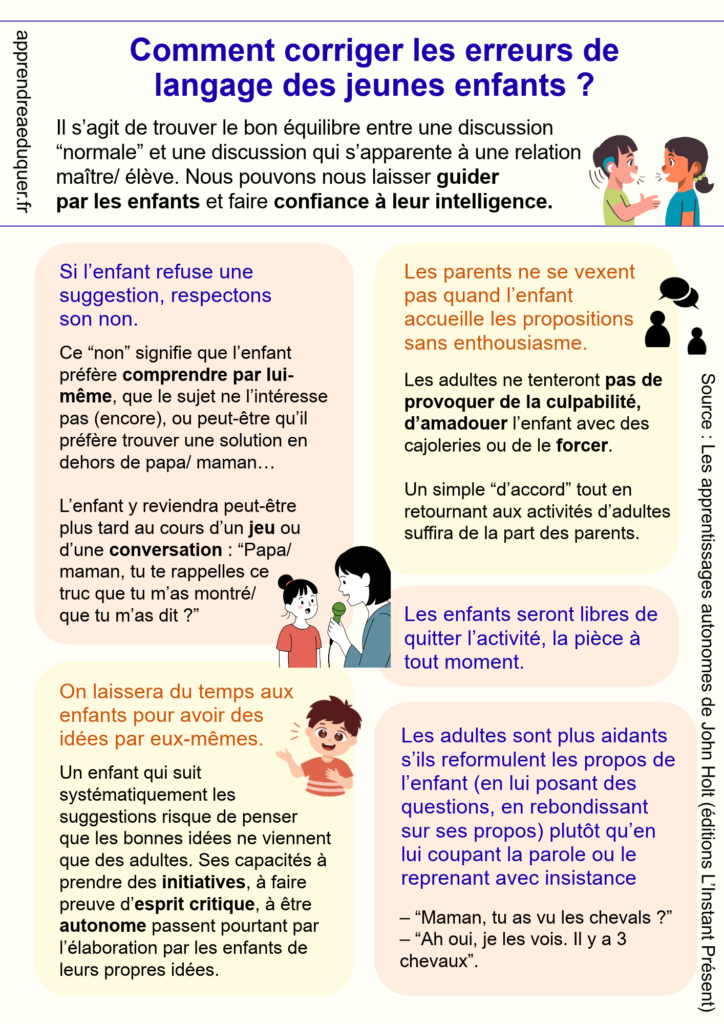
The goal is balance between normal conversation and a teacher-pupil relationship. Let the child lead and trust their intelligence: if a child refuses a suggestion, respect that no.
That "no" may mean the child prefers to work it out alone, is not interested yet, or wants a solution from someone other than mum or dad. They may return to it later: "Remember that thing you told me?" Parents should not feel offended when suggestions are met without enthusiasm, and should not use guilt, cajoling or force. A simple "okay" while returning to adult activities is enough.
Practical Habits That Help
Let children leave an activity or room whenever they choose, and give them time to form their own ideas. Rephrase what the child says, ask questions and build on their words rather than cutting them off. A child who always follows adult suggestions may come to believe that good ideas only come from grown-ups, which undermines initiative and critical thinking.
Children are remarkably good communicators, verbally and non-verbally, and will let you know when help is unwanted. That same instinct for independence shows up early, even in small choices like requesting baby DNI or picking out dog licking toys to share with a pet.


My hands-on take
When my own child was learning to talk, I caught myself correcting nearly every sentence. It felt helpful, but I noticed they started speaking less around me and more with other relatives. That shift made me rethink my approach.
I began simply repeating the correct word back in a natural reply, then moving on. I also learned to pause when I saw that look of concentration, and to let them finish even when I knew the answer. The change was gradual, but conversation became warmer and my child grew noticeably more willing to try new words. Letting go of the urge to fix everything turned out to be the most useful language lesson I gave.
Frequently asked questions
Should I never correct my child's speech?
Not never, but rarely and gently. Focus on modelling the correct word in natural conversation rather than stopping your child to fix each mistake.
How will my child learn the right words without correction?
Children learn largely through imitation. Hearing the correct word used repeatedly in context is usually enough for them to adjust on their own.
What if my child asks me directly for help?
Then help is welcome. The key is responding to a request rather than imposing help that was not sought.
Why does my child get upset when I explain things?
Unsolicited explanations can feel like a reproach or a sign of mistrust. Waiting and letting the child work it out often avoids frustration.
Product Reviews
 Best Toys for Dogs With High Prey Drive |
Best Outdoor Toys for 3-4 Year Olds |
Best Outdoor Toys for 6 Year Olds |
Best Harness for Poodle |
Best LEGO Sets for Adults |
Best Travel Toys for 4 Year Olds on Airplane |
Best Toy Stores in Washington DC |
Best Potty Training Toys |
Best Toys for Tripod Dogs |
Maillot equipe de france







