


Clay for kids is one of those simple, natural materials that invites hours of open-ended play. Long before anyone worries about a finished object, the real pleasure lies in the handling: squeezing, rolling, smoothing and pressing.
This natural, endlessly mouldable material works the sense of touch and supports fine motor development. Children can shape it, push objects into it, roll it, stick it and peel it off their fingers again.

Kneading clay is damp, it slips, it clings a little to the fingers, it feels cold or warm, and above all it is messy, which is the surest recipe for a big success.
Quick takeaways
- The gesture matters more than the finished object: handling is the pleasure
- Clay builds tactile perception and fine motor skills through squeezing and rolling
- Natural loose parts like acorns, feathers and seeds expand creative play
- Self-hardening clay dries in a few hours and can be painted afterwards
- A clay station works well as a birthday party activity for groups
- Store clay in a damp cloth inside a damp bag to keep it soft
Why Clay Is Such a Rewarding Material for Children
Clay appeals first through its texture. It offers a rich tactile experience and naturally invites children to refine the small movements of the hands, which is why it pairs so well with other fine motor toys and hands-on activities.
The gesture matters more than the final object. Manipulation itself is the reward, and children happily spend a long time simply kneading, rolling and pressing before anything recognisable appears.
Because it is so open-ended, clay also supports broader developmental play. If you enjoy following your child's interests through materials, this approach fits well with educating children by letting them lead the process rather than directing every step. It also connects naturally to the childcare at home you already provide day to day.

What You Can Make With or Without Tools
There are countless creative possibilities with clay: with or without equipment, with or without a model, with or without tools, with or without a potter's wheel, and with or without a kiln.
You do not need a full kit. Many families simply prefer natural creation, spending hours shaping pots, dishes, masks and little figures. Adding plenty of small natural elements, often called loose parts, widens the possibilities and feeds creative exploration.
Decoration ideas are endless: waves drawn with a knife, lines made with a fork, imprints of acorns or seeds. For children who like building and constructing, it can sit alongside travel toys and foam block toys as another open-ended material in the play cupboard. You might even plan a gourmet family calendar around these creative sessions.

| Element | Options | Practical note |
|---|---|---|
| Clay type | Self-hardening, no-bake | Dries in a few hours depending on thickness |
| Tools | None, fork, knife, hands | Natural creation needs no special kit |
| Loose parts | Acorns, feathers, seeds, husks | Add variety and invite exploration |
| Finishing | Air-dry, then paint | Extends the activity over several days |
| Storage | Damp cloth in a damp bag | Keeps clay soft between sessions |
| Clean-up | Washable mat, damp towel | Plan for mess from the start |
Air-Dry Clay: Drying, Painting and Finishing
Self-hardening, no-bake clay is the easiest option for children. Creations dry in a few hours in the air, depending on their thickness, and they can even be painted afterwards.
Painting is a lovely second stage that extends the activity over several days. One family painted their latest creations using acorn caps and pumpkin seeds, turning the decorating itself into a collecting and printing game.
If your child enjoys the messy, sensory side of making, this is a natural companion to other hands-on projects. It also connects well with the kind of psychomotor skills children build through squeezing, rolling and shaping.
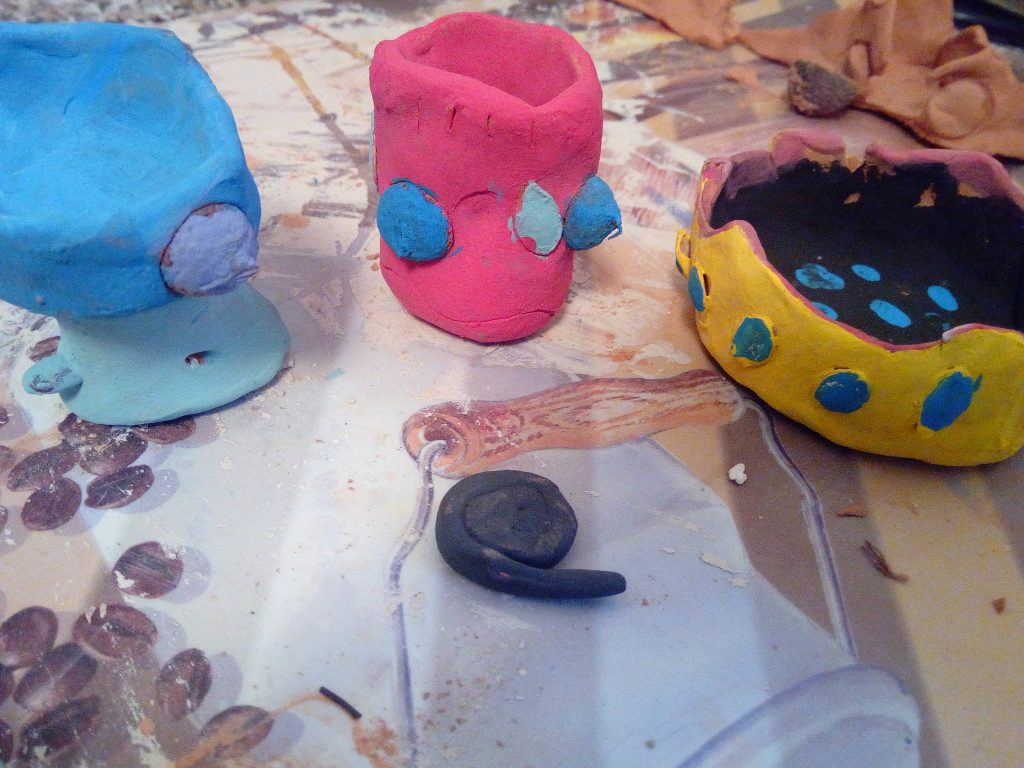
A Clay Activity for a Birthday Party
Clay works beautifully as a party activity. For a sixth birthday, one parent set out balls of clay on place mats and placed a range of decorating objects in the centre of the table: acorns, chestnuts, feathers, husks, corn kernels and fir needles.
The children loved creating, making and unmaking, handling, pushing in and decorating. They were very proud to take their creation home at the end of the afternoon.
This idea comes from the loose parts approach, which is also useful when you plan toys for five year olds or group activities where several children create side by side.

Storing Clay Between Sessions
Clay keeps easily. Wrap it in a damp cloth, then place that cloth inside a damp bag, for example with a little water at the bottom, so it stays soft and ready for the next session.
Good storage means the material can come out again and again without drying out, which makes it a economical and low-fuss addition to your craft routine. Keep it somewhere your child can reach with a little help.
For families who like calm, repeatable activities, clay sits comfortably beside other quiet making sessions, much like the focus children show during a simple pretzel recipe in the kitchen.

Setting Up Clay Play at Home
You do not need much to begin. A washable mat or tablecloth, a bowl of water, a cloth for hands and a few natural loose parts are enough to get started.
Expect mess and plan for it: roll up sleeves, protect the table and keep a damp towel nearby. The messiness is part of the appeal, and children relax into the material when they are not worried about staying clean.
As with any hands-on material, the value lies in repetition. Offering clay regularly, alongside things like learning to write style mark-making activities, gives children time to build confidence and skill at their own pace.

My hands-on take
I started buying clay after getting interested in the Reggio approach, and it quickly became one of our favourite materials. We have no special tools and no potter's wheel; we just set out the clay with a pile of natural loose parts and let the session unfold.
What I noticed most is how long my daughter stays with it. She will happily smear clay up to her elbows, press acorns into a wobbly pot, then flatten the whole thing and start again. The finished pieces are rarely the point. I keep a damp cloth and a bag handy so the clay is ready whenever she asks, and I have learned to put a mat down before, not after.
Frequently asked questions
Do children need special tools to play with clay?
No. Many families prefer natural creation with just hands and a few natural loose parts. A fork or a knife can add texture, but they are optional.
Does the clay need to be fired in a kiln?
Not if you choose self-hardening, no-bake clay. Creations dry in the air within a few hours, depending on how thick they are, and can then be painted.
How do I keep leftover clay from drying out?
Wrap it in a damp cloth and place that inside a damp bag, for example with a little water at the bottom. This keeps it soft and ready for the next session.
Is clay a good activity for a children's party?
Yes. Setting out balls of clay with decorating objects in the centre of the table keeps a group busy, and each child can take a creation home.
Product Reviews
 Best Toys for Dogs With High Prey Drive |
Best Outdoor Toys for 3-4 Year Olds |
Best Outdoor Toys for 6 Year Olds |
Best Harness for Poodle |
Best LEGO Sets for Adults |
Best Travel Toys for 4 Year Olds on Airplane |
Best Toy Stores in Washington DC |
Best Potty Training Toys |
Best Toys for Tripod Dogs |
Maillot equipe de france







