


Où es-tu? is a gentle, poetic picture book written for very young children from around two years old, and it works just as well for children taking their first steps into independent reading.
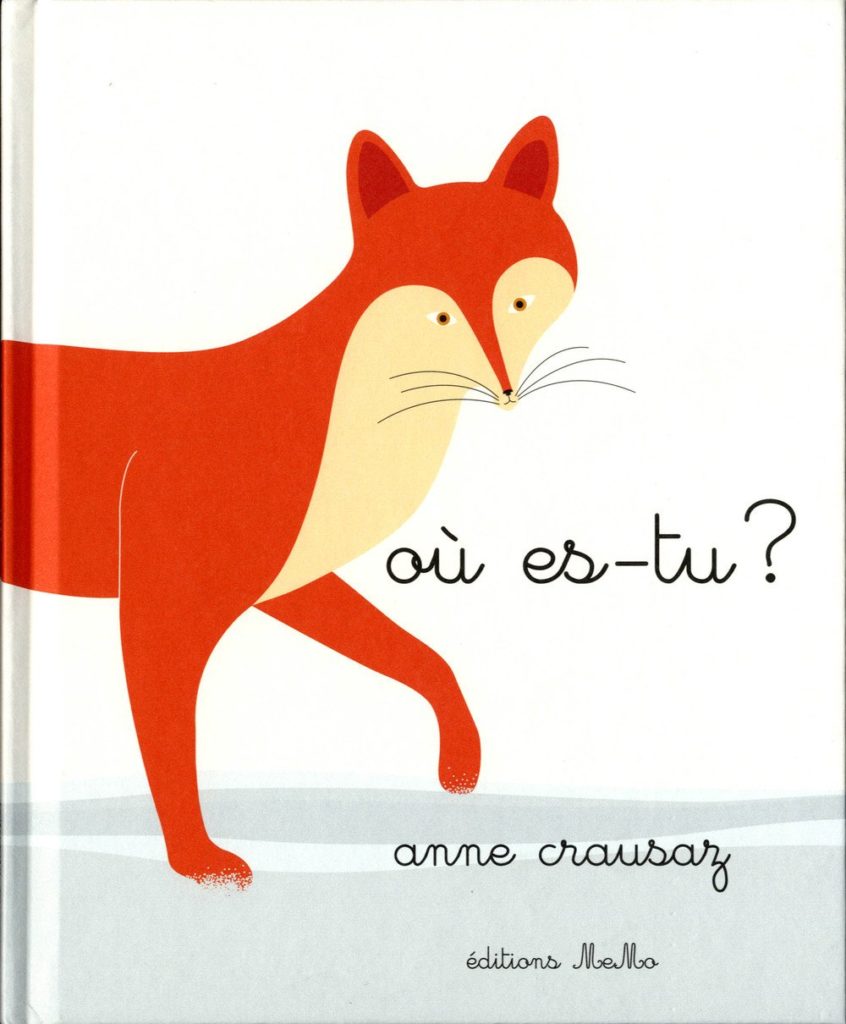
Two foxes, Rousse and Panache, play hide-and-seek in the forest and in their burrows. A hole-punch book invites children to follow them from the inside to the outside, page after page.

It is the kind of quiet book that slows a busy day down, and it fits naturally into a home shelf alongside other gentle stories for the youngest readers.
Quick takeaways
- A hole-punch picture book about two foxes playing hide-and-seek
- Written for children from around two years old
- Short, large, cursive text suits beginning independent readers
- Poetic, calm tone that invites slowness and quiet
- Themes of nature, seasons, affection, and birth
- Soft, slightly retro illustrations that appeal across ages
A hide-and-seek story with holes to explore
Two foxes, Rousse and Panache, spend the book playing hide-and-seek in the forest and in their burrows. The story moves between inside and outside, and the physical holes in the pages let children follow that movement with their hands as much as with their eyes.
Holes are reliably popular with the youngest children. They will push their fingers through, lift the pages, and peek underneath, which turns a read-aloud into a small hands-on game. If you are building a shelf for this age, our guide to the learning toys for two-year-olds follows the same principle: simple, tactile, and open-ended.
Because the text is short, the book also suits children who are just beginning to read alone, and it pairs well with other titles chosen to expand children's vocabulary without overwhelming them.
A text that reads like a poem
The writing is as soft as the subject. As with everything by author-illustrator Anne Crausaz, the words are spare and lyrical, and the text reads almost like a poem. It invites calm and slowness rather than a rush to the last page.
That quiet rhythm makes it a good choice for a bedtime read or for a moment when a child needs to settle. Parents looking for more ways to build a calm reading routine may enjoy these parenting TED Talks on everyday family life, and those who want to understand their own role better can read this pediatrician's advice on how parents shape their children.
Each double page carries only a short amount of text, printed large and in cursive letters. That combination of few words and clear lettering is exactly what makes a book easy to read independently for beginners, while still giving pre-readers plenty to look at. For more screen-free play at home, see these open ended toys.
| Reader | Best way to use it | What they gain |
|---|---|---|
| Toddler (from 2) | Read aloud, explore the holes | Fine motor play, shared attention |
| Beginning reader | Read alone, short pages | Reading confidence |
| Older sibling | Read to a younger child | Fluency, bonding |
| Sensitive child | Quiet bedtime read | Calm routine |
| Gift giver | Library, bookshop, or online | A timeless present |
Themes that speak to children
Behind the simple game of hide-and-seek, the book touches on themes that genuinely nourish young children: hiding and finding, affection, the passing of the seasons, nature, and birth. None of these is spelled out heavily; they arrive through the story and the illustrations.
The seasonal thread gives you an easy way to talk about the year with a child, and the nature setting invites questions about animals and their homes. If your child enjoys making things after reading, these Christmas tree drawings offer a seasonal craft to try together.
Books like this one are a gentle entry point into bigger conversations too. Families who want to talk about how homes and relationships come in many shapes may find our piece on diversity in family models a useful companion.
Soft illustrations for every age
The illustrations are soft and warm, and they appeal as much to toddlers as to older children, and honestly to quite grown-up readers as well. There is a slightly retro feel to the artwork that gives the book a timeless quality.
That broad appeal matters for a family shelf, because a book that pleases a two-year-old and a six-year-old earns its place. The gentle palette also makes it a restful choice for a child who is sensitive to busy, high-contrast images.
If you are choosing books for a slightly older child who is building confidence, it helps to know which titles match their stage; our round-up of the best of Cervantes for children shows how adapted classics can grow with a reader.

A book to read alone or together
For beginning readers, the short text on each double page, set in large cursive letters, makes independent reading feel achievable. For younger children, the same pages work as a read-aloud, with the holes providing the interactive part.
It is a flexible book, then: a first solo read, a shared bedtime story, or a quiet activity for a child who needs a calmer moment. Parents supporting a child who finds reading harder may also be interested in our look at reading with dyslexia and the tools that can help. Those shopping for a birthday may also enjoy our best birthday gift toys guide.
Où es-tu? by Anne Crausaz is published by éditions MeMo and is available in libraries, in bookshops, and through online retailers. It makes a thoughtful gift for a young child, or a gentle addition to a nursery or school reading corner.

My hands-on take
We borrowed this one from the library almost by accident, and it stayed in our house far longer than planned. My youngest treated the holes as a game in their own right, pushing fingers through and lifting the pages before I had even turned them, while my older child quietly read the short lines aloud without any prompting.
What I appreciated most was how it slowed everything down. After a hectic afternoon, sitting with a book that asks for calm rather than excitement did more for the mood in the room than any activity I could have planned. I would happily give it as a gift, and I would look for more titles by the same author when choosing books for the youngest readers in the family.
Frequently asked questions
What age is Où es-tu? written for?
It is designed for young children from around two years old, and the short, large text also makes it suitable for beginning readers who are starting to read on their own.
What is the story about?
Two foxes, Rousse and Panache, play hide-and-seek in the forest and in their burrows, and the holes in the pages let children follow them from inside to outside.
Why are the holes useful?
Young children love pushing their fingers through, lifting the pages, and peeking underneath, so the holes turn reading into a hands-on game that keeps them engaged.
Who created the book?
It is written and illustrated by Anne Crausaz and published by éditions MeMo, and it is available in libraries, bookshops, and online.
Product Reviews
 Best Toys for Dogs With High Prey Drive |
Best Outdoor Toys for 3-4 Year Olds |
Best Outdoor Toys for 6 Year Olds |
Best Harness for Poodle |
Best LEGO Sets for Adults |
Best Travel Toys for 4 Year Olds on Airplane |
Best Toy Stores in Washington DC |
Best Potty Training Toys |
Best Toys for Tripod Dogs |
Maillot equipe de france







