


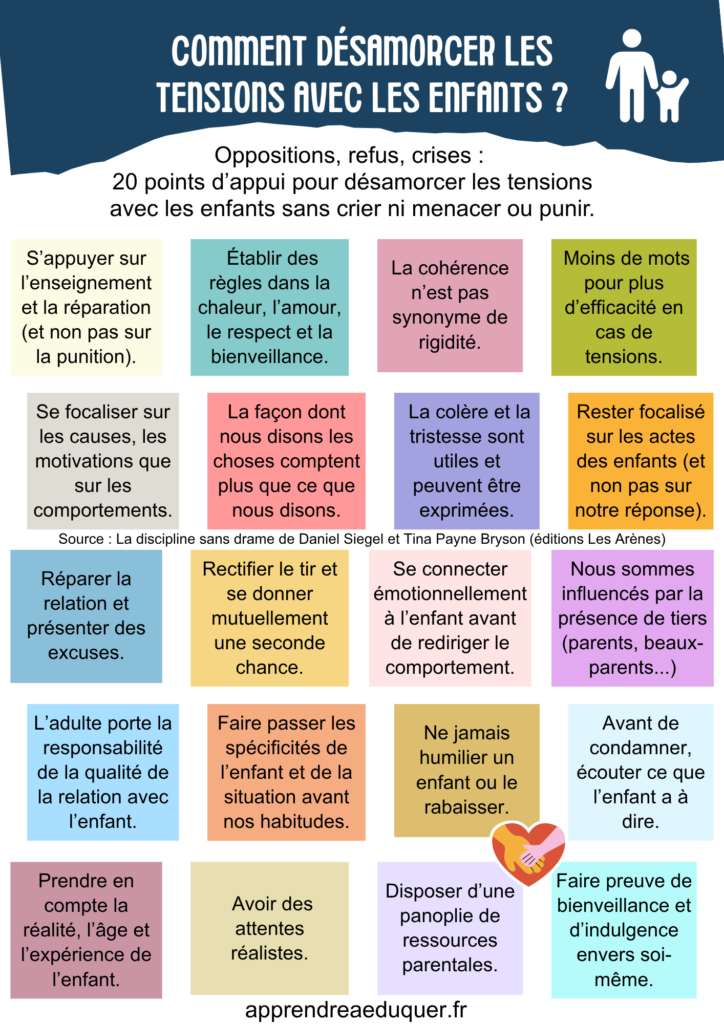
Calm parenting does not mean the absence of conflict; it means knowing where to stand when opposition, refusals and crises fill the room. Instead of shouting, threatening or punishing, you can lean on a set of practical anchors that keep the relationship intact while still holding a limit.
The twenty anchors below come from a gentle discipline framework built around teaching, connection and repair. They are not scripts to recite but reminders of where to put your attention when a child pushes back, so that the moment becomes something you move through together rather than a battle to win.

Quick takeaways
- Treat discipline as teaching and repair, not as punishment.
- Set rules with warmth, then allow reasoned exceptions.
- Say less when tension rises; let silence and touch reconnect.
- Look for the cause behind the behaviour, not just the act.
- Step away rather than over-react, then repair quickly.
- Defuse power struggles yourself; you hold the mature brain.
Discipline Is Teaching, Not Punishment
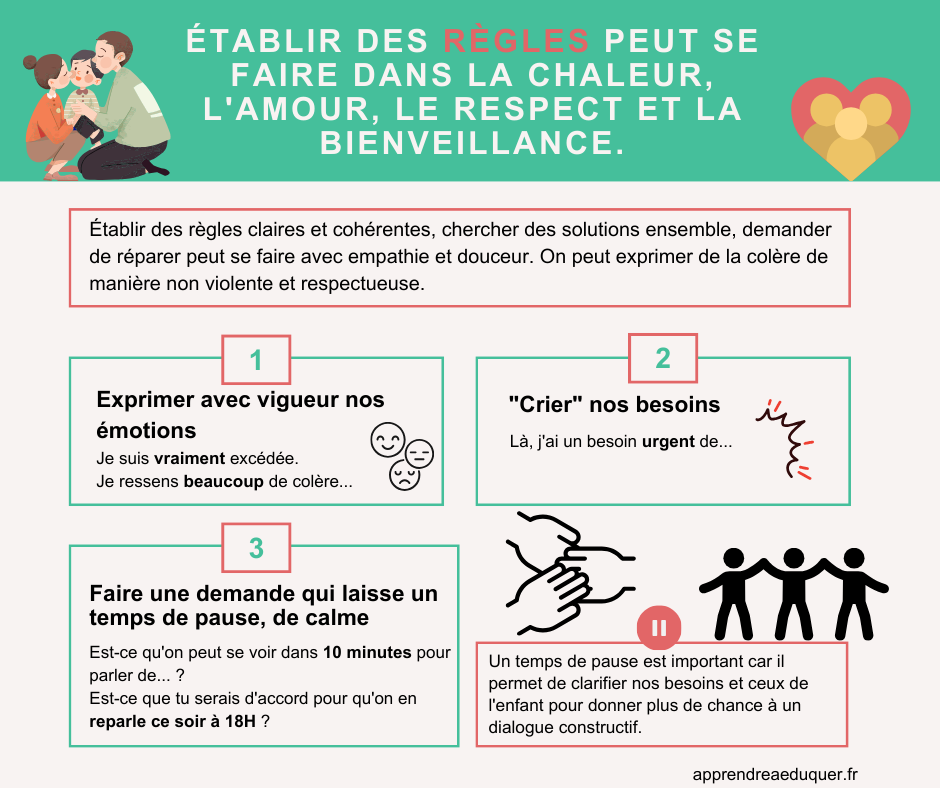
Education and teaching share the same root, yet punishment so often takes their place. When a child struggles, the useful question is not "what consequence fits?" but "what does this child still need to learn, and how can I show it?" Rules can be set with warmth, love, respect and kindness: clear, consistent expectations, solutions found together, and requests to repair what was broken.
You can still express anger without violence. Name your emotion with vigour ("I am really exasperated right now"), state your need out loud, then make a request that leaves a pause: "Can we talk about this in ten minutes?" That pause matters, because it lets you clarify your own needs and your child's before dialogue begins. Parents who practise this often notice how much conscious parenting depends on the adult's own self-regulation first.
Consistency is not rigidity. Some situations can carry exceptions to a rule, and children are perfectly able to grasp that an exception is exceptional rather than a collapse of the whole framework.

Fewer Words, More Connection
When tension rises, fewer words work better. Non-verbal communication — a stroke on the back, a smile, an empathetic face — or simply a silent wait can reconnect you with a child who has gone somewhere else in their head. This is the same principle behind independent play, where children need space and quiet presence rather than constant instruction.
It also helps to focus on causes and motivations rather than on the behaviour itself. Misbehaviour is usually a symptom of something else, and that something will keep surfacing until you connect with the emotion and the subjective experience behind it. How you say things matters more than what you say: the intention to connect should come before the form of the message.
Intense emotions often labelled "negative", such as anger or sadness, are useful and can be expressed safely. Repressing them is harmful, but that does not justify inappropriate behaviour. Aim for the balance of being flexible about the emotion and firm about the conduct — a stance that also shapes how siblings learn to peer interaction with patience.

| Situation | Less helpful | More helpful |
|---|---|---|
| Child refuses a request | Raising your voice | Stating your need, then pausing |
| Child shouts in anger | "Don't talk to me like that" | Naming the emotion, holding the limit |
| You lost your temper | Pretending it didn't happen | Apologising and repairing |
| Standoff over a rule | Winning at all costs | Asking for suggestions together |
| Child overwhelmed | Lecturing | Connecting first, then redirecting |
Stay on the Act, Not Your Reaction
Staying focused on what your child actually did, rather than on your own response, keeps you from over-reacting. Over-reaction has a cost: the child's attention shifts to the injustice they feel at the size of your reaction, and the original lesson disappears. Aim to be as calm and considered as possible, which may mean stepping out of the situation and granting yourself a moment of quiet before words or hands go too far.
Repairing the relationship and apologising can be necessary. Gentle education never means conflict-free parenting, because family life is group life. You will not always be at your best. What matters most is recognising where you fell short of your own convictions and repairing the relationship as early as you can, so the family bond is restored rather than left to harden.
It is always possible to correct course. Give each other a second chance: "Earlier I got angry and didn't think carefully about what I was doing. Having thought about it, I've changed my mind." Or: "I didn't like what you did. How could you act differently?" Small repairs like these are the everyday work of understanding relationships for a growing child.
Be the Mature Brain in the Room
Children may need your help to make good choices or simply to calm down. Their brain is immature, and they need your mature brain to serve as an "external brain" for emotions that sweep them away. The first step is always to connect with the child before redirecting behaviour or minimising feelings — the same instinct that makes tummy time toys and calm floor play so regulating for babies.
Be aware that other people's presence influences you: your parents, in-laws, friends, family, other parents. You would gain from stepping aside to avoid reacting according to what others think. Power struggles always lead to a dead end, and it falls to the adult — who carries responsibility for the relationship and has the mature brain — to defuse the game. Rather than firing back at a child who answers, look for a solution that suits everyone: "What could we do? Do you have any suggestions?"
Putting the child's specific needs and the situation ahead of your habits, conditioning and feelings is hard and sometimes takes long personal work, but it is possible. A solution may work with one child and not with their sibling — much like choosing newborn toys, where one baby's favourite is another's ignored object.

Routines That Lower the Temperature
Many explosions are not about discipline at all but about tiredness, hunger and transition. A predictable rhythm — meals, rest, outdoor time — removes a surprising number of daily flashpoints before they start. Protecting rest matters for adults too, and the same logic that makes rest during pregnancy essential keeps a parent's patience available on hard afternoons.
Getting everyone outside helps as well. A walk, a park, a change of scenery resets the nervous system for child and adult alike, and it is often easier to hold a limit in the open air than in a cramped room. Parents planning a family day out may find ideas for rural houses and other low-key escapes useful for keeping expectations realistic.
Finally, watch the pressure you put on yourself to be a perfect parent. Children do not need flawless adults; they need adults who come back, name what happened, and try again. That is the whole of it.

My hands-on take
I learned most of this the hard way, in the doorway of a bedroom, mid-argument, with my voice already too loud. What changed things for me was not a new rule but a pause: I started saying "I need ten minutes" and actually leaving the room. My child hated it at first. Then something shifted — when I came back calmer, the conversation was shorter and far more honest.
The other habit I lean on is the repair. For a long time I thought apologising would undermine my authority. In practice it did the opposite: my child began apologising too, unprompted, which never happened when I lectured. I still get it wrong on tired evenings, but I now treat those moments as information rather than failure.
Frequently asked questions
Does gentle discipline mean there are no rules?
No. Clear, consistent rules are part of it; what changes is how they are set and held. Warmth and firmness work together rather than in opposition.
What if I shout before I can stop myself?
It happens to every parent. The repair afterwards matters more than the slip: name what happened, apologise, and say what you will try next time.
How do I handle a child who argues back?
Avoid treating it as a contest to win. Acknowledge the feeling, restate the limit, and offer a shared problem-solving question instead of a counter-attack.
Why focus on causes rather than behaviour?
Behaviour is usually a symptom. Until the underlying emotion or need is acknowledged, the same behaviour tends to return in another form.
Product Reviews
 Best Toys for Dogs With High Prey Drive |
Best Outdoor Toys for 3-4 Year Olds |
Best Outdoor Toys for 6 Year Olds |
Best Harness for Poodle |
Best LEGO Sets for Adults |
Best Travel Toys for 4 Year Olds on Airplane |
Best Toy Stores in Washington DC |
Best Potty Training Toys |
Best Toys for Tripod Dogs |
Maillot equipe de france







