


A positive parenting workbook for parents of children aged 4 to 8 offers far more than a stack of exercises: it is a compact, practical digest of the key ideas behind gentle, respectful parenting.
Getting heard without shouting or repeating yourself fifty times, finding the middle ground between permissiveness and strictness, staying tuned in to your own emotions and needs without being overwhelmed — none of this works the same way every time. Each situation, each child, each parent and each parent-child relationship is different.

That is exactly why a structured workbook can help: it turns broad principles into concrete tools you can try, adjust and return to whenever you feel stuck or discouraged.
Quick takeaways
- Goes beyond exercises: a compact digest of positive parenting principles
- Toolboxes for stress, sadness, anger and jealousy give children clear reflexes
- Ten keys cover guilt, listening, cuddles, rules, trust and moving away from punishment
- Three daily rituals and three positive-attitude programmes structure the week
- A dedicated section reminds parents to look after their own needs
- A four-week plan turns theory into practice, with direction valued over perfection
What the Workbook Covers
The workbook opens with the foundations of positive parenting: understanding how a child's brain works, supporting healthy habits, tuning in to emotions and helping children learn to manage them. From there it builds a set of toolboxes — anti-stress, anti-sadness, anti-anger and anti-jealousy — designed to give children the right reflexes when feelings overflow.
It then lays out ten keys to a warm, win-win parent-child relationship: letting go of guilt, listening to emotions, encouraging cuddles, setting rules and helping children accept them, building respect and trust, and moving away from punishment. If you have ever wondered slapping children does more harm than good, this section explains the reasoning behind a non-punitive approach.
Three daily rituals are offered to change family life: starting the day on the right foot, cultivating joy, and holding regular family councils. Three "positive attitude" programmes follow — anti-stress, emotion management and house rules — plus a four-week plan for embedding the approach for good.

Why the Author's Background Matters
What stands out when leafing through the workbook is the experience and seriousness behind it. You find frequent references to the respectful-communication tools developed by Faber and Mazlish, along with mentions of recognised experts in the field such as Isabelle Filljaot, Catherine Dumonteil Kremer, Daniel Siegel, Olivier Maurel and Marshall Rosenberg.
The main strength is how the author combines her skills as a sophrologist and parent consultant to offer tools for children — calming down, managing emotions, taming anger — and for parents: communication techniques, playful parenting tools, keys to encouraging cooperation, and background on child development. Parents who want to understand forms of aggression that adults often normalise will find useful context here. The same developmental insight helps explain cases like Chachat's case, where a baby's needs differ sharply from a four-year-old's.
A summary table of the major developmental stages by age range is especially helpful: it shows what it is reasonable to expect from a child at each stage, which takes a lot of the guesswork out of daily conflicts. It also clarifies practical questions such as children's expenses after divorce.

| Chapter | Focus | What you get |
|---|---|---|
| Foundations | Brain, habits, emotions | Understanding what to expect by age |
| Emotions | Anger, fear, sadness, jealousy | Calm-down toolboxes for children |
| Parents first | Stress, guilt, perfectionism | Self-care and communication tools |
| Limits and cooperation | Rules, respect, trust | Keys to a win-win relationship |
| Four-week programme | Theory into practice | Gradual plan plus a final review |
Parents, Take Care of Yourselves
One entire part of the workbook is devoted to parents looking after themselves — the author considers parents the great forgotten people of positive parenting. This matters, because a stressed or exhausted adult has far less patience to draw on, and children read that tension easily.
The workbook addresses painful emotions in children (anger, fear, sadness), difficult sibling dynamics such as jealousy and conflict, and the perfectionism and guilt many parents carry. It also looks at how stress shapes daily life. If you recognise yourself in the housewife trap of endless invisible work, the self-care chapters are a gentle reminder that your needs count too.
There is also space for the harder seasons of family life, including the adjustments that follow a separation; readers navigating that terrain may find family after divorce guidance a useful companion to the communication tools described here.
How the Workbook Is Organised
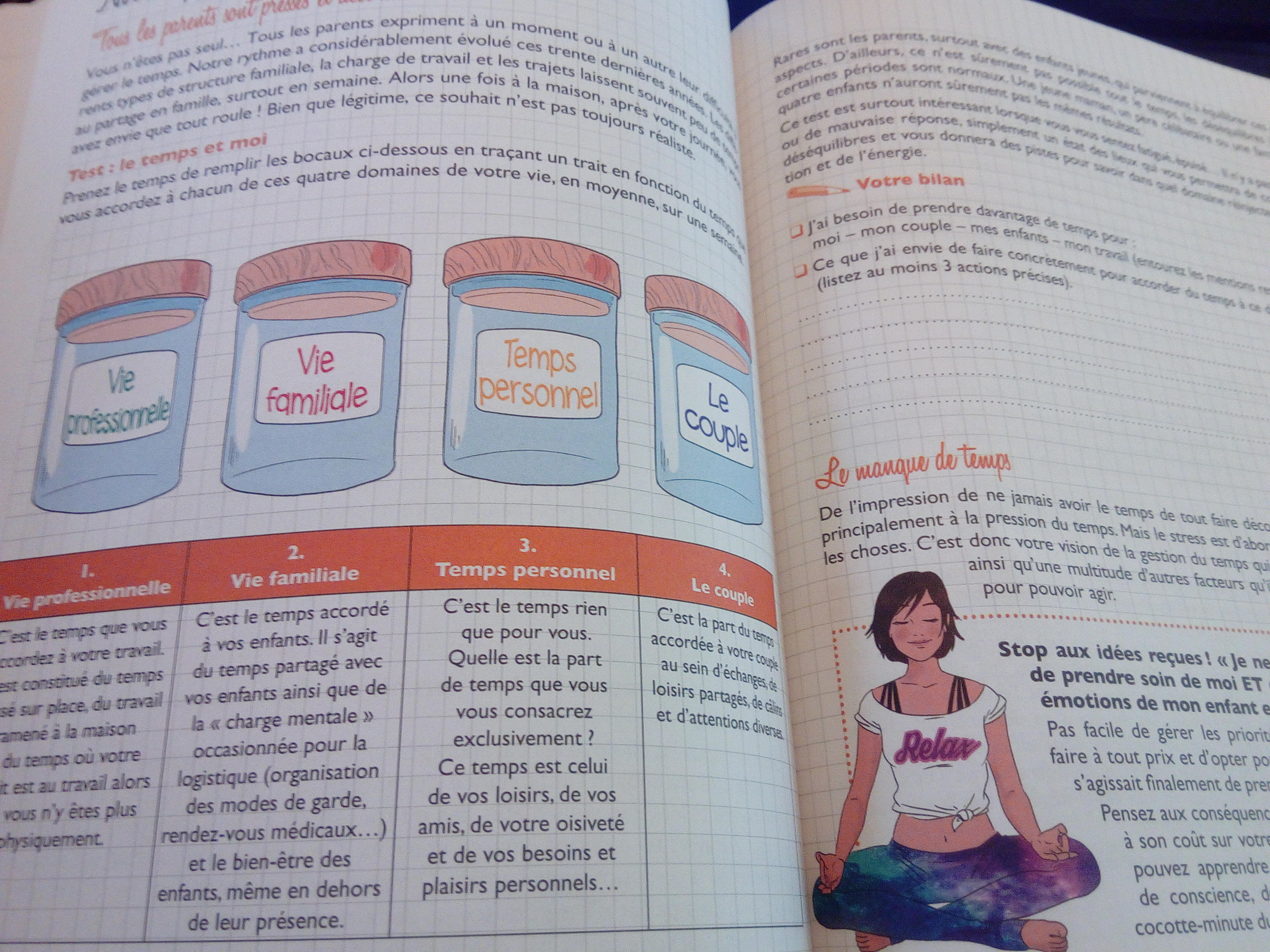
The content sits in four main chapters: the foundations of positive parenting; emotions, what are we really talking about; parents, take care of yourselves; and setting limits while cooperating. The layout is airy and colourful, with tests, exercises and practical tools mixed with concise theory.
At the end, a four-week programme helps you move gradually from theory to practice, followed by a review to keep the journey going — with the reminder that the goal is not perfection but direction. That framing is refreshing for anyone who has felt defeated by love for the baby ideals that seem impossible to live up to on a bad day.
Because the tone stays practical rather than preachy, it works equally well as a first introduction to gentle parenting or as support during moments of discouragement and self-questioning.

Using the Tools Day to Day
The real value of a workbook like this appears when you actually use it. Pick one toolbox — say, the anti-anger one — and keep it visible for a week, practising the calm-down steps alongside your child rather than simply handing them over.
Daily rituals are easy to underestimate. A predictable morning routine, a moment of shared joy and a short family council can reduce friction more than any lecture. If you are building a calm home environment, small additions help too, such as books with flaps or pop-ups that make quiet time together appealing for younger children. Parents who are juggling work and family life may also find ideas in these tips for working, while rest during pregnancy can help you stay patient enough to keep the rituals going.
Keep expectations realistic: some days the tools work, some days they do not. The four-week programme is designed for exactly that rhythm, letting you return to the same pages and notice slow progress rather than dramatic transformation.



My hands-on take
I tried the anti-anger toolbox idea with my own child during a phase when every bedtime turned into a negotiation. What helped was not the worksheet itself but keeping the calm-down steps where we could both see them, so the routine became ours rather than something imposed from a book.
The chapter on parents stuck with me most. I had read plenty about listening to children's emotions and very little about managing my own, and recognising that my impatience usually arrived when I was tired reframed the whole thing. I also liked the developmental table: knowing what is reasonable to expect at a given age stopped me from treating normal behaviour as defiance. My advice is to start with one ritual and one toolbox, give it a fortnight, and only then add more.
Frequently asked questions
Who is this workbook aimed at?
It is written for parents of children roughly aged 4 to 8, whether they are new to positive parenting or looking for support during moments of doubt. The tools assume a child old enough to talk about feelings but still learning to manage them.
Does it replace professional advice?
No. It is a practical companion that summarises established communication and emotion-management approaches. For persistent difficulties, a qualified professional remains the right person to consult.
Do I have to follow the four-week programme in order?
Not necessarily. Many readers dip into the toolboxes as situations arise and use the programme later to consolidate. The review at the end helps you see what has changed.
Is it only about children's emotions?
No. A substantial part addresses parents' own stress, guilt and self-care, on the view that parental wellbeing is central to gentle parenting rather than an optional extra.
Product Reviews
 Best Toys for Dogs With High Prey Drive |
Best Outdoor Toys for 3-4 Year Olds |
Best Outdoor Toys for 6 Year Olds |
Best Harness for Poodle |
Best LEGO Sets for Adults |
Best Travel Toys for 4 Year Olds on Airplane |
Best Toy Stores in Washington DC |
Best Potty Training Toys |
Best Toys for Tripod Dogs |
Maillot equipe de france







