


Fun writing prompts for kids turn a blank page into a game, and that is exactly what these ten ideas do. Each prompt gives a child a small, concrete starting point, then lets imagination do the rest.
They work from around age seven or eight, when children can write a few sentences on their own, and they suit a parent, a teacher or a grandparent who wants to share the pleasure of writing without turning it into homework.

Some prompts are funny, some are tender, and a few ask children to think about the world around them. Read them together, let your child pick one, and keep the mood light: the goal is pleasure, not a perfect page.
Quick takeaways
- Give a concrete starting point, not a blank page
- Let the child choose the prompt and the form
- Keep sessions short and pressure-free
- Read results aloud and praise one specific detail
- Mix funny, tender and thoughtful prompts
- Repeat favourite prompts with new images or ideas
Start with memories and identity
The first prompt is simple and strange: "The first time I stayed awake all night, when was it, where, and why?" If it never happened, the child invents what could happen. It invites storytelling from a real or imagined memory, with no right answer.
The second prompt flips perspective: "If I were a boy" for a girl, or "If I were a girl" for a boy, written as a list of positive and negative changes. It is a gentle way to talk about daily life and expectations, and it pairs well with reflections on children's self-image and how they build themselves through our eyes.
A third idea is a letter to a brand-new baby: what would you tell them about life and the world they have just arrived in? Add three wishes if you were a magician or a fairy. It is tender, and it lets a child practise kindness and empathy.
Prompts about self-esteem and imagination
"I love myself" asks children to write everything they like about themselves, in any form (a list, a portrait, a poem), ending with the words "I love myself." This is a small confidence exercise disguised as writing, and it connects naturally to self improvement and to the way praise shapes a child's inner voice.
Then comes the twin prompt: "If I had a twin brother or sister," imagining funny, odd or awkward everyday situations. Children love inventing small scenes of confusion at breakfast or at school, and it teaches them to build a story from one simple idea.
A list of sweet words for someone they love follows, inspired by a playful poem of pet names (my little sparrow, my hummingbird, my moon). It shows that writing can be affectionate and a little silly, and that words are gifts, much like the gentle care described in sunburns in children.

| Prompt | Main skill | Best for |
|---|---|---|
| First sleepless night | Memory and invention | Confident storytellers |
| If I were a boy or girl | Perspective and empathy | Discussing daily life |
| Letter to a new baby | Kindness and reflection | Tender moments |
| I love myself | Self-esteem | Quiet confidence building |
| If I had a twin | Humour and scene building | Reluctant writers |
| Sweet words list | Vocabulary and affection | Playful children |
| The four elements | Description | Outdoor warm-ups |
| Birth of the world | Plot and explanation | Curious minds |
| Becoming an insect | Point of view | Detail-loving children |
| Portrait with a secret | Character building | Rainy afternoons |
Nature, elements and the birth of the world
The elements prompt invites children to start each sentence with "If I were water, fire, earth or air." It is a good warm-up for descriptive writing, and it works well outdoors, where a child can watch rain, wind or sunlight before writing.
The birth of the world is a bigger canvas: invent the story of how the wind, the morning dew, the mountains or the first rainbow came to be. Why is the sea salty? Who sent the snow? These questions push children to explain, imagine causes and build a plot.
For children who like facts as much as fiction, a nature walk beforehand gives them material to describe. And if a child is curious about how the body works or how senses differ, a question like childhood color blindness can spark a fascinating side conversation about perception.
Becoming an insect for a day
Here the child transforms into an insect for twenty-four hours. Which insect? What does it eat, where does it live, who does it meet, and who might try to eat it? The prompt asks the writer to think inside the creature's body, legs and habitat.
This is a wonderful exercise in point of view, because the child must describe a familiar world from a very small place. It also encourages observation: a garden, a balcony or a park becomes a research field before writing begins.
Children who enjoy building and imagining tiny worlds often respond well to hands-on play too, and a simple construction session can feed the story. Letting kids choose their own clothes can even inspire an insect's outfit, while wondering what the first set was worth adds a curious historical detail. Even a practical question, like whether LEGO pieces in the dishwasher survive a wash, can become a funny detail in the insect's daily routine.
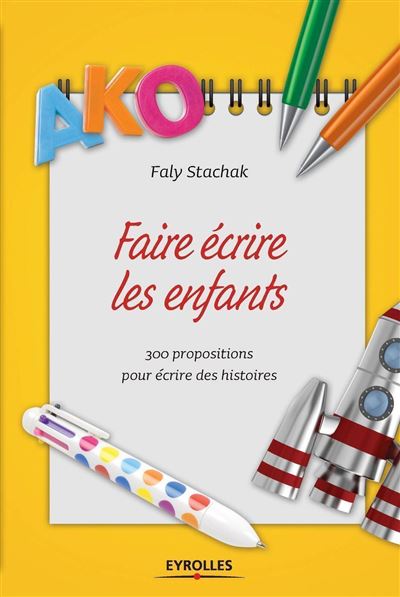
The portrait with a secret
Collect four pictures of people (photos, paintings, magazine cuttings) of different ages and styles. The child chooses one portrait and looks at it closely, then answers: "This person has a secret. A big secret. What is it?" The answer becomes a story.
This prompt teaches character building: a face, a posture, a detail in the background all become clues. It is also a quiet activity, good for a rainy afternoon or a long wait, and it can be repeated endlessly with new images.
For older children, add a civic twist: what would your first five decisions be as a newly elected president, or describe your first day as a member of parliament. These topics work best once the child has some idea of how institutions function.
How to keep writing playful
Keep sessions short, maybe ten to fifteen minutes, and let the child choose the prompt. Read the result aloud together, praise a specific detail, and never correct spelling during the first draft. Pleasure comes first; technique can wait.
Offer variety: a list one day, a letter the next, a story after that. Children who are tired or anxious may find writing harder, and a calm, pressure-free routine helps, much like the reassurance described in teenage test anxiety for older students.
Finally, let writing sit alongside other creative play. Drawing, building and outdoor exploration all feed stories, and a child who has just built something often has plenty to say about it. Collecting rare LEGO minifigures can spark imaginative tales too.

My hands-on take
In my own experience, the prompt that worked best was the portrait with a secret. I cut four faces from an old magazine, spread them on the table, and said nothing more than "this person has a big secret." My child stared at one picture for a while, then started talking, and the story came out almost fully formed before a single word was written.
What I learned is that children rarely need instructions; they need a small door to walk through. The insect prompt worked the same way, with a lot of laughter about what a beetle eats for lunch. I keep a folder of pictures and odd questions now, ready for the days when writing feels like a chore. It almost never does when the starting point is a game.
Frequently asked questions
What age can children start these prompts?
Most work from around age seven or eight, when a child can write a few sentences independently. Younger children can dictate their ideas while an adult writes them down.
How long should a writing session last?
Ten to fifteen minutes is usually enough. Short, regular sessions keep motivation high, and a child can always continue the next day.
Should I correct spelling mistakes?
Not during the first draft. Let the ideas flow, then talk about one or two corrections afterwards if the child is willing.
What if my child refuses to write?
Try a different form: a list, a comic strip, or a dictated story. Changing the format often unlocks the pleasure of writing again.
Product Reviews
 Best Toys for Dogs With High Prey Drive |
Best Outdoor Toys for 3-4 Year Olds |
Best Outdoor Toys for 6 Year Olds |
Best Harness for Poodle |
Best LEGO Sets for Adults |
Best Travel Toys for 4 Year Olds on Airplane |
Best Toy Stores in Washington DC |
Best Potty Training Toys |
Best Toys for Tripod Dogs |
Maillot equipe de france







