


The Fransya reading method is a structured, multisensory approach that teaches children to read and write together, one letter-sound pair at a time. It is alphabetical and plurisensory, designed with struggling learners in mind, and it lays the groundwork for spelling from the very first lesson.
Its starting point is the link between graphemes (letters or letter groups) and phonemes (the sounds they make), practised through exercises that call on movement and the senses. Reading (decoding) and writing (encoding) are always paired, and each lesson builds only on sounds the child has already met.

Quick takeaways
- Fransya pairs reading and writing in every single lesson.
- Lessons follow the same predictable sequence each time.
- Only previously studied graphemes appear in new reading material.
- The pupil's book has no pictures, so decoding is the only route to meaning.
- Movement-based exercises suit children with attention difficulties.
- All materials are included except the rough letters.
How the Fransya method works
Fransya is built on what is known about how the brain learns, and it treats reading and writing as two sides of one skill. In every lesson the child decodes words and encodes them, so the same letter-sound link is practised in both directions. Progress is strictly step by step: in the sentences a child reads or writes, only the current grapheme and previously studied ones appear.
From the earliest lessons, children write from dictation and learn to explain aloud, then summarise, what they have read. Basic spelling rules arrive gradually: gender and number, the idea of a verb with the beginnings of conjugation, and the notion of a subject. The method is described as effective from age five and accessible to all children, including those with dyslexia or certain disabilities.
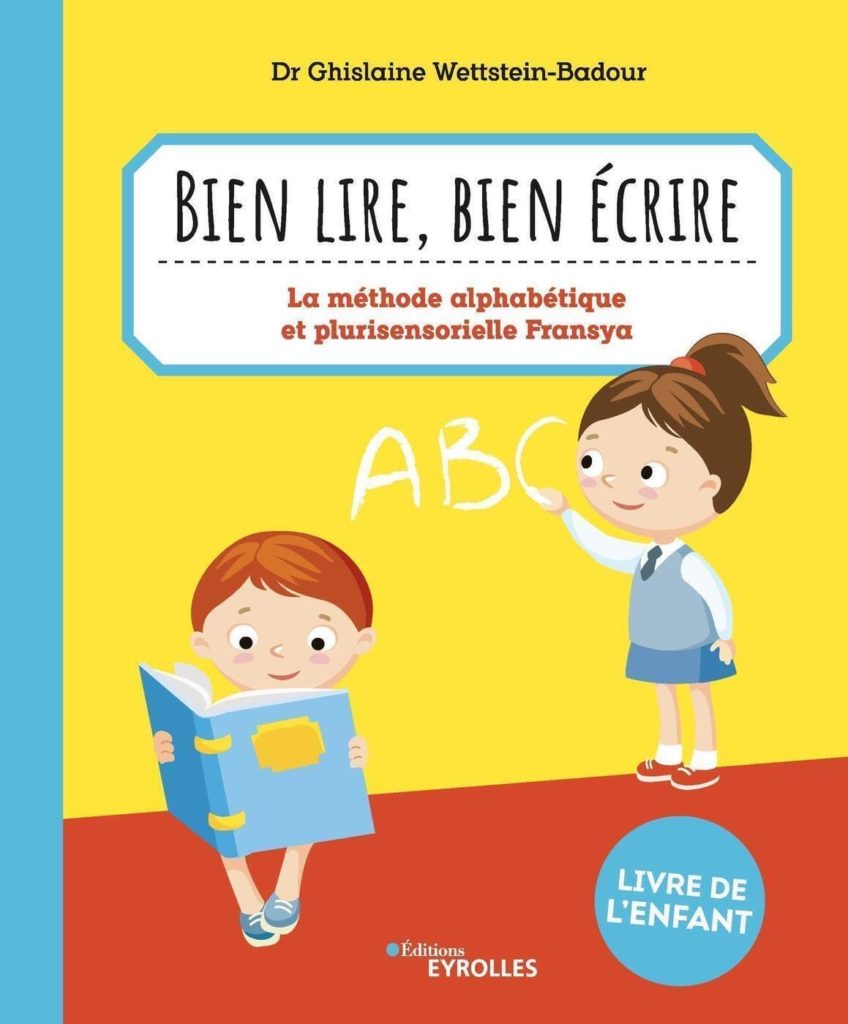
It was created by Dr Wettstein-Badour from current knowledge of learning processes, for parents and teachers who want to help build the circuits that support intellectual development. The boxed set contains two inseparable volumes: a teacher's book explaining each lesson, and a reading book for the pupil. For families who enjoy hands-on learning alongside structured methods, a LEGO building set can complement this approach, and if your child is also asking about growing long hair, that guide offers practical tips.

What a Fransya lesson looks like
Every lesson follows the same predictable sequence, which is part of why it never leaves the child floundering. It opens with motor and laterality exercises (body inventory, working on positions, rhythm, awareness of shapes and their orientation in space, spotting differences between near-identical pictures), then graphic preparation for writing and reading. The previous lesson is revised before the new grapheme is announced, written in print and cursive, and named by its sound rather than its letter name.
The child then identifies the sound by ear, learns the grapheme in movement (tracing its shape in the air while saying the gestures, then feeling it with rough letters), and works with movable letters. Reading follows in the pupil's book through syllables, words, groups of words, sentences and short texts, then writing in the notebook, copying, and dictation. The session closes with free drawing so the child can relax and express themselves.
Many of these exercises echo Montessori practice, and the movement-based work suits children with attention difficulties who learn by moving. If you are building a home learning space, our guide to the back to school toys can help you stock it sensibly. For the same reason, children need our gaze to build themselves, and hands-on activities like making tie dye t shirts at home support that development.

| Stage | What the child does | What it builds |
|---|---|---|
| Warm-up | Motor and laterality exercises | Body awareness, spatial orientation |
| New grapheme | Traces in air, feels rough letters | Letter-sound link through the senses |
| Sound work | Listens and discriminates sounds | Auditory discrimination |
| Reading | Syllables, words, sentences, texts | Decoding |
| Writing | Notebook, copying, dictation | Encoding and spelling |
| Cool-down | Free drawing | Relaxation and expression |
Why the pupil's book has no pictures
The pupil's reading book contains no illustrations at all, and this is deliberate. The aim is for decoding to be the only route to understanding the text, so a child cannot guess a word from a picture. That choice supports the method's core promise: reading is taught as a code to be cracked, not a story to be guessed.
For a child who needs extra encouragement alongside the lessons, simple supports can help. Picture-free reading is demanding, so balance it with relaxed story time at home, and our selection of toys for language offers ideas for playful vocabulary building. Keeping the tone light matters more than drilling.
All the material needed sits at the back of the teacher's book, apart from the rough letters, which you source separately. There is some preparation involved: reading the exercises, printing and cutting out the shapes, letters and graphemes for each lesson. In practice the method feels close to ready-made and works out cheaper than many alternatives.

Who the Fransya method suits
Fransya is aimed at children from around five, and it is explicitly inclusive: it is presented as accessible to all children, including those with dyslexia or certain disabilities. Its heavy use of movement makes it a natural fit for children with attention deficit disorder, with or without hyperactivity, who learn best while moving.
Because each lesson is short, repetitive and predictable, it also suits children who become anxious when faced with too much at once. The many repetitions consolidate learning rather than rush it, and the child is never put in a position of failure. Parents teaching at home will find the teacher's book does the planning for them.
If your child is also working on attention or behaviour, our article on helping a child control his aggression pairs well with a calm, routine-based lesson structure.

Setting up Fransya at home
Before you begin, read the teacher's book through once so you understand the arc of the lessons. Print and cut the letter and grapheme cards in advance, and keep them sorted in envelopes by lesson so each session starts without fiddling. A small board or easel helps for the in-the-air tracing, and a dedicated notebook keeps the writing practice tidy.
Keep sessions short and stop while the child is still enjoying it. The closing drawing activity is not filler; it is the child's chance to decompress, so protect that time. If you want to extend the multisensory spirit beyond the lesson, hands-on play works well, and our roundup of toys for newborns is useful for younger siblings in the house. For everyday family essentials, our guides to children's sunglasses and choosing nipple creams are worth a look.
Finally, remember that the teacher's book and pupil's book are designed to be used together and should not be separated. Consistency, not speed, is what makes this method work.



My hands-on take
I have used this method with a child I was supporting in foundational learning, and the structure did most of the work for me. Because every lesson looked the same, the child quickly knew what was coming and settled faster. The in-the-air tracing and rough letters were the parts that clicked most, and the dictation at the end gave a clear picture of what had actually stuck.
The preparation is real: printing and cutting cards takes an evening or two. But once the envelopes were sorted by lesson, sessions ran smoothly. My advice is to go slower than you think you need to and to keep the closing drawing time intact. The child I worked with came to see that drawing as the reward for the lesson, which made the whole routine easier to sustain.
Frequently asked questions
What age is the Fransya method for?
It is described as effective from age five and is accessible to all children, including those with dyslexia or certain disabilities. Younger children can start once they show interest in letters and sounds.
Do I need to buy special materials?
Everything is included at the back of the teacher's book except the rough letters, which you source separately. You will need to print and cut out cards, so allow some preparation time.
Can it be used with a child who has ADHD?
Yes. The method relies on movement-based exercises, which suit children with attention difficulties because they learn while moving. Short, predictable lessons help keep focus.
Why are there no pictures in the pupil's book?
The choice is deliberate: without illustrations, decoding becomes the only way to understand the text. This prevents guessing from pictures and strengthens reading skills.
Product Reviews
 Best Toys for Dogs With High Prey Drive |
Best Outdoor Toys for 3-4 Year Olds |
Best Outdoor Toys for 6 Year Olds |
Best Harness for Poodle |
Best LEGO Sets for Adults |
Best Travel Toys for 4 Year Olds on Airplane |
Best Toy Stores in Washington DC |
Best Potty Training Toys |
Best Toys for Tripod Dogs |
Maillot equipe de france







