


Father's Day gift ideas that build a real bond are worth more than another tie or gadget, because the best presents for dads are often the ones you use together. Instead of handing over an object he will politely thank you for and then shelve, you can choose something that opens a conversation, a ritual or a shared project.
The three ideas below are simple, affordable and easy to find: a picture book to read aloud, a small card game for the whole family and a creative journal for parent and child to fill in side by side. Each one works because it creates time rather than filling space, and each can be adapted to the age and temperament of your child.

Quick takeaways
- Choose gifts you use together, not objects that get shelved
- A read-aloud picture book creates a bedtime ritual
- A question card game gets quiet dads talking
- A shared creative journal needs little material and builds emotional expression
- Match the gift to the child's age and the father's temperament
- Put the shared moment on the calendar so it actually happens
A picture book to read together: Papa and Me
Some picture books are pure wonder, and this one belongs in that category. It unfolds as a series of watercolour scenes showing father and daughter in everyday moments, celebrating the father-child relationship without a single unnecessary word. The father is drawn very tall, because that is how a small girl sees him, and his beard reads as both strength and softness.
The message is gentle and unconditional: the father is simply there to love his child, in all the small instants that make up childhood. Reading it aloud becomes a ritual in itself, and if you want more titles to rotate through the year, browse great books collection and tender dad ads for inspiration on how fatherhood is portrayed.
How to get more out of a read-aloud gift
Pair the book with a small ritual: the same chair, the same time of evening, and a question after each reading about which scene the child liked best. That habit turns a gift into a shared memory, and it also supports early language skills, which is why parents often look at speech therapy toys alongside books.

A family card game: 2 Minutes, Dad!
This box of cards is built on the principles of positive psychology, and each card asks a question that every family member answers in turn. The point is not to win but to take time to laugh together, to discover each other differently, to stretch children's imaginations and to help dads reconnect with their own inner child.
The rules are as simple as they come: the youngest player starts, then each person draws a card at random and answers within two minutes. The small format slips easily into a bag, so it travels to restaurants, trains, waiting rooms and family meals, and it produces small moments of happiness through intimate, deep and sometimes surprising exchanges.
Why this works for dads who "don't talk much"
A structured question removes the pressure of finding something to say, which suits many fathers perfectly. If you want to extend the screen-free side of family time, screen free toys offers more ideas, and for long journeys maximize car space helps you pack the game where it is reachable.

| Gift | Best for | Time needed | Materials |
|---|---|---|---|
| Picture book | Toddlers and early readers | 10 minutes at bedtime | None |
| Card game | Whole family, ages 6 and up | 2 minutes per card | None |
| Creative journal | One parent, one child | One page per session | Pens, pencils, paint |
| All three | Building a lasting routine | A weekly slot | A visible shelf |
A creative journal to co-create: Four Hands
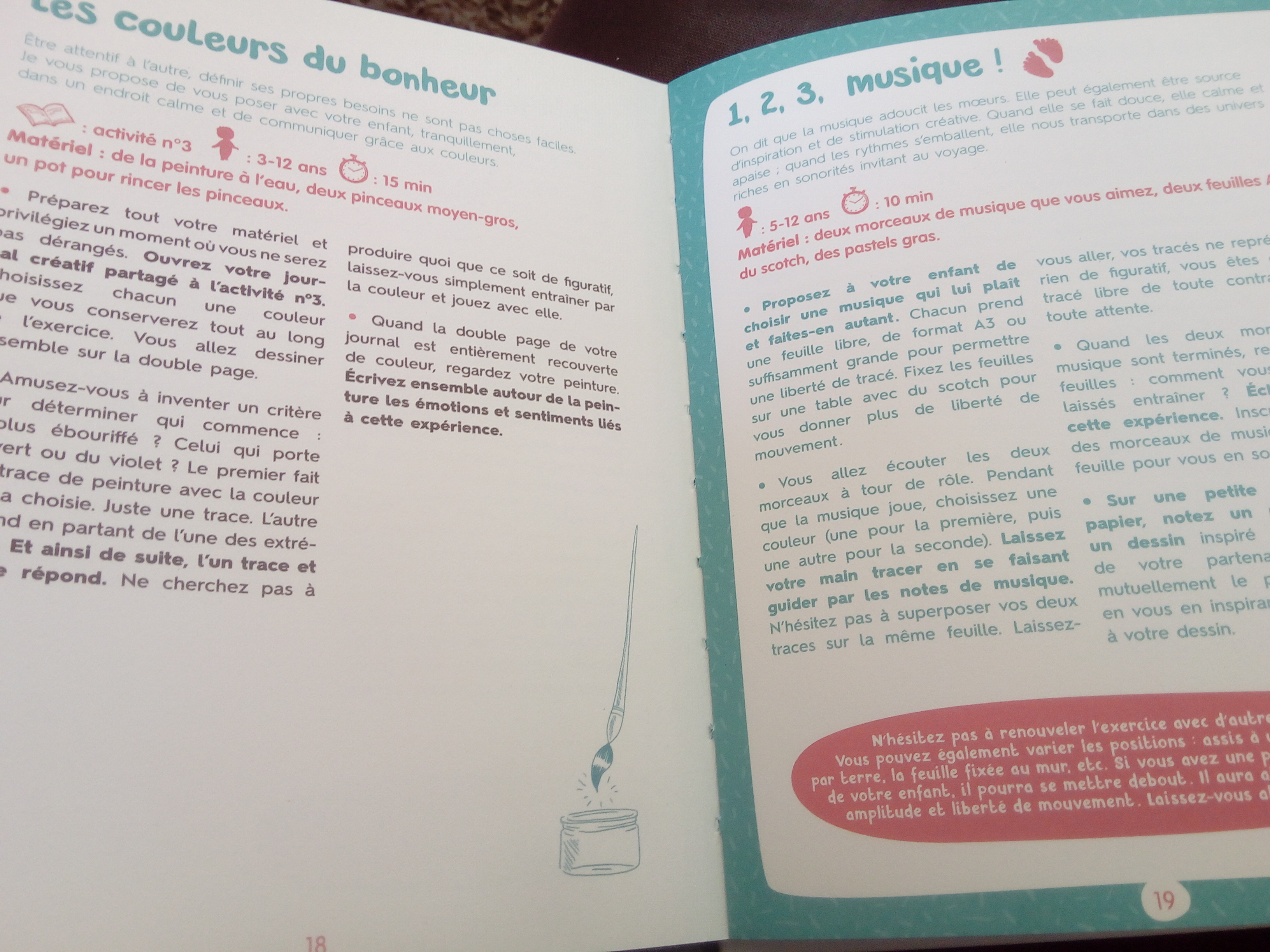
This parent-child creative journal is made for reconnection, and it gives adults and children room to let certain emotions out. It is organised in two parts: the first explains the activities and speaks to the parent, while the second offers blank double pages, one side for the adult and one for the child, with short prompts recalling what each activity is for.
The activities are simple and often close to nature, such as going out to observe the stars or drawing a landscape outside, and they need very little material: felt pens, pencils, paint, a few natural finds. They invite contemplation, emotional exchange and authentic conversation, and they work because you draw, create or invent together or side by side.
Setting it up so it actually happens
Keep the journal visible, choose a weekly slot and let the child pick the page. Creative work of this kind also supports fine motor control, so it sits naturally alongside help child write advice, and it pairs well with the routine-building ideas in household chores responsibility.

How to choose the right gift for your dad
Match the gift to the child's age first: a picture book suits toddlers and early readers, the card game works from the moment a child can answer a question out loud, and the journal needs a child who can hold a pencil. Then match it to the father's temperament, because a dad who dislikes performing will prefer the quiet journal to a party game.
Finally, think about the setting. A gift that lives in the living room gets used; one that stays in a cupboard does not. If you are shopping for several family members at once, teenager gift ideas and Easter basket toys show how the same logic of shared use applies to other occasions, and classroom prize toys is useful when you need small extras for siblings.

Making the moment last beyond Father's Day
A gift creates a bond only if it comes back out of the box. Decide in advance when you will use it: a book at bedtime, cards on Sunday afternoons, a journal page each weekend. Write it on the calendar, because a shared ritual survives far better than a good intention.
Involve the child in the choice too, since a present they helped pick is a present they will ask to use. And keep the tone light: the goal is connection, not performance. If you are building a family reading and playing routine, 10 Best Transformers Toys Reviews and 10 Best Toy Stores can help you find the next item on the list without guesswork.





My hands-on take
I have tried all three formats over the years, and the one that surprised me most was the card game. My youngest could not sit still for a board game, but answering a single question in two minutes was short enough to hold her attention and long enough to produce something we still quote months later. We keep the box in the car door pocket, and it has rescued more than one long drive.
The journal took more discipline, because it is easy to forget. What worked was leaving it open on the kitchen table with the pencils already out, so the page was simply there when we had ten quiet minutes. My advice is to start with one activity you can do outside, since drawing a landscape together asks nothing of you but attention, and that is usually the part dads enjoy most.
Frequently asked questions
Which of these gifts suits a very young child?
The picture book is the safest choice, because a toddler can follow the images and the rhythm of a read-aloud long before reading alone. The card game can wait until the child can answer a question out loud.
Do these gifts require a big budget?
No. All three are inexpensive, and the journal in particular needs only pens, pencils and a few natural finds. The value comes from the time spent using them, not from the price.
What if the father is away for work or travels often?
The small card game travels easily and can be played over a video call, and the journal can be filled in during visits. A book read aloud on a call also works well for short, regular contact.
Can siblings join in?
Yes, especially with the card game, which is designed for the whole family. For the journal, give each child their own copy so the one-to-one time stays genuinely one-to-one.
Product Reviews
 Best Toys for Dogs With High Prey Drive |
Best Outdoor Toys for 3-4 Year Olds |
Best Outdoor Toys for 6 Year Olds |
Best Harness for Poodle |
Best LEGO Sets for Adults |
Best Travel Toys for 4 Year Olds on Airplane |
Best Toy Stores in Washington DC |
Best Potty Training Toys |
Best Toys for Tripod Dogs |
Maillot equipe de france







