


Creative writing tools for kids can turn a blank page into a game, and that is exactly what this small toolkit of storytelling aids sets out to do. Instead of asking children to sit down and produce a story from nothing, these materials give them images, prompts and structures to build on.
Used together, they cover the whole craft of writing a story: describing a landscape, a character or a period, moving the plot forward coherently, anchoring the tale in time and place, enriching vocabulary and feeding the imagination with starters and themes.

Some of the tools work best for speaking first, others for building descriptions or linking events logically. Below is how each one fits, and how to combine them at home.
Quick takeaways
- Storytelling dice build shared stories and spoken language before writing.
- A story box develops description, plot and point of view through play.
- Picture books teach logical and time connectors that hold a story together.
- Short, regular writing sessions beat long occasional ones.
- Rotate tools and prompts so children stay curious.
- Read finished stories aloud to give writing a real audience.
Storytelling dice to spark imagination
Storytelling dice are a cooperative game with no winner and no loser. One or more players roll the dice, and the first player picks one die and places it in front of them: the picture shown becomes the opening of the story. There is no right or wrong choice; you simply pick the image that inspires you most.
The player to the left then takes another die, keeps the same face, and continues the previous player's image, and so on around the table. Bit by bit, the group builds a shared story. Speech therapists, teachers of children learning a foreign language and primary school teachers use these dice to support spoken language and vocabulary growth.
Grammar and vocabulary variations
You can roll one die and find as many synonyms as possible for the picture, words from the same family, or free associations. Limiting the roll to two or three dice invites players to build one coherent sentence from the images; harder variants impose a tense, a foreign language, or a noun-verb-adverb structure. The same dice can then feed written work. Suitable from around four or five years old, they sit comfortably alongside other toys for four year olds in a family collection, and they pair well with the best toys too.

A story-building box for young writers
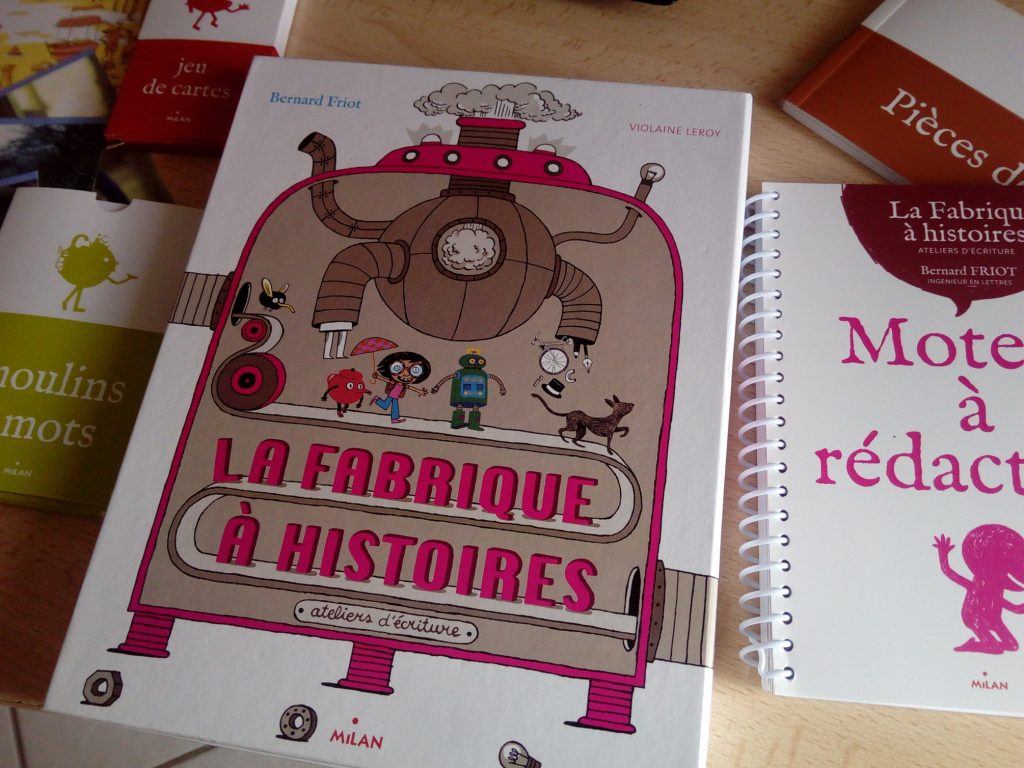
A well-designed story box is an ingenious book-and-box set, a genuine toolkit for exercising the imagination, inventing stories and getting started with writing. Its contract is simple: set children's imaginations in motion, encourage them to write, and let them take part in creating a story while having fun.
A notebook gathers writing workshops, and each workshop calls on "tools" physically offered to the child: a card game, a board, word mills, a reality reservoir, a character catalogue and more, all in a magnetically closing box. Every workshop comes with a story written by the author to illustrate the activity, which draws children into writing without the feel of school exercises. Like the playful what happens after the story, it invites children to imagine what comes next.
What is inside the box
The contents include a drafting engine (step-by-step proposals for building a story), a catalogue of characters, places and situations, a card game for overturning situations, sample texts, a board for moving characters through a setting, a reservoir of postcards and photos, detachable pieces and a word mill for dialogue and registers of language. As with the things you should not say to a mother, the right words matter.

| Tool | Main skill | Best for |
|---|---|---|
| Storytelling dice | Imagination, spoken language, vocabulary | Ages 4-5 and up, groups |
| Story-building box | Description, plot, characters | Ages 7 and up, solo or pairs |
| Picture book on connectors | Narrative structure | Ages 6 and up, read-aloud |
| Prompt book | Regular practice, starters | Ages 8 and up, weekly routine |
| Board and cards | Setting, dialogue, twists | Mixed ages, family sessions |
Working on description and plot
This box works more specifically on description: a landscape, a place, a character's appearance or personality. It also covers the elements of a narrative, such as telling the end of a story from images that show the beginning, making characters speak, or imagining what happens to a character in a given setting.
The drafting engine is the main element, because it acts as an activity notebook for building a story step by step and pulling every ingredient from the other tools. Activities cover themes children love: two images for the start and end with the middle to invent, silly text openings to complete, characters to describe, or changing the point of view to tell the same story again.
For quieter afternoons, pair the box with simple educational toys for threes and up, since the picture-based activities adapt well to younger siblings who cannot yet write. A German Shepherd dog in the house is no obstacle either; the box is compact and easy to pack away after a session.
Connecting events with linking words
A picture book about adopting a dragon is a clever way to work on narrative structure through logical and spatio-temporal connectors. Children see how "first", "then", "because" and "suddenly" hold a story together, and they can reuse those words in their own writing.
Read it once for pleasure, then again asking your child to spot the connectors. Write them on a strip of paper and keep it on the desk as a reminder during writing sessions. This kind of scaffolding matters as much as the toys themselves, in the same way that everyday time with our children builds the memories they carry forward.
If a child is tired or unwell, keep sessions short; even a minor child's ear pain can derail concentration, so read aloud instead of asking for writing that day.

Writing prompts for regular practice
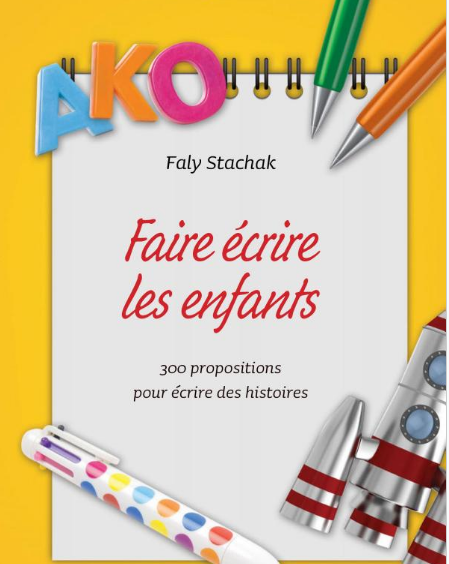
A book of writing ideas for children supplies starters for recurring writing work, in which the skills gained through play can be reused. Short, regular sessions beat long occasional ones: ten minutes of writing three times a week builds fluency faster than a single weekly marathon.
Keep a notebook for finished pieces and date each one, so your child can see progress over the year. Rotate the tools so the same prompt is not exhausted: dice on Monday, the story box on Wednesday, a free starter on Friday. Children who feel pressured often resist, so offer choice wherever you can.
Some families find a simple computer helpful once writing takes off, as discussed in whether a computer helps at five years old. Others prefer paper only. Either way, celebrate the story, not the spelling, in the first draft.
Building a writing routine at home
The real value of this kit is complementarity. Dice loosen the imagination and encourage speaking before writing; the story box develops description and plot; the dragon book teaches structure; the prompt book keeps practice regular. Together they cover the craft from several angles without repetition.
Set up a small writing corner with the tools within reach, a stack of paper and a few pencils. Invite siblings to join, since cooperative formats work well with mixed ages. If you are choosing gifts, these items sit naturally beside classic toys for one year olds and older children's games on the same shelf.
Finally, read your child's stories aloud at dinner. An audience is the strongest motivation of all, and it costs nothing.

My hands-on take
In our house, the dice were the breakthrough. My eldest refused to write anything longer than a sentence, but rolling a few dice and telling a story around the table changed the mood completely. Once the story existed out loud, writing it down felt like a small step rather than a wall.
What I learned is to keep sessions short and stop while it is still fun. We keep the box on a low shelf so the children can choose it themselves, and I write alongside them in my own notebook. That shared table time did more for their writing than any instruction I gave.
Frequently asked questions
At what age can children start with storytelling dice?
From around four or five years old, with an adult helping to shape the story. Younger children can simply name what they see on the dice before building sentences.
Do these tools replace school writing work?
No, they complement it. They make writing feel like play, which builds confidence that carries over into classroom exercises.
How often should we use them?
Little and often works best. Two or three short sessions a week keep motivation high without turning writing into a chore.
Can several children use the same kit?
Yes, most formats are cooperative and suit mixed ages. Older children can write while younger ones tell their part aloud.
Product Reviews
 Best Toys for Dogs With High Prey Drive |
Best Outdoor Toys for 3-4 Year Olds |
Best Outdoor Toys for 6 Year Olds |
Best Harness for Poodle |
Best LEGO Sets for Adults |
Best Travel Toys for 4 Year Olds on Airplane |
Best Toy Stores in Washington DC |
Best Potty Training Toys |
Best Toys for Tripod Dogs |
Maillot equipe de france







