


Concept Kids Animals is a cooperative board game that invites children to discover the animal world while thinking together as a team. Instead of competing, players combine their wits to describe and guess creatures using a big board of simple pictograms.
It works for a wide age range, needs no reading and no timer, which makes it a calm yet stimulating option for rainy afternoons, family gatherings or quiet play between siblings. Here is how the game works and why it earns a place on the shelf.

Quick takeaways
- Cooperative game: the whole team plays together and shares one score.
- Players describe animals by placing markers on pictograms.
- Two decks: common animals in blue, rarer ones in red.
- No timer, which suits children from around four years old.
- Real and imaginary animals keep the guessing varied.
- Rules are simple enough for children to play without an adult.
What Is Concept Kids Animals?
Concept Kids Animals is a cooperative guessing game built around a large board covered in pictograms, a deck of animal cards and transparent coloured markers. The goal is simple: make the other players guess the animal shown on a card by placing markers on the pictograms that describe it.
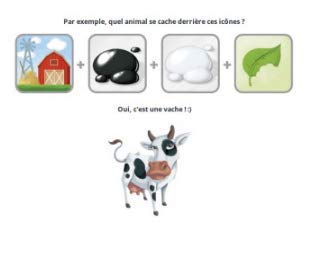
Each pictogram represents a characteristic of the animal world, such as habitat, diet, fur colour, speed, physical features like claws, a beak or scales, and even a gentle-or-fierce feel. For example, a child who draws the cow card can mark the farm, the black and white colours and the herbivore symbol.
A game that runs on thinking, not luck
Children genuinely have to reason about how best to describe their animal so the others guess it easily. That quiet mental effort is the heart of the game, and it is why it fits naturally alongside other learning toys that reward thinking rather than chance.

How a Round Works
One player draws an animal card and places markers on the board to describe it, while everyone else tries to name the animal. The team scores one point for each card guessed correctly across twelve draws, and the aim is simply to reach the best collective score.
Because the game is fully cooperative, there is no winner and no loser: the player puzzling over the pictograms and the players interpreting them are on the same side. That shared effort creates a pleasant intellectual buzz, and children often start discussing which clues are the most relevant, much like comparing notes after a round of outdoor toys.
No clock, no pressure
There is no time limit, which makes the game perfectly suited to children from around four years old. In a group mixing ages, the youngest can take their time without feeling rushed, and older children naturally step in to help. It is the same relaxed spirit you find when making Christmas nougat.
| Feature | Detail | Why it matters |
|---|---|---|
| Playing mode | Cooperative team play | No winners or losers, less pressure |
| Age range | Roughly 3 to 10 years | One box serves siblings of different ages |
| Blue deck | Common, well-known animals | Easy starting point for younger children |
| Red deck | Less familiar animals | Extra challenge for older players |
| Timer | None | Children can think at their own pace |
Two Decks, Two Levels of Difficulty
The game includes two decks so it can grow with the players. The blue deck holds common animals that most children already know, while the red deck features less familiar creatures for a bigger challenge. Animals can be real, like a bee or a ladybug, or imaginary, like a unicorn or a dragon.
This flexibility means one box can serve a three-year-old and a ten-year-old in the same session. The pictograms and cards are clear and explicit enough that children grasp the rules quickly, often without an adult explaining much at all.
Adaptable to any group
Rules can be adjusted for cooperative play between adults and children, or just between children. That adaptability is a real asset when you are choosing open ended toys that need to work for several siblings at once.

Why It Works So Well With Children
Beyond the fun, the game really makes children think and encourages them to talk together about which clues matter. Describing an animal forces them to organise what they know, which is valuable language and reasoning practice in disguise.
It also travels well between settings. A single box keeps a mixed-age group happily occupied, much like a good set of outdoor toys keeps everyone busy in the garden, except this one works just as well at the kitchen table on a wet day.
A calm option for group play
Not every child enjoys fast, competitive games, and some are shy about speaking up in a group. A cooperative format gives quieter children a comfortable way in, similar to how team sports can help children build confidence, as explored in overcoming shyness.

Practical Tips for Family Play
Start with the blue deck for younger players and introduce the red deck once they know the pictograms well. Let the child holding the card place the markers themselves, even if the clues seem odd at first, because the reasoning is the point.
Keep sessions short and stop while everyone is still enjoying it. If you have a house full of games already, it may be worth reading about how to keep toys organized so the box does not get lost in the pile. A weekend away can also help, so consider rural houses near Barcelona for a change of scene.
Choosing games for a mixed-age group
When you are picking gifts for a household with several children, look for games with adjustable difficulty and no reading requirement. The same logic applies when you compare birthday gift toys for a five-year-old boy, since a game the whole family can join gets far more use than a solo activity. For younger siblings, browse educational toys under $50 that grow with them.


My hands-on take
I first played this over a rainy weekend in a rented house full of friends and children, with four kids ranging from eighteen months to nine years old. The board came out on the table and, within minutes, the three-and-a-half-year-old, the five-year-old and the nine-year-old were running it entirely by themselves.
What struck me most was the conversation it sparked. Rather than arguing over turns, the children were debating which pictograms best described a dragon or a ladybug, and the older ones quietly guided the youngest. It has become the game I reach for when I want something calm that still gets everyone thinking.
Frequently asked questions
What age is Concept Kids Animals for?
It is designed for children from around four years old, though younger children can join with help. Because there is no timer and the rules are simple, it also works well for older siblings up to about ten.
Is the game competitive or cooperative?
It is fully cooperative. The player describing the animal and the players guessing are on the same team, and the group tries to score as many points as possible over twelve cards.
Do children need to read to play?
No. The game relies on pictograms and animal illustrations, so pre-readers can take part. Clear symbols let children understand the rules quickly on their own.
Can adults play too?
Yes. The rules can be adapted for adults and children playing together, or for children playing alone. It is a genuine family game rather than a child-only activity.
Product Reviews
 Best Toys for Dogs With High Prey Drive |
Best Outdoor Toys for 3-4 Year Olds |
Best Outdoor Toys for 6 Year Olds |
Best Harness for Poodle |
Best LEGO Sets for Adults |
Best Travel Toys for 4 Year Olds on Airplane |
Best Toy Stores in Washington DC |
Best Potty Training Toys |
Best Toys for Tripod Dogs |
Maillot equipe de france







