


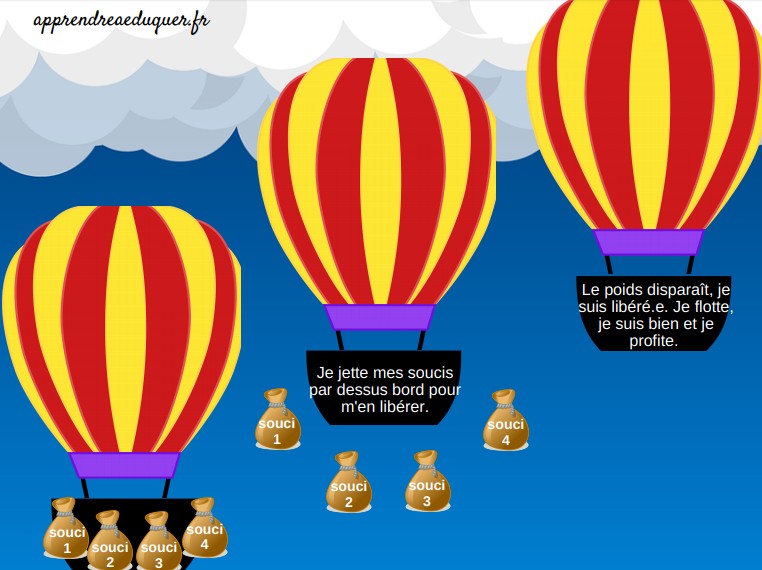
The worry balloon is a gentle tool that helps children become aware of the worries and thoughts that weigh on them so they can set them free. The image is simple: a hot-air balloon held to the ground by sandbags, and those sandbags stand for the child's worries and fears.
To make the balloon take off, children toss the bags, their worries, overboard and notice the relief this brings as the balloon rises into the sky. The activity works best when paired with a calm visualization that supports letting go and a sense of well-being.

Quick takeaways
- The balloon is held down by sandbags that stand for your child's worries.
- Throwing each bag overboard shows, in a concrete way, what letting go feels like.
- A calm space and slow breathing set the stage before the story begins.
- The guided visualization moves from rising through the clouds to a gentle landing.
- The printable worksheet lets children write worries down and act them out.
- Follow your child's pace and never force eyes closed or full disclosure.
What the worry balloon represents
The tool gives children a concrete picture for something abstract. A beautiful red-and-gold balloon floats above the countryside, but heavy sandbags tied to the basket keep it from lifting off. Those bags are the metaphor for the child's worries and fears.
By imagining each bag being thrown overboard, the child experiences, in a safe and playful way, what it feels like to release a burden. The balloon grows lighter with every bag, and so does the child. This kind of symbolic play pairs naturally with sensory games that help children connect with their bodies and emotions.
Why a metaphor helps
Young children often struggle to explain what is bothering them. A picture they can see and touch makes the feeling easier to name, and naming is the first step toward managing it.
Setting up a calm moment
Before starting, choose a quiet place and a time when nothing will disturb the activity. Invite your child to close their eyes, without forcing it if they would rather keep them open. A predictable routine around rest also helps; if bedtime is a struggle, these tips on child sleep can support the same calming atmosphere.
Then guide your child to focus on their breathing: breathe in slowly while counting to three, breathe out slowly while counting to three, and notice the belly swelling on the in-breath and softening on the out-breath.
Continue breathing slowly and deeply together. Your own calm voice and steady pace do much of the work, so there is no need to rush the setup.
| Step | What you do | What your child does |
|---|---|---|
| Prepare | Choose a quiet place and time | Settles in, no distractions |
| Breathe | Count to three in and out | Notices the belly rising and falling |
| Imagine | Tell the countryside story | Pictures the balloon and sandbags |
| Release | Guide the throwing of bags | Lets each worry go overboard |
| Return | Lead the gentle descent | Takes three breaths, opens eyes |
| Extend | Offer the worksheet | Writes worries, imagines lifting off |
Guiding the visualization story
Once your child is settled, tell the story slowly. Imagine a beautiful spot in the countryside on a sunny day with a blue sky, the warmth of the sun on the cheeks, a light breeze in the hair, the smell of flowers and grass, and birds singing.
In the distance sits a hot-air balloon, held to the ground by sandbags attached to the basket. The child walks closer and climbs in. The bags are heavy and keep the balloon from taking off, just as worries keep the child from feeling light and well.
Invite your child to place their worries, fears, anxieties and stress into the bags, close them tightly, and throw each one overboard. With every bag, the balloon rises a little higher, and the child feels freer, almost as if flying. Storytelling like this fits naturally alongside cartoon lessons that help children process big feelings.
Rising through the clouds and coming back down
When all the bags are gone, the child feels completely released and at peace. The balloon drifts through the clouds and passes birds that greet them and smile, and the child smiles back. Higher still, the landscape below becomes clear and calm, seen with more clarity than before.
Let your child enjoy that feeling of freedom and well-being for a moment, floating and feeling serene. Then, when they are ready, they can begin the descent, letting the wind carry the balloon gently back to earth.
They land still holding that sense of calm, take three big breaths, and open their eyes. If your child enjoys imaginative journeys, travel toys can extend the playful, exploratory mood afterwards.
Using the printable balloon worksheet
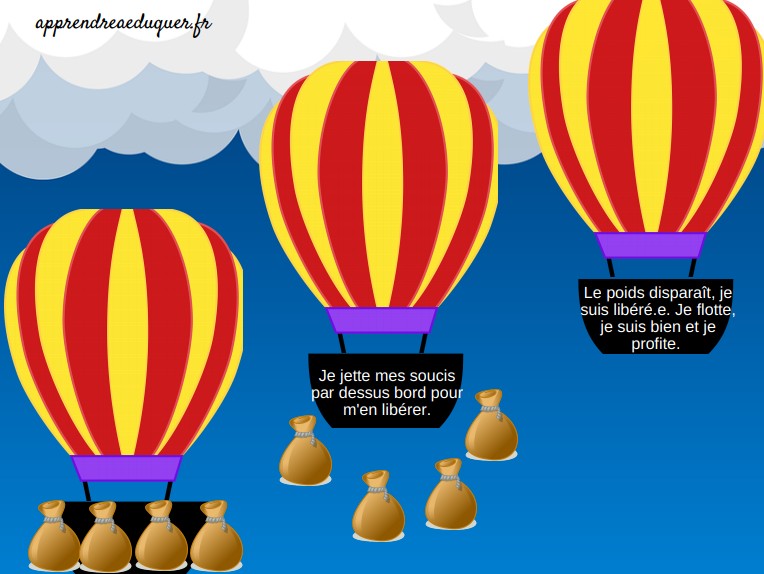
The blank worry balloon worksheet lets children move from imagination to action. They write their worries inside the sandbags and picture themselves throwing each one to the ground so the balloon can rise. Combining the written tool with the positive visualization helps them let go and move past their anxiety.
Keep the worksheet nearby for repeat use; some children like to draw or colour the balloon as they talk. Pairing the exercise with Montessori toys that encourage calm, focused hands-on play can reinforce the same reflective mood.
Making it part of the routine
A short session after school or before bed works well. Over time, the balloon becomes a familiar language your child can use to signal that something is weighing on them.
Tips for a supportive experience
Follow your child's pace and never insist on eyes closed or on sharing every worry. Some children will want to keep one bag private, and that is fine. A relaxed, curious tone matters more than finishing the whole story.
If worries come up often, keep the conversation open and reassuring. Everyday routines, from tooth brushing to packing a baby luggage list for trips, show children that small steps and preparation bring a sense of control.
For families juggling many demands, protecting a few quiet minutes matters. Even busy parents working from home with a baby or toddler can borrow the balloon idea for a short midday reset.

My hands-on take
I first tried the worry balloon with my own child on a evening when bedtime had turned into a long negotiation. Instead of asking what was wrong, I simply told the story slowly and let them picture the sandbags. What struck me was how quickly the tone shifted: no big confession, just a quieter voice and a few deep breaths.
Since then, we keep the printed balloon on the fridge. Sometimes my child fills in one bag and says nothing more, and that is enough. I have learned to offer the activity without pressure and to let silence do part of the work. It has become one of those small rituals we return to whenever the day feels heavy.
Frequently asked questions
What age is the worry balloon suitable for?
It works best with children old enough to follow a short story and picture images, though the metaphor can be simplified for younger ones. Adapt the length and wording to your child.
Does my child have to close their eyes?
No. Closing the eyes is an invitation, not a rule. Some children visualize better with eyes open, looking at the worksheet or a picture.
How often should we do this?
There is no set schedule. Some families use it after school or before bed, while others bring it out only when a child seems weighed down.
What if my child does not want to share their worries?
That is completely acceptable. The exercise is about releasing, not confessing, and a child can keep a worry private and still imagine letting it go.
Product Reviews
 Best Toys for Dogs With High Prey Drive |
Best Outdoor Toys for 3-4 Year Olds |
Best Outdoor Toys for 6 Year Olds |
Best Harness for Poodle |
Best LEGO Sets for Adults |
Best Travel Toys for 4 Year Olds on Airplane |
Best Toy Stores in Washington DC |
Best Potty Training Toys |
Best Toys for Tripod Dogs |
Maillot equipe de france







