


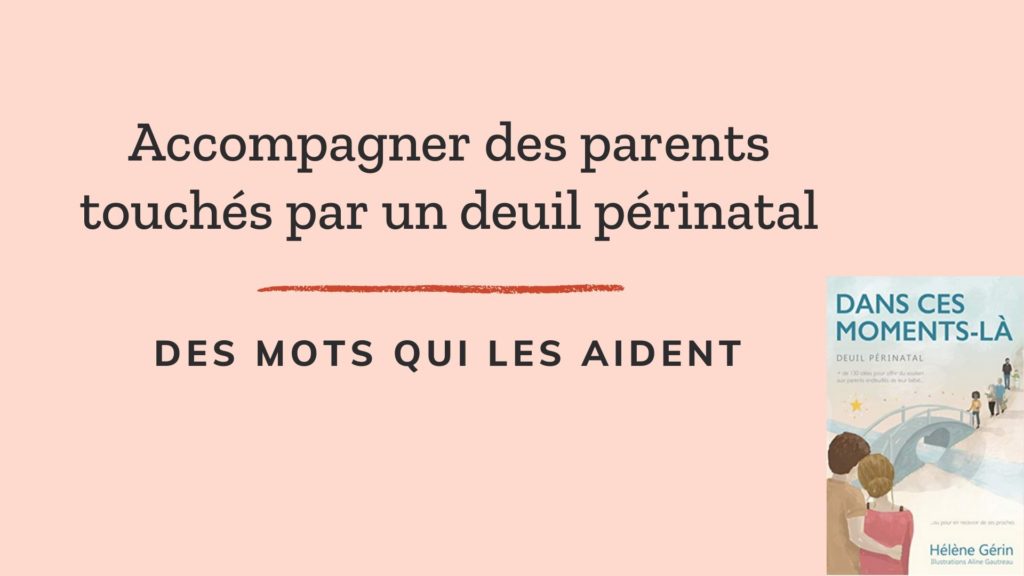
Perinatal grief support begins with words, and the words you choose can either ease a parent's pain or add to it. When a baby dies before or shortly after birth, families carry a loss that many people around them do not know how to acknowledge. Hélène Gérin, author of a book of tools and ideas for parents touched by perinatal bereavement, points out that some well-meant phrases only deepen the initial sorrow.
Comments like "you're young, you'll have another" or "you barely knew them, you didn't have time to bond" are clumsy and hurtful, even when spoken with kindness. Gérin instead offers a set of around thirty helpful phrases, shared in a video on her Facebook account, that acknowledge the baby, the parents' feelings and the reality of grief.

This guide translates those ideas into practical support you can offer, from the first conversation to the small daily gestures that help a family feel less alone.
Quick takeaways
- Name the baby and ask about them; it shows the child mattered.
- Avoid "you're young, you'll have another" and similar phrases.
- Offer to listen without pressure, and let the parent lead.
- Say sorry if you stayed silent; honesty reopens the door.
- Make concrete offers like a meal, with an easy way to decline.
- Remember anniversaries and check in months later.
Words that hurt and words that help
Gérin reminds us that certain phrases are clumsy and add pain to the initial pain. Telling a parent they are young and will have another child, or that they hardly knew the baby, dismisses a real loss and a real attachment. Even when intentions are good, these comments suggest the grief should be smaller than it is.
Helpful words do the opposite: they name the baby, invite the parent to speak, and give permission to feel. A simple question like "was it a little girl or a little boy?" or "did you want to give them a name?" treats the child as a person worth remembering. If you are also navigating the practical side of early parenthood, our newborn enjoyment tips can sit alongside this gentler approach.
Why wording matters
Grief after baby loss is often invisible to others, so the words a friend uses become proof that the child existed. That is why an invitation to talk, rather than advice, is usually the most comforting thing you can offer.
Invitations to talk about the baby
One of the most helpful phrases Gérin suggests is simply: "If you want to talk to me about your child, I'm ready to listen." It puts no pressure on the parent and signals that the baby is not a forbidden subject. Another is "I'd like to know your baby. Tell me about them," which lets the parent share memories, a name, or small details.
Asking about the child by name, or asking whether they would like to light a candle together for the baby, keeps the memory present in everyday life. This mirrors the way we gently keep other conversations open with children, as in our baby sign guide where naming things helps them feel understood.
Let them lead
Some parents want to talk constantly; others stay silent for weeks. Offering the invitation without demanding an answer respects both. When a family also has older children, books can help siblings process big feelings, much like our books about democracy show how stories open difficult conversations.
| Situation | Helpful phrase | Phrase to avoid |
|---|---|---|
| First conversation | Was it a little girl or a little boy? | You barely knew them |
| Offering to listen | If you want to talk about your child, I'm ready | You'll have another child |
| Acknowledging feelings | It's normal to be angry; you're not crazy | You should be moving on |
| Explaining your silence | I'm sorry I didn't reach out sooner | I didn't know what to say, so I said nothing |
| Practical help | I'll bring a meal tomorrow; no need to reply | Let me know if you need anything |
Allowing the grief to take its time
Gérin's phrases include a reminder that "grief doesn't happen in a day" and that the parent has the right to be sad and to cry as much as they need. She also normalises anger and feeling lost: "It's normal to be angry and to lose your footing. You are not crazy."
This permission matters because grieving parents often feel they should be recovering faster than they are. Acknowledging that there is no timetable removes one more source of guilt. If you are supporting a parent who is also recovering physically, our sciatica in pregnancy article explains why the body needs care too.
Small daily gestures
Practical offers carry weight when words fail. Gérin suggests saying "I'd like to call you or bring you a meal tomorrow evening. You don't need to reply, unless you'd prefer I didn't." This removes the burden of answering while still giving the parent control. A postpartum doula can offer similar hands-on support in the weeks after loss.
Apologising for silence and showing up
Many friends disappear after a loss because they do not know what to say. Gérin offers a phrase for exactly this: "I'm sorry I didn't reach out sooner. I didn't know how." It is honest, and it reopens the door without excuses.
Showing up does not require perfect words. It can mean sending a message on a hard anniversary, remembering the baby's name, or simply sitting with the parent. Our parental love unconditional piece reminds us that love does not need to be earned, and the same is true of friendship in grief.
Keeping the door open
Grief does not follow a calendar, so the friends who check in months later, when others have moved on, are often the ones who help most. A short note saying "I'm thinking of you and [name] today" can mean everything. For families with other children at home, keeping routines gentle helps, much like the balance we describe in children's holiday enthusiasm.

Supporting siblings and the wider family
When a baby dies, parents are not the only ones grieving. Brothers and sisters may feel confused, frightened or forgotten, and they need simple, honest explanations. Gérin's approach of naming the child and speaking openly can be adapted for siblings, using clear words rather than euphemisms.
Keeping some familiar routines, like baking together or reading a story, gives children a sense of safety. A simple activity such as our stained glass cookies recipe can create a calm moment for the whole family. For parents managing the emotional weight of a new baby, our pregnancy and fever guidance shows how worry and care often sit side by side.
Looking after yourself too
Supporting a grieving family is draining. It is fine to admit you do not have the answers, to ask another friend to share the load, and to seek support for yourself. The goal is not to fix the grief but to make sure the family does not carry it alone.

My hands-on take
When a friend of mine lost her baby, I froze. I sent a short message saying I was sorry and that I did not know what to say, then I stayed quiet for weeks because I was afraid of making it worse. Eventually I wrote again, apologised for the silence, and asked if she wanted to tell me about her daughter. She did, for a long time, and she later told me that being asked her name was the first time someone had treated her as a mother rather than as a person who had lost something.
What I learned is that the perfect phrase does not exist, but presence does. Bringing a meal, remembering a date, or simply sitting beside someone without filling the silence does more than any carefully crafted sentence. If you are unsure, say so honestly and stay.
Frequently asked questions
What should I say to a parent after a perinatal loss?
Start with the baby. Ask their name, whether they were a girl or a boy, and whether the parent would like to talk about them. Offer to listen without pressure rather than giving advice.
Which phrases should I avoid?
Avoid comments that minimise the loss, such as "you're young, you'll have another" or "you didn't have time to bond." They suggest the grief should be smaller than it is and add pain to the initial pain.
How can I help practically?
Make a specific offer, like bringing a meal tomorrow evening, and give the parent an easy way to decline. This removes the burden of answering while still giving them control.
Is it too late to reach out if I stayed silent?
No. A simple apology such as "I'm sorry I didn't reach out sooner, I didn't know how" is honest and reopens the door. Checking in months later, when others have moved on, often helps most.
Product Reviews
 Best Toys for Dogs With High Prey Drive |
Best Outdoor Toys for 3-4 Year Olds |
Best Outdoor Toys for 6 Year Olds |
Best Harness for Poodle |
Best LEGO Sets for Adults |
Best Travel Toys for 4 Year Olds on Airplane |
Best Toy Stores in Washington DC |
Best Potty Training Toys |
Best Toys for Tripod Dogs |
Maillot equipe de france







