


Gentle parenting burnout is real, and it deserves to be named. Many parents, and mothers in particular, find that the gentle approach they chose with such good intentions slowly turns into a source of exhaustion. The pressure to stay kind, calm and patient at every moment adds a layer of stress that nobody warned them about.
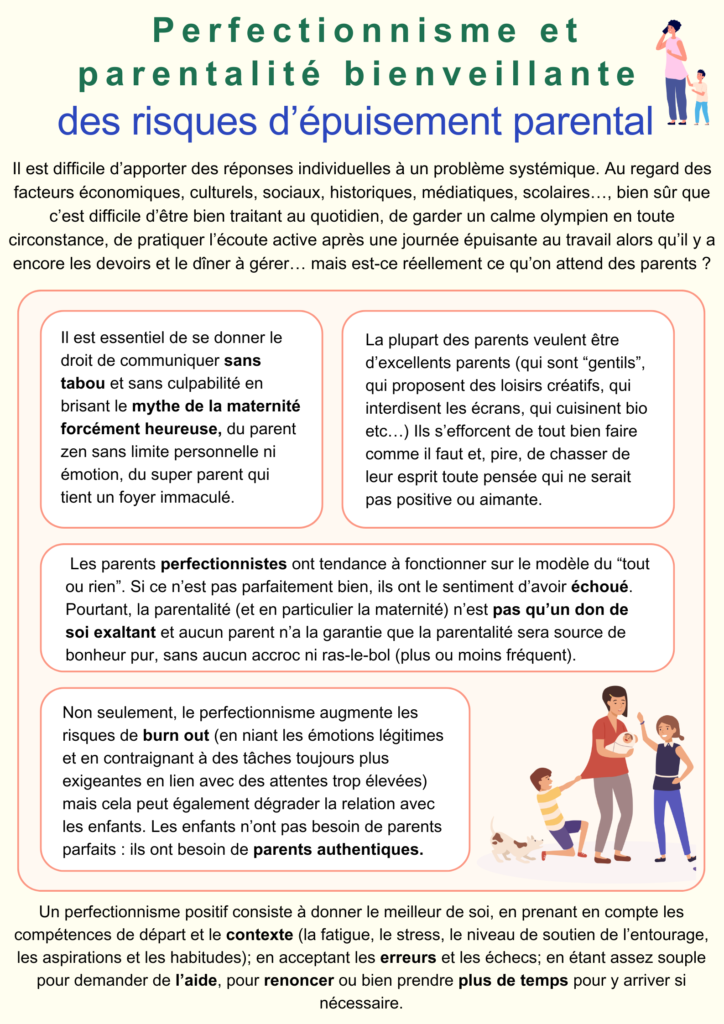
Part of the problem is perfectionism. Most people sit somewhere on that continuum, and parenting gives perfectionism a perfect stage. When kindness is mistaken for constant patience, every human slip feels like failure, and guilt moves in quickly.

This article looks at why gentle parenting can drain you, what perfectionism has to do with it, and how to set expectations you can actually live with.
Quick takeaways
- Gentle parenting is not the same as endless patience or sainthood
- Perfectionism can be situational or a stable personality trait
- The pressure to always be kind creates stress and guilt
- Parental burnout has no miracle cure and recovery takes time
- Naming the problem makes it easier to ask for help
- Stepping away from comparison-driven media protects your energy
Why Gentle Parenting Can Become Exhausting
Gentle parenting asks parents to stay attuned to their child's emotions, which is valuable work but also demanding work. When that approach is understood as a duty to be endlessly kind and patient, it stops being a tool and becomes a performance. Parents then feel guilty whenever they cannot maintain that constant benevolence.
The confusion matters. Gentle parenting is not the same as sainthood, and no one is asking parents to become Buddhist monks. Haïm Ginott, a pioneer of positive parenting in the 1960s, put it plainly: don't be parents, be humans who are parents. He advised against playing a role or hiding emotions, whether to appear as the "nice parent" or to hold firm principles.
That advice still holds. Hiding what you feel to protect an image costs energy, and that energy has to come from somewhere. Over months, the bill arrives as fatigue.
Perfectionism and the Pressure to Always Be Kind
Most people sit somewhere on the continuum of perfectionism. When the goal is to hide emotional wounds, protect an image or identity, or prove you are better than others to feel worthy, everyone plays the impostor to some degree. Parenting offers endless chances to do exactly that.
The implicit pressure to be always gentle creates extra stress, and guilt follows close behind when you fall short. For some people, perfectionism only appears in high-stakes moments or during vulnerable episodes. For others, it is a stable personality trait that colours every day.
Recognising which pattern is yours helps. A trait needs steady, compassionate management, while situational perfectionism can be spotted and interrupted before it takes over a whole week. Either way, the answer is not to lower your values but to make your expectations human-sized.
| Situation | What it may signal | A realistic response |
|---|---|---|
| Guilt after every sharp word | Perfectionism in high-stakes moments | Repair the moment, then move on |
| Constant exhaustion | Possible parental burnout | Talk to a doctor or professional |
| Comparing yourself online | Unrealistic expectations | Reduce social media input |
| Feeling you must never say no | Kindness confused with patience | Set calm, honest limits |
| Doing everything alone | Perfectionist mental load | Share tasks and accept help |
From Perfectionism to Parental Burnout
Some parents, and especially mothers, who commit to the gentle parenting path can suffer from perfectionism to the point of risking parental burnout. This is not a character flaw or a sign of weak commitment. It is what happens when the gap between the ideal parent and the real one grows too wide for too long.
There are no miracle cures, and recovering from parental burnout can take a long time. That honesty matters, because it protects parents from the next perfectionist trap: expecting recovery to be quick and tidy.
If you are preparing a nursery or choosing everyday gear while running on empty, keep decisions simple. Practical guides such as toys for newborns and best toddler toys can remove small daily frictions, and fewer decisions leave more room for rest.
Naming It and Asking for Help
Realising you are affected is what allows you to dare to talk about it, to close friends and family, to your doctor, or to mental health professionals. Naming the exhaustion out loud breaks the isolation that perfectionism quietly builds around a parent.
Practical support matters too. Sharing the mental load, accepting help with meals, and simplifying routines all reduce the pressure to hold everything perfectly. Small children notice calm far more than they notice a perfectly organised shelf.
It also helps to remember that your child's development does not depend on flawless parenting. Everyday learning, from learning to speak to the first toys for two year olds, happens in ordinary, imperfect moments. What children need is a present adult, not a perfect one.

Resetting Expectations and Protecting Your Energy
One way to avoid exhaustion and to reframe expectations so they become realistic is to step away from social media, TV shows, books and influencers that spread information which undermines you, parenting included. Curated feeds show edited lives, and comparison drains the confidence gentle parenting actually requires.
Choose your inputs deliberately. A toy store or a toy store can inspire gift ideas without selling you a fantasy of perfect family life. Likewise, a toys under $25 list keeps birthdays simple, and a best selling dolls overview helps you pick a present without hours of scrolling.
None of this makes you a lesser parent. It makes you a rested one, and rested parents find it far easier to be the kind adult their child needs.
Being Human Instead of Perfect
Gentle parenting works best when it leaves room for your own emotions. You can repair after a sharp word, name your frustration honestly, and show your child that feelings are manageable. That modelling is worth more than a spotless record of patience.
Family life also includes ordinary logistics, and keeping them light helps. Knowing how children's expenses are handled after a divorce, or planning a calm natural Europe trip with children, reduces background stress that feeds burnout.
Above all, treat yourself as you would treat a friend. The goal is not constant benevolence; it is a honest, sustainable relationship with your child, built on realistic expectations and permission to be human.

My hands-on take
I remember a stretch when I treated every impatient sigh as proof I was failing at this whole gentle parenting thing. I had built a picture in my head of the parent I should be, and the gap between that picture and my tired, real self was exhausting me more than my child ever did. What finally helped was small and unglamorous: I stopped scrolling parenting content late at night, I told my partner out loud when I was running on empty, and I let the house be messier than I wanted.
I also learned to repair instead of ruminate. When I snapped, I would come back and say, honestly, that I had been frustrated and that it was not my child's fault. Those short conversations did more for our relationship than any attempt at flawless patience. If you take one thing from this, let it be permission to be a human who parents, not a performance of one.
Frequently asked questions
Is gentle parenting supposed to be exhausting?
No. The approach itself is not the problem; the pressure to perform it perfectly is. When kindness is confused with constant patience, guilt and fatigue follow.
How do I know if I am heading toward parental burnout?
Persistent exhaustion, guilt after every imperfect moment, and a sense of isolation are common signs. If they last, speak to your doctor or a mental health professional.
Does stepping back from social media really help?
It can reduce comparison and reset expectations to something realistic. Fewer idealised images leave more room for your own judgement as a parent.
Can I be gentle and still show anger?
Yes. Hiding emotions to appear like the "nice parent" costs energy. Naming feelings honestly and repairing afterwards models something valuable for your child.
Product Reviews
 Best Toys for Dogs With High Prey Drive |
Best Outdoor Toys for 3-4 Year Olds |
Best Outdoor Toys for 6 Year Olds |
Best Harness for Poodle |
Best LEGO Sets for Adults |
Best Travel Toys for 4 Year Olds on Airplane |
Best Toy Stores in Washington DC |
Best Potty Training Toys |
Best Toys for Tripod Dogs |
Maillot equipe de france







