


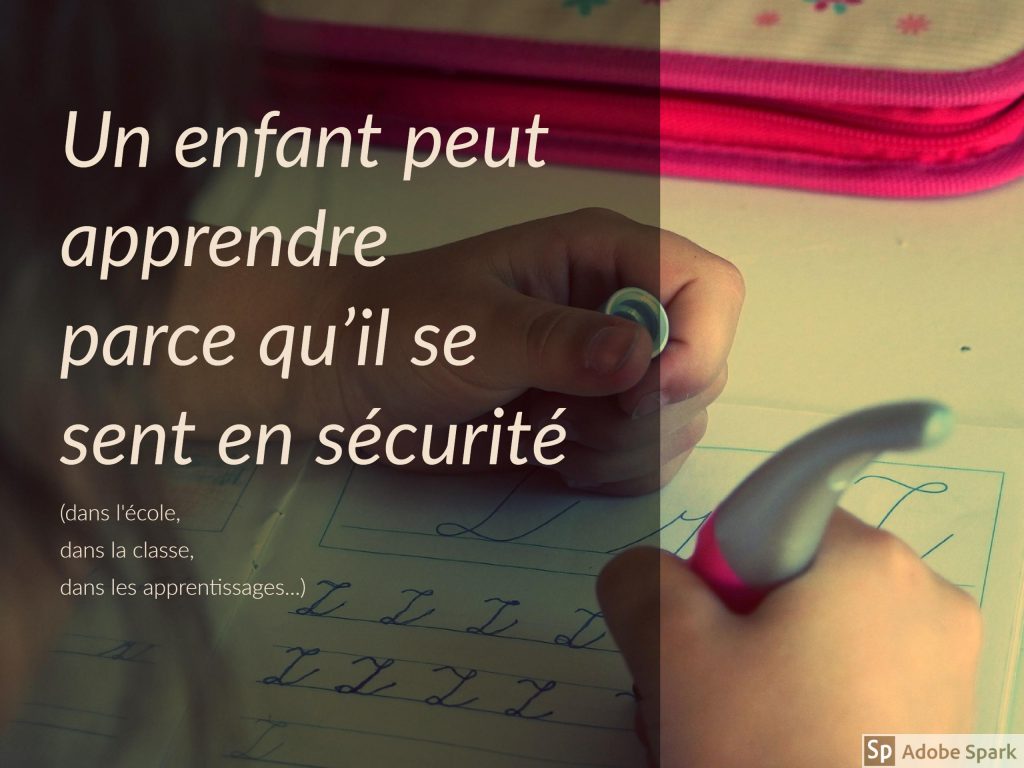
Emotional security is the quiet foundation of real learning: a child can learn because they feel safe, in the school and in the classroom. That safety makes learning effective, lasting and accessible to everyone, not just to those who already feel at ease at school.
This principle matters most where living conditions and relationships with school are difficult, sometimes conflictual or even violent. A secure setting does not remove those realities, but it gives children a stable base from which to face them.

Classroom practice inspired by Freinet pedagogy offers concrete answers: space for personal expression, a firm yet caring framework, and learning situations that protect children from fear of failure.
Quick takeaways
- Emotional security is the condition that makes lasting learning possible.
- Regular expression times let children unload worries and speak honestly.
- Firm, caring rules protect children physically and emotionally.
- The right to make mistakes turns errors into useful work.
- Help should be official, cooperative and never stigmatised.
- Stable routines let children take risks and engage in projects.
Why Feeling Safe Comes Before Learning
A child who is worried, frightened or preoccupied cannot give their attention to schoolwork. The brain stays busy watching for danger, so lessons slide past. Security is therefore not a soft extra: it is the condition that makes effective, lasting learning possible for every pupil.
This is especially true in settings where daily life is hard and where the relationship with school can be tense or even violent. In such contexts, a predictable classroom becomes a refuge. The goal is not to ignore difficulties but to build a space where children can set them down for a while.
Security is not permissiveness
A safe classroom is not a classroom without rules. It is a classroom where the rules are known, stable and applied fairly, so children know what to expect. That predictability is what allows them to relax and engage.
Making Room for Personal Expression
Children arrive with concerns that have nothing to do with the lesson. Giving them a legitimate outlet lets them unload at least part of that weight and express themselves honestly. Freinet-inspired practice uses several simple formats to connect this need for expression with school learning.
These include a “what's new?” sharing time, free writing, class councils and creative work. Each gives children a recognised moment to speak, rather than forcing them to stay silent until the bell. If you want to support expression at home too, small rituals such as accompanying from love help children name what they feel. Parents can also learn about the father's role in supporting that expression.
Expression also has a physical side. Children need to drink, move and walk about sometimes, and a classroom that allows these needs without drama removes a frequent source of tension. For expectant families, understanding sciatica in pregnancy can help parents stay comfortable too.
| Area | What it looks like | Why it helps |
|---|---|---|
| Expression | Sharing time, free writing, class councils | Children unload worries and feel heard |
| Framework | Visible schedules, stable routines, clear rules | Predictability reduces fear and conflict |
| Mistakes | Errors treated as work, no marks or ranking | Lowers stress and encourages effort |
| Help | Material reserves, signposting questions, peer support | Children act independently without shame |
A Firm and Caring Framework
The second pillar is a school environment that is genuinely secure, physically and emotionally. That means preventing violence and fear, since both disrupt work, while still allowing pupils to speak and to express their needs as children. Firmness and kindness are not opposites here; they work together.
Clear routines do a lot of this work quietly. When the organisation of the day is displayed publicly, when individual plans are visible and when routines repeat, children stop guessing. They know where to look and what comes next, which frees energy for learning.
Stable anchors for handling conflict
Conflicts will happen, so the framework needs known places to recognise and manage them, such as class councils. When those anchors are stable, the unexpected can be absorbed without threatening the whole. This is also where everyday parenting habits matter, for instance how we reward good actions without turning behaviour into a transaction, much like the timeless Rubik's cube teaches patience through steady practice.
Securing Learning Itself
The most important work is to make learning situations themselves safe. The first tool is the right to make mistakes: an error becomes an interesting, legitimate object of work rather than a verdict on the child. Evaluation then functions as observation and guidance, not as a sentence, with no marks or ranking and much less stress.
Help is the second tool, and it comes in several forms. Material help includes a reserve of instruments for forgotten equipment, clear labelling of everything available in the classroom, and guide plans so children can use computers by themselves. Cognitive help means signposting and questions rather than ready answers: how could you do this, what resources do you need, where will you find them? Just as we naturally hold the baby without thinking, support should feel instinctive and unforced.
Under a principle of cooperation, asking for help is official and never stigmatised; mutual support around possible solutions is actively encouraged. Repeated phases of reviewing what has just been done alongside earlier work weave links between situations, contents, past and present, and errors already overcome. Even large families rely on this same cooperative rhythm.

Encouraging Children to Take Risks
Once the framework is secure, with stable anchors everyone recognises, pupils can be encouraged to take risks. They can engage early in research, presentations or creative projects, because the safety net is in place. Trying something difficult stops feeling dangerous.
This is where the balance pays off: structure protects, and protection permits boldness. A child who knows the routines, the help available and the way mistakes are treated will volunteer an idea, test a solution or present work to the class. At home, the same logic applies when we raising a child well means offering a steady frame rather than constant correction.
Practical projects are a natural outlet for that confidence, such as making a recycled costume together, where planning, trial and error and finishing all belong to the child.
Bringing the Idea Home
Parents can borrow the same principles without recreating a classroom. Predictable routines, a visible weekly plan and calm responses to mistakes all build the sense that home is a safe base. Children who feel secure at home carry that security into school.
It also helps to keep the practical side of daily life calm and organised, from labelling belongings with clothing name labels to preparing bags the night before. Small predictable systems reduce friction, and less friction leaves more room for learning and for trust.

My hands-on take
In my own experience, the single change that made the biggest difference was making the day predictable. I started writing the afternoon plan on a small board, with two or three items only, and stopped reacting to every mistake as if it were a final result. The atmosphere shifted within a couple of weeks: fewer arguments over small things, more willingness to try a task alone.
I also learned to ask questions instead of giving answers. When something went wrong, I would ask what the child needed and where it might be found. Sometimes the answer was simply a break or a drink of water. That small pause, offered without judgment, often did more for concentration than any reminder to focus.
Frequently asked questions
Does a secure classroom mean fewer rules?
No. Security comes from rules that are clear, stable and applied fairly. Children relax when they know what to expect, not when anything goes.
How should mistakes be handled?
Treat them as legitimate material for work. Instead of a verdict, offer observation and guidance, so the child learns what to adjust next time.
What kind of help should adults give?
Prefer questions and signposts over ready answers: how could you do this, what do you need, where will you find it? Material help, such as accessible supplies, also builds independence.
Can parents use these ideas at home?
Yes. Predictable routines, visible plans and calm responses to errors create the same sense of a safe base, which children then carry into school.
Product Reviews
 Best Toys for Dogs With High Prey Drive |
Best Outdoor Toys for 3-4 Year Olds |
Best Outdoor Toys for 6 Year Olds |
Best Harness for Poodle |
Best LEGO Sets for Adults |
Best Travel Toys for 4 Year Olds on Airplane |
Best Toy Stores in Washington DC |
Best Potty Training Toys |
Best Toys for Tripod Dogs |
Maillot equipe de france







