


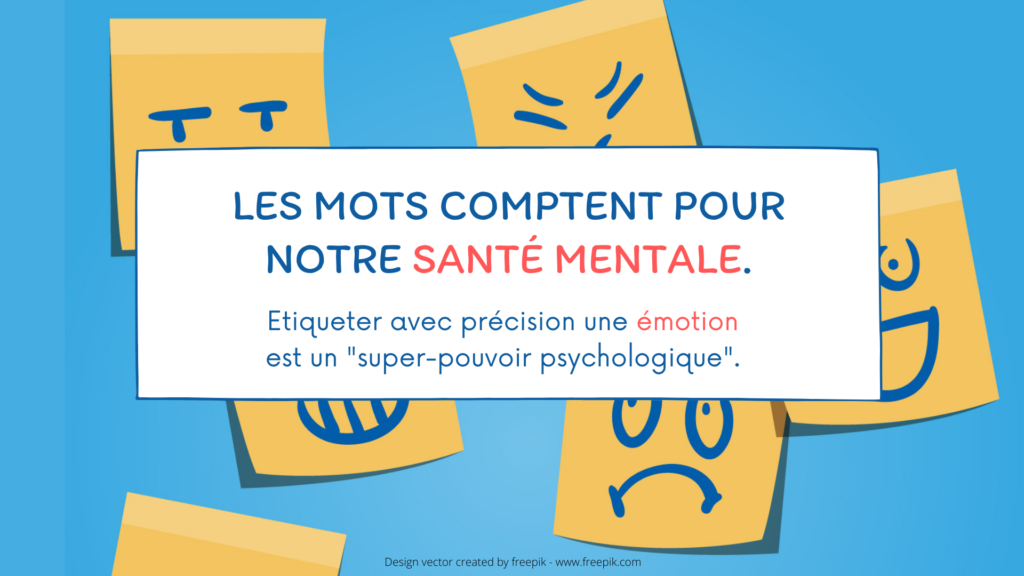
Words matter for our mental health, and labeling an emotion with precision is one of the simplest skills we can build. Most of us answer "fine" or "not great" when asked how we feel, and we rarely go further than "I'm stressed." Yet a richer emotional vocabulary gives us clarity about what is really happening inside us.
Psychologist Susan David describes emotional agility as the ability to meet our emotions with curiosity and compassion, and then to act on what we value. Precise labeling sits at the heart of that approach, and it is a skill parents can model and teach at home.

Quick takeaways
- Precise emotional labels turn vague stress into something finite and manageable.
- Emotional agility means curiosity and compassion toward feelings, not forced positivity.
- Add two nuance words to every strong emotion to catch what hides beneath.
- Emotions are data, not directives: accept the feeling, choose the behavior.
- Every emotion has a purpose, including anger and fear.
- A shared family feelings vocabulary makes naming easier for everyone.
Emotional agility instead of positive thinking
Susan David, a South African psychology researcher, studies the downsides of forced positive thinking. A culture that demands constant positivity leaves little room for compassion, authenticity and vulnerability, which are what make us genuinely human. Emotional agility means living with our emotions curiously and compassionately, and finding the courage to act in line with our values.
This goes beyond simply accepting feelings. The accuracy of our words matters, and that requires a rich emotional lexicon. Even as adults we lean on ready-made phrases: "I'm stressed" covers a wide range of experiences, and "good" or "bad" stand in for real description. Naming a feeling precisely, including its intensity, is harder than it sounds. If you want a gentle way to start conversations about feelings with young children, introduce children to picture books about emotions and let the characters do some of the naming for you.
Building a richer vocabulary of emotions
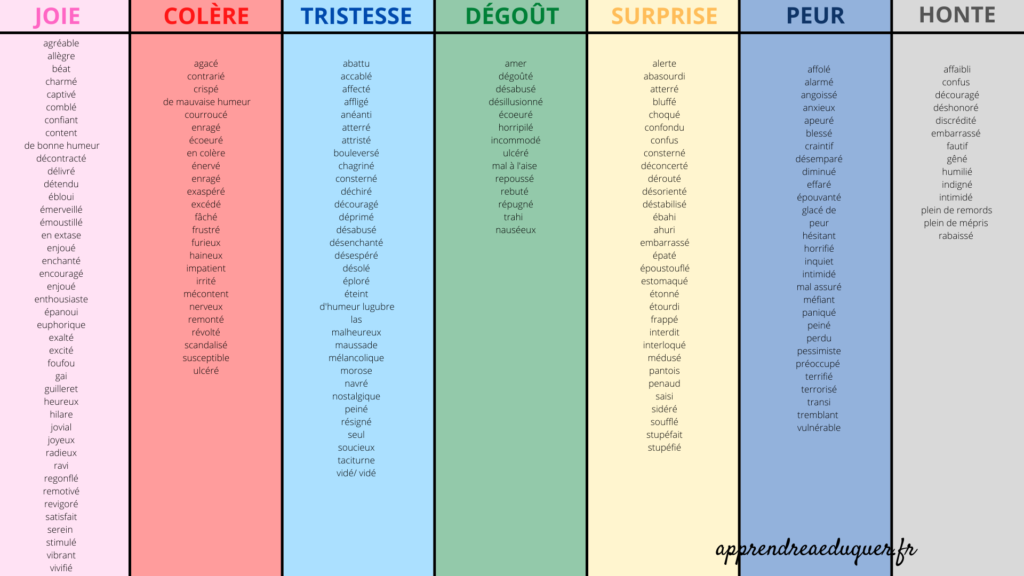
When a strong emotion hits, David suggests pausing to name its nature: is it anger, sadness, fear, joy, shame, trust or disgust? Then try to add two more words that capture the nuance and intensity. You may be surprised by the size of what you feel, or discover a second emotion buried beneath the obvious one.
This exercise works for unpleasant emotions and pleasant ones alike. Surprise sits somewhere in the middle, a neutral signal that sharpens our attention so we can work out whether an event means danger or delight. A useful example: someone nervous about a first day at a new job may realize they are also excited. Both feelings, hidden under "stress," show that the job matters and that they care about doing well. As Julia Donaldson reminds us, stories can open these conversations without lecturing.
A simple labeling routine
Try naming the emotion, then its intensity, then where you feel it in your body. Keep a short written list of feeling words somewhere visible, and add to it as a family. Even everyday moments, like days at grandparents or a first sleepover, offer rich material for naming what came up. Just as revalidation pressures can stir up big feelings, so can small family transitions.
| Vague label | More precise words | What it may point to |
|---|---|---|
| Stressed | Overwhelmed, rushed, pressured | Too many demands at once |
| Angry | Frustrated, hurt, treated unfairly | A value around justice or respect |
| Sad | Disappointed, lonely, grieving | A loss or unmet need |
| Anxious | Nervous, excited, apprehensive | Something that matters deeply |
| Fine | Content, relieved, tired but okay | A need for rest or connection |
Labeling emotions precisely is a psychological superpower
David calls precise emotional labeling a "psychological superpower." It turns a vague, unpleasant experience like "stress" into something finite, with limits and a name such as "disappointed" or "exhausted." Naming well lets us move forward with more awareness of our needs, values and deeper aspirations.
Consider someone who feels rage while reading the news. That rage signals that fairness and justice matter to them, and it points to an opportunity to act in that direction. When we stay open to difficult emotions, we can generate responses aligned with our values rather than reacting on autopilot. Parents who practice this at home often find it easier to follow parenting rules consistently, because they respond instead of erupting.
Emotions are data, not directives
David reminds us that emotions are data, not instructions. We can accept every emotion by naming it and feeling it in the body, saying where and how it shows up, without accepting every behavior that follows. That is the difference between owning our emotions and being owned by them.
Imagine a conversation where you feel sidelined or ignored. The old script says: "Here we go again, nobody cares what I think, there's no point speaking up." A more agile version says: "It's uncomfortable to feel invisible. I need to feel safe to speak and give my best." That shift in internal language can be the difference between an impulsive reaction, such as attack or withdrawal, and a considered response that expresses needs and makes a request. It is the same patience we need when helping children combine homework with rest without turning every evening into a battle, and the same calm that large families learn to practice daily. After all, the perfect age for parenting matters less than the emotional skills we bring to it.
Countering emotional repression and toxic positivity
Emotional agility is not about explosive, uncontained anger or endless complaining. It means showing up honestly and vulnerably with ourselves and the people around us. Our capacity to feel a whole range of emotions is part of our shared humanity, and it is a direct answer to the harms of toxic positivity.
Every emotion has a physiological purpose in service of life. Anger responds to helplessness, frustration, grief and injustice, and it moves us to react. Fear protects us from danger and pushes us toward action: fight, flight, or freezing when neither escape nor confrontation is possible. Naming these states accurately helps us use them well, whether we are managing a household, motherhood priorities or the ordinary chaos of family life. The same care applies to the products we use on our children, as we should be careful.

My hands-on take
I started doing this almost by accident, after a week where "I'm stressed" was my answer to everything. One evening I stopped and asked myself what the stress actually was. The honest answer was "disappointed and a bit lonely," which had nothing to do with my to-do list. Naming it changed the whole evening.
With my children, I now try to add a second word when they tell me how they feel. "You seem frustrated, maybe also a little embarrassed?" Sometimes I get it wrong and they correct me, which is fine. The correction is the conversation, and that is where the real work happens.
Frequently asked questions
What is emotional labeling?
It is the practice of naming what you feel with precise words rather than vague ones. Naming an emotion accurately gives it limits and clarity, which makes it easier to respond well.
Is emotional agility the same as positive thinking?
No. Emotional agility invites curiosity and compassion toward all feelings, including difficult ones. Forced positivity tends to push emotions away instead of listening to them.
How can I teach this to my children?
Model it out loud by naming your own feelings and their intensity. Offer a short list of feeling words and ask curious questions instead of judging what comes up.
Do I have to act on every emotion?
No. Emotions are data, not directives. You can accept a feeling fully and still choose a response that fits your values.
Product Reviews
 Best Toys for Dogs With High Prey Drive |
Best Outdoor Toys for 3-4 Year Olds |
Best Outdoor Toys for 6 Year Olds |
Best Harness for Poodle |
Best LEGO Sets for Adults |
Best Travel Toys for 4 Year Olds on Airplane |
Best Toy Stores in Washington DC |
Best Potty Training Toys |
Best Toys for Tripod Dogs |
Maillot equipe de france







