


Children's books about kindness and unconditional love do quiet work: they give a child words for feelings that are still too big to explain. The three picture books below all carry that same message, each in its own voice and with its own illustrations.
One is about encouragement and self-confidence, one follows the "first times" of a whole life, and one is a parent's plain declaration of love. All three are short enough for bedtime and rich enough to be read again and again.

Below you will find what each book says, the age it suits best and how to read it with your child so the message really lands.
Quick takeaways
- Choose books that name feelings rather than books that give verdicts.
- Pause on questions in the text and let your child answer first.
- Read the same book from different points of view to deepen the conversation.
- Keep gentle titles within your child's reach and rotate them.
- Link a story to a real moment, such as a lost game or a hard goodbye.
- Write a dedication inside the cover; it becomes part of the memory.
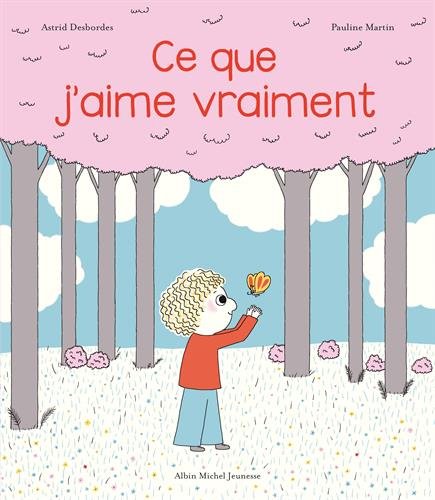
What I Really Like: A Book About Encouragement
This picture book follows Archibald, a small boy who feels discouraged after losing a tennis match. His mother does not tell him he is the best or that winning does not matter. Instead, on a walk through nature, she asks him a series of gentle questions: is a bird untalented because it cannot swim, is a butterfly untalented because it cannot sing, is an apple tree untalented because it cannot fly?
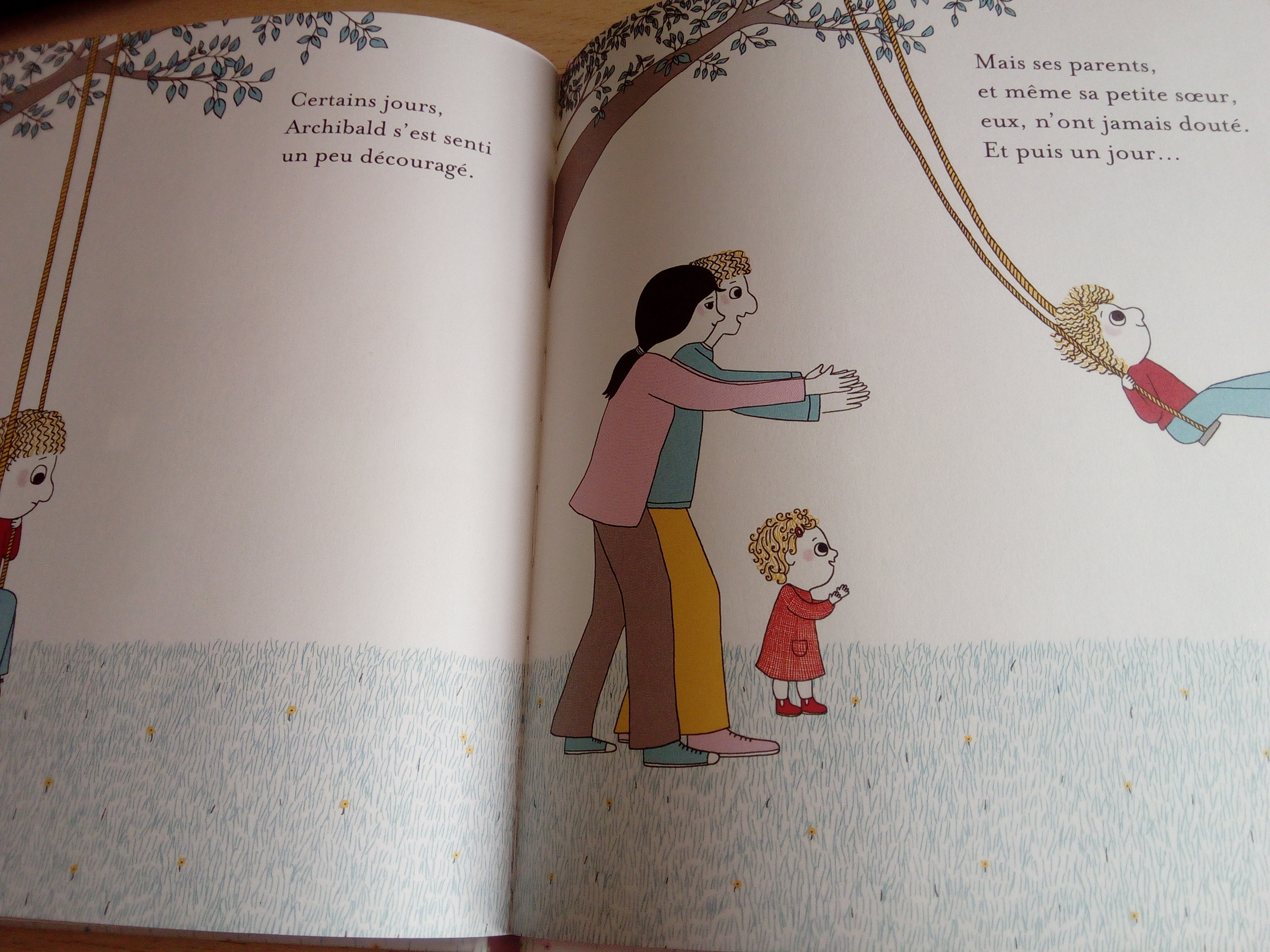
Through those questions the boy arrives at an idea that stays with him: the real question is not whether you are talented, but how you are talented. He starts looking for what he truly loves, somewhere between what he does well and what he enjoys doing. When he feels discouraged again, his family supports him, and he keeps practising until he offers his talent to the world.
How to read it with your child
Pause on each question and let your child answer before you turn the page. You can then ask what they think they are good at, and what they simply love doing, even badly. This is also a good moment to talk about the small struggles of growing independence, such as the nursery drop off or the first days of a new routine. Just as you would prepare for dog training, patience and gentle encouragement make all the difference.
The book suits children from about three years old, especially those who doubt themselves or compare themselves with others. Keep the tone light: the aim is curiosity, not a lesson.

The First Time I Was Born: A Book to Share
This book retraces, with tenderness and humour, the first times of a child's life: birth and the first meeting with the parents, the father's tears of joy, the first bath, the first step, the first dream, the first holiday, the first friendships and loves, the first outings, the first heartaches of adolescence, until the grown woman carries a child of her own.
Each page describes one first time and is illustrated sometimes with magic, sometimes with humour, often with all three at once. The writing often brushes against poetry and philosophy, which makes it a book to read slowly rather than in one go.
Several ways to read it
You can read it from different points of view: is the mother telling her own story to the child, is the parent telling the child's story and imagining the future, or is it simply the cycle of life and the unconditional love that binds a parent to a child? Ask your child which version they prefer; the answer often changes with age. The book works from about four years old and is a gentle way to say "I love you" and to pass on confidence in oneself and in life. For more inspiration, these TED Talks on parenting pair nicely with such shared reading moments, and if you are looking for a gift for a slightly older child, see our birthday gift toys.
| Book | Main theme | Best age | Reading style |
|---|---|---|---|
| What I Really Like | Encouragement and self-confidence | From 3 years | Stop on each question and let the child answer |
| The First Time I Was Born | First times and the cycle of life | From 4 years | Slow reading, discuss who is speaking |
| When You Grow Up | Unconditional parental love | From 3 years | Short sessions, explore the fold-out page |
| Any of the three | Bonding and kindness | From 3 years | Let the child pick the book |
When You Grow Up: A Parent's Declaration of Love
This album is a pure wonder, the kind that can bring a tear because the love a parent feels for a child is so visible on every page. It opens with a simple sentence: when I look at you and you look at me, I wonder what wonderful person you will be.
Here the point of view is the parents', parents who have unconditional faith in their child and in the treasure inside them. They describe the joy of watching children grow, unfold their potential, become who they are and contribute to the world. The sentences are short and the artwork is spare, which makes the message even stronger.
The final fold-out page
A double page with flaps at the end paints a portrait of the many possible paths a life can take, respecting each child's individuality. The book closes on: then I will look at you and you will look at me, and I will love you, whoever you are. That line echoes everything before it: I love you as you are, whatever choices you make, and I love watching you become the person you are. It also insists on kindness and altruism, values worth naming out loud, much as you would when you teach children respect for living creatures.
Reading Tips to Make the Message Land
These books work best when they are not treated as lessons. Read the text once without stopping, then go back to the pages your child points at. A short pause after a strong sentence is often enough for a child to ask the question they had in mind.
You can also link the stories to daily life. After a lost game or a difficult day, remind your child of the bird and the apple tree instead of repeating an abstract rule. For younger siblings, keep the session short and let them turn the pages; the toys for 18 month old babies crowd is rarely ready for a long text, but they still enjoy the pictures and the sound of your voice.
Finally, let the child choose. Some evenings they will want the encouraging book, other evenings the love letter. Following that choice is already a small act of respect for their inner life.

Building a Small Home Library of Kindness
Three books are a good start, but a small shelf of gentle titles gives a child room to return to a story when they need it. Keep them within reach, at child height, and rotate them every few weeks so they feel new again. A basket near the sofa works as well as a shelf in the bedroom.
Reading aloud also creates a routine that calms the whole evening, and it pairs naturally with other quiet family habits. A board game on a rainy afternoon or a shared cooking session can carry the same message of togetherness, and there are plenty of cheap board games that suit young children. Even letting a child choose his clothes can become a small shared ritual, and car games keep the same spirit alive on the road.
If you are looking for a gift, these titles travel well: they suit a birthday, a birth or simply a Tuesday. Choose according to the child's temperament rather than age alone, and write a short dedication inside the cover. Years later, that sentence is often what parents and children remember most.



My hands-on take
I started reading the encouragement book to my eldest after a phase of small defeats at the park, when every lost race felt like proof that he was "bad at everything". The first time we reached the page with the bird, he went quiet, then said the bird was fine because it could fly. We did not talk about talent again that evening, but he brought it up himself a few days later.
What I learned is that these books do not need a follow-up lecture. The story does the work, and my job is mostly to be there, to read slowly and to resist the urge to add a moral at the end. Some evenings we read two pages and close the book; that counts too.
Frequently asked questions
At what age can I start reading these books?
Two of them suit children from about three years old, and the third from about four. You can start earlier with the pictures alone, naming what you see and skipping the longer sentences.
My child does not sit still for a whole book. What should I do?
Read one or two pages and stop there. Short, repeated sessions work better than a full reading, and letting your child turn the pages keeps them involved.
Can these books help a child who lacks confidence?
They can open the conversation, but they are not a cure. The encouragement book gives you shared language, and the follow-up talk you have afterwards matters more than the story itself.
Are they good gifts?
Yes, they suit a birthday or a birth, especially with a short dedication inside the cover. Pick according to the child's temperament rather than age alone.
Product Reviews
 Best Toys for Dogs With High Prey Drive |
Best Outdoor Toys for 3-4 Year Olds |
Best Outdoor Toys for 6 Year Olds |
Best Harness for Poodle |
Best LEGO Sets for Adults |
Best Travel Toys for 4 Year Olds on Airplane |
Best Toy Stores in Washington DC |
Best Potty Training Toys |
Best Toys for Tripod Dogs |
Maillot equipe de france







