


Teaching with kindness is not about lowering expectations; it is about building the kind of relationship in which children can meet them. Many teachers and parents feel torn between being warm and being firm, as if the two were opposites. The books gathered here show that warmth and clear boundaries actually reinforce each other.
This selection brings together pedagogues, psychologists and experienced teachers who write from the classroom as well as the home. Some focus on language and posture, others on conflict, motivation or the teacher's own wellbeing. Read together, they form a coherent toolkit rather than a list of slogans.

You do not need to read all twelve. Pick the one that matches your current difficulty, try a single idea for a week, and notice what changes in the room.
Quick takeaways
- Kindness and firm boundaries work together, not against each other
- Value the child first; behaviour follows the relationship
- Nonviolent communication gives concrete language for conflict
- Avoid both authoritarianism and permissiveness
- Shared phrases between home and school reduce confusion
- A rested teacher is a more patient teacher
Start by believing in the child
The first book, written by four women who have worked as teachers, trainers and therapeutic companions, asks a simple question: how do we value children so they can reveal their potential? It combines theory with concrete tools for daily life, at home and at school. The authors insist on nonviolent communication, but also on everything that passes through the non-verbal: tone, posture, silence.
This is a useful starting point if you want to understand why a child shuts down after a remark that seemed harmless to you. The same attention to the child's inner world runs through our advice on childhood aggression, where the behaviour is a message rather than an attack. For younger children, the early foundations of learning to speak show how much communication begins long before words.
What to take away
Notice the ratio between corrections and encouragements in a single lesson. Most teachers are surprised by what they count.

Bridge the gap between home and school
Adele Faber and Elaine Mazlish, known for their work on adult-child communication, turn here to the relationship between parents and educators. Through realistic dialogues, reminders and cartoons, they show how the two sides can work together so that children solve problems and keep their appetite for learning. The book also addresses harder questions, such as how to motivate pupils who rebel against a society that does not always meet their emotional needs.
Their approach favours autonomy, self-discipline and openness rather than compliance. That same spirit of independence is what we look for when choosing independent play toys, which leave room for the child to decide. If your household is navigating a transition such as a child starting secondary school, the question of starting high school deserves the same calm, collaborative framing.
What to take away
Agree on one shared phrase that both home and school use when a child is overwhelmed. Consistency matters more than the wording.

| Challenge | Book focus | First practical step |
|---|---|---|
| Child lacks confidence | Valuing children | Count encouragements in one lesson |
| Home-school tension | Parent-educator dialogue | Agree one shared phrase |
| Repeated conflicts | Nonviolent communication | Name the need behind behaviour |
| Discipline struggles | Teacher effectiveness | Prepare one calm sentence |
| Low motivation | Autonomy and choice | Offer two real options |
| Teacher exhaustion | Adult wellbeing | Protect one restoring habit |
Use nonviolent communication in the classroom
Marshall Rosenberg's short book transcribes a conference and a workshop given to Montessori teachers. He sets out the key principles of nonviolent communication and shows how to apply them in class, exploring power, punishment and empathic connection. In the workshop, a role-play with a teacher facing a difficult situation demonstrates how to meet everyone's needs at once.
The appeal of this approach is that it does not require new equipment or a new curriculum, only a different way of listening. It pairs well with the practical work of helping a child control aggression without shame. Teachers who want to bring big questions into the classroom will also find ideas in our selection of books about democracy, which rely on the same respectful dialogue.
What to take away
Before reacting, name the need behind the behaviour, yours included. The sentence usually changes on its own.

Teach effectively without losing yourself
Thomas Gordon's classic method rests on a satisfying relationship between teacher and pupils. He shows how to avoid belittling messages, gain cooperation, escape the twin traps of authoritarianism and permissiveness, and make decisions that respect everyone's needs. Discipline conflicts are resolved without winners and losers, and thousands of educators from nursery to university apply these principles.
The reported benefits include less stress and greater satisfaction in teaching, which matters because a stretched teacher cannot stay kind for long. New parents returning to work will recognise the same pressure described in our piece on managing maternal stress. The wider lesson is that a calm adult is part of the pedagogy, not a luxury.
What to take away
Identify the one recurring conflict you handle worst, and prepare a single sentence in advance for it.
Build a classroom where children want to learn
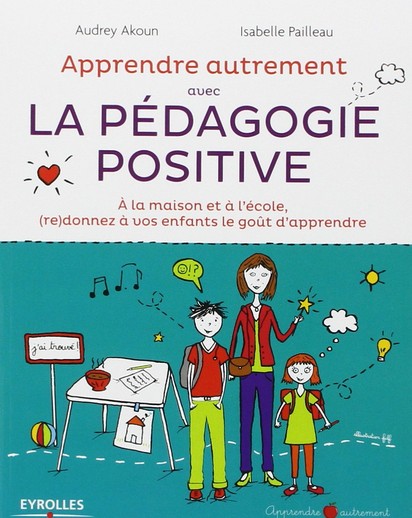
Several of these books return to motivation. Children learn best when they feel competent and connected, and the practical suggestions reflect that: offer real choices, describe rather than judge, and separate the behaviour from the person. A classroom that feels safe is also a classroom where mistakes can be discussed openly.
The same logic applies at home. A child who is trusted with a task, even a modest one, grows more confident, which is why we like toys that invite independent play rather than constant adult direction. For children who enjoy building and problem-solving, our guide to STEM toys offers a natural way to combine challenge with encouragement.
What to take away
Replace one "you are" comment this week with a description of what you actually saw.
Look after the adult in the room
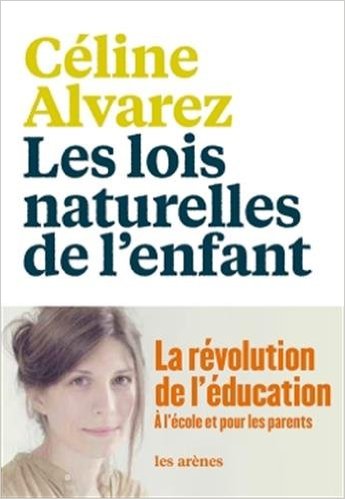
Kindness in teaching depends on the state of the person teaching. The final part of this selection invites reflection on the teacher's own needs, limits and satisfaction, because a depleted adult has little patience left for empathy. Reading about communication is not enough; the principles have to be practised, reviewed and adjusted.
For parents, the same principle applies during intense periods. Our tips for the first days with a newborn make the point that rest and support are part of good care, not extras. And when family life becomes tense, it helps to remember how professional strain can spill over, as we explore in unemployment and relationships.
What to take away
Choose one habit that restores you, and protect it as seriously as a lesson plan.




My hands-on take
I first tried these ideas on a small scale, with one child who seemed to argue about everything. Instead of correcting the tone, I started describing what I saw and asking what he needed. It felt awkward for a week, and then something loosened. He still argued, but he also started explaining.
What surprised me most was how much my own state mattered. On days when I had slept badly, every principle evaporated by mid-morning. So I stopped treating calm as a personality trait and started treating it as preparation: fewer decisions made in the moment, a couple of sentences ready, and one honest pause before answering. That pause did more for the atmosphere than any clever phrase I borrowed from a book.
Frequently asked questions
Do I need to read all twelve books?
No. Each book stands alone, and most readers get more from applying one idea at a time. Start with the challenge you face this week.
Are these books only for teachers?
Most are written for both teachers and parents, and several explicitly address educators at home. The principles transfer easily between school and family life.
What if my school culture is very traditional?
Begin privately with language and listening rather than whole-school change. Small shifts in one classroom are usually noticed before any formal discussion.
How do I keep kindness when I am exhausted?
Reduce the number of battles you fight and prepare a few sentences in advance. Restoring your own energy is part of the method, not a distraction from it.
Product Reviews
 Best Toys for Dogs With High Prey Drive |
Best Outdoor Toys for 3-4 Year Olds |
Best Outdoor Toys for 6 Year Olds |
Best Harness for Poodle |
Best LEGO Sets for Adults |
Best Travel Toys for 4 Year Olds on Airplane |
Best Toy Stores in Washington DC |
Best Potty Training Toys |
Best Toys for Tripod Dogs |
Maillot equipe de france







