


Rethinking violence as a virtue starts with a simple question: why have we been taught that the good guys must defeat the bad guys by force? In her book on how schools can adapt to children, Montessori educator Donna Bryant Goertz warns against the myth of redemptive violence, which splits the world into good and evil and presents force as the way to settle disagreements.
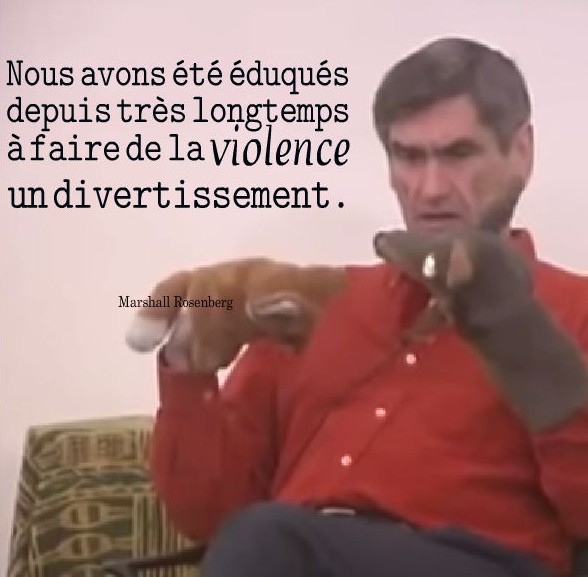
Her view echoes Marshall Rosenberg, founder of Nonviolent Communication, who argued that a culture of domination has no choice but to make violence feel pleasant and entertaining. We were educated, he suggests, to forget the joy of giving and caring for one another.

This article explores that idea and offers practical, everyday ways to raise children who can stop their own violence rather than wait for an adult to do it for them.
Quick takeaways
- The myth of redemptive violence splits people into good and bad and sells force as the fix.
- “Who is right?” is a game with only losers, built on punishment and reward.
- Children wait for adults to stop fights when nobody taught them to stop themselves.
- Naming anger and pausing early breaks the cycle before it escalates.
- Parents can only teach what they practice, so model repair out loud.
- Stories and screens shape how children read conflict, so watch and discuss together.
The Myth That Violence Redeems
Goertz describes a myth that opposes good people and bad people, then frames violence as the solution to any disagreement. It is a story children absorb early, and it shapes how they interpret every conflict they meet.
Rosenberg's point is uncomfortable but useful: a culture built on domination cannot afford to let violence feel repulsive, so it makes it entertaining. If we want calmer homes, we have to notice what our children are rehearsing through play and screens, much as we pay attention to sensory play and other formative experiences.
Why the Story Is So Attractive
The myth is simple, lazy, and primitive, which is exactly why it travels so well. It asks no reflection and offers a quick answer to a complicated feeling.
The Game of “Who Is Right?”
Instead of playing “let's make life wonderful for each other,” we were trained to play “who of us two is right?” That game produces only losers, because it carries two sneaky principles: punishment, meaning if you are wrong you deserve to suffer, and reward, meaning if you are right you deserve a prize.
This binary thinking generates violence by design. Who is right, who is wrong? Who is good, who is bad? Who is normal, who is abnormal? It runs on criticism, manipulation, labels, and judgments, and children pick it up long before they can name it.
The alternative is not permissiveness but a shift in attention. When a child hears tender family stories or sees adults repair a disagreement without a verdict, the lesson lands far deeper than any lecture.

| Situation | Blame approach | Repair approach |
|---|---|---|
| Two children grab the same toy | Decide who is right and punish | Name the need, pause, take turns |
| A child hits in anger | Send to timeout as a penalty | Separate, breathe, name the anger |
| A child sees a violent cartoon | Ignore or forbid it | Watch together and discuss the myth |
| A parent loses their temper | Hide it or justify it | Apologize and show the repair |
| A fight is starting | Wait for an adult to step in | Practice “I stop, let's stop now” |
A Conversation With Children Who Had Just Fought
Goertz recounts a discussion with primary school pupils who had just been fighting. One child asked why there are so many things in the adult world. The answer she gives is striking: because when adults were children, they never learned how to stop their own violence, or to see that it came from anger.
They thought our soldiers were good and the others were bad. As children, they expected parents and teachers to act as soldiers and police for them, in their work and in their daily games. They had been taught to wait for adults to stop them from hurting others and to stop others from hurting them.
Nobody told them that each of them carries inside the light, the strength, and the peace that stop violence. And parents cannot teach children what they have not learned themselves. Even a shared visit to grandparents can become a quiet classroom for that lesson.
What Screens and Stories Teach
The American Christian nonviolent activist Walter Wink observed that letting spectator interest determine program content pushes comics, television, and films toward the lowest common denominator of mythical simplicity. The myth of redemptive violence, he wrote, is the simplest, laziest, least complicated, most irrational and most primitive illustration of evil the world has known.
Its orientation toward evil, he added, is the one in which almost all modern children, especially boys, are socialized on their way to adulthood. Children choose this mythical structure because signs and models reinforced by the culture have already prepared them to find an echo in its simplistic outlook.
This does not mean banning stories. It means watching them together, naming the pattern, and offering richer alternatives, from sea stories to gentler bedtime rituals such as calming lullabies.
Learning to Stop Without Outside Help
For Goertz, it is urgent to teach children to stop their own violence without asking for outside help. When we call on an external power instead of the one inside us, we abandon our own power and hand ourselves over to someone older who may, if needed, use force to save us.
When we stop our own cycle of violence without asking for help, we break the cycle and we teach nonviolent action. During fights, she suggests children say: “I stop. Let's stop. Let's stop now. Look, I have stopped.” Waiting for an adult or another child to intervene, she argues, cannot lead to peace.
The Words She Offers Children
She tells them plainly that depending on others to stop them from being violent is very dangerous for them and their friends. They must practice stopping on their own, and practice sensing when someone may become violent so they can defuse the situation.
That practice starts small, in the ordinary moments of baby care and daily routines, long before a crisis arrives.
Building a Home Culture of Repair
None of this asks parents to be perfect. It asks us to model the pause, name the anger underneath the behavior, and separate the child from the impulse. A calm corner, a breathing phrase, and a consistent repair ritual do more than any punishment.
Play helps too: building, rebuilding, and narrating conflict gives children a safe rehearsal space, whether through language building toys or simple basket toys for younger siblings. The goal is a family habit of stopping early, apologizing honestly, and starting again, so that peace becomes the ordinary game rather than the exception.


My hands-on take
In our home, the shift began with one sentence I now say out loud when my own voice rises: “I stop.” At first it felt awkward, and my child simply stared. After a few weeks, though, I heard them say it during a squabble over a chair, and the fight deflated before I could stand up.
What helped most was dropping the verdict. Instead of asking who started it, I ask what each of them needed and what they could try next time. It is slower, and some days it fails completely. But the pause is becoming a habit, and that habit, more than any punishment, is what I want them to carry into the world.
Frequently asked questions
Does this mean children should never be disciplined?
No. It means discipline should teach a skill rather than inflict suffering. The aim is to help a child recognize anger and stop themselves, not to make them pay for being wrong.
How young can children learn to pause?
Even toddlers can learn a short breathing phrase or a calm corner with adult support. The skill grows with practice, and the earlier it becomes routine, the more natural it feels.
What if my child keeps waiting for me to intervene?
Start by naming what you see and inviting the pause before stepping in. Over time, hand more of the stopping back to the child so they build confidence in their own power.
Are violent stories always harmful?
Not automatically, but they are powerful. Watching together and naming the good-versus-evil pattern helps children see the myth instead of absorbing it silently.
Product Reviews
 Best Toys for Dogs With High Prey Drive |
Best Outdoor Toys for 3-4 Year Olds |
Best Outdoor Toys for 6 Year Olds |
Best Harness for Poodle |
Best LEGO Sets for Adults |
Best Travel Toys for 4 Year Olds on Airplane |
Best Toy Stores in Washington DC |
Best Potty Training Toys |
Best Toys for Tripod Dogs |
Maillot equipe de france







