


Positive parenting is not a magic method that turns every conflict into harmony; it is a set of practical tools you can learn and rehearse until they feel natural. This guide draws on a French parenting book written by a positive-discipline trainer and parent coach, and translates its ideas into everyday English advice.
The starting point is simple: today's children no longer accept blind obedience, and they want a real place in family decisions. That does not mean giving up your authority. It means building a horizontal authority where every need is heard and mutual respect is the rule, even though adult and child remain different.

Below you will find the book's core themes, the small habits that make family life calmer, and ten mantras worth keeping on the fridge.
Quick takeaways
- Positive parenting means horizontal authority: equal value, different roles.
- Connect before you redirect, and say one instruction at a time.
- Welcome the emotion while still holding the limit.
- Play is connection, not a reward to be earned.
- Guilt teaches nothing; repairing the mistake teaches everything.
- Keep the ten mantras visible for the hard days.
What Positive Parenting Really Means
Positive parenting starts with a clear definition, because the phrase is often misunderstood. It describes an authority based on social equality rather than submission: the adult and the child have the same value, even if their roles differ. Children who grow up in a society where obedience without reflection no longer makes sense need to take part in decisions that concern them.
This does not mean every child gets what they want. It means their needs are listened to and mutual respect is established. Every parent is different and every child is unique, so the same problem can have several good solutions. Still, some educational skills are worth knowing, just as school route preparation helps a child start the day on solid ground.
Why the old model stopped working
Models of submission have faded, and children now claim their rightful place. Understanding this shift removes a lot of guilt: your child is not being difficult for the sake of it, they are asking to cooperate rather than simply comply.

A Book Built for Real Family Conflicts
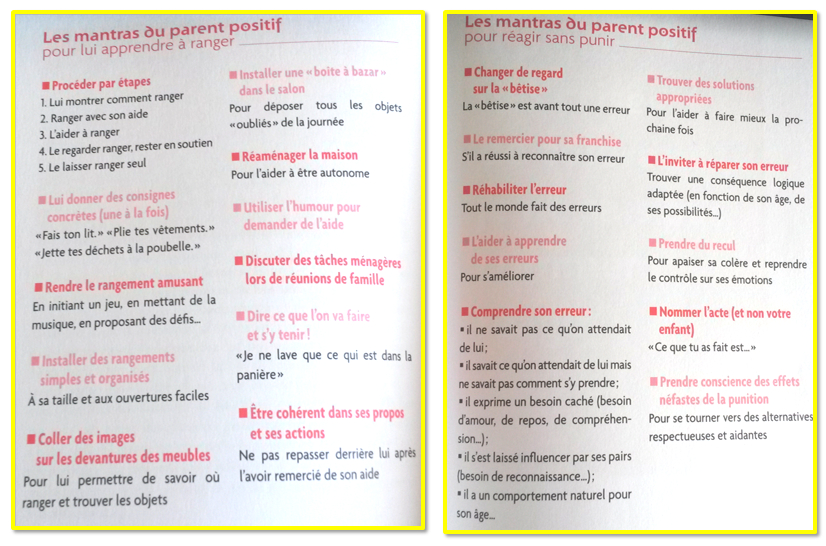
The layout is one of its strengths. For each theme, the parent's point of view and the child's point of view are both described, then concrete keys are offered so the whole family gains serenity. Small boxes highlight a single notion, and each chapter closes with a recap written as mantras.
The book addresses parents of children aged roughly one to eight and covers the conflicts that wear you down daily: repeating instructions, constant punishment, tantrums, sibling fights, opposition, mess, play and homework. These are the same everyday struggles that make child fatigue management so important when routines change.
Tools borrowed from many approaches
You will find playful parenting, active listening, win-win solutions, connection before redirection, welcoming emotions, alternatives to punishment, positive psychology and nonviolent communication. It is a compilation rather than a single doctrine, which makes it easy to pick the tool that fits your child.

| Situation | What the child needs | What you can try |
|---|---|---|
| Repeating instructions | To be heard and noticed | Move close, make eye contact, say one thing |
| Constant punishment | To repair rather than pay | Name the emotion, the limit, then a solution |
| Tantrums | To feel understood | Stay calm, welcome the feeling, hold the limit |
| Sibling fights | To be coached, not judged | Listen to both, look for a win-win option |
| Refusing to tidy up | A clear, shared routine | Make it playful and do it together |
| Homework battles | A predictable calm moment | Prepare the environment before school returns |
Staying Calm When You Repeat Yourself
Repeating instructions ten times is exhausting, and punishment rarely fixes it. The book suggests connecting before redirecting: get close, make eye contact, say one thing at a time. A playful tone often works better than a louder voice, and simple props can help, much as a cardboard box becomes a game that absorbs a child's attention.
When a child does something wrong, the goal is to repair rather than to make them pay. Naming the emotion, then the limit, then the solution keeps everyone's dignity intact. If your child is struggling with hair brushing or another daily battle, the same three-step script applies.
Welcoming emotions without giving in
Accepting a feeling is not accepting a behaviour. You can say "you are furious" and still hold the limit. That distinction is the heart of gentle discipline, and it protects the relationship during the hardest moments.
Play, Siblings and Homework
Play is not a reward you grant when everything is done; it is how young children learn and connect. If you no longer know what your role is when your child plays, remember that toys for imaginative play work best when an adult joins briefly and then steps back. Sibling conflicts are normal too, and the aim is to coach rather than referee.
Homework needs a predictable routine and a calm return from school. Preparing the environment, as you would when you choose outdoor toys for toddlers, means thinking about what the child needs before the moment arrives. And when the day has been long, a short pause outdoors resets everyone.
Small rituals that carry the family
A consistent bedtime, a shared snack and a few minutes of undivided attention do more for cooperation than any lecture. These are the memories children keep, and they are the reason time spent with children matters more than perfect discipline.

The Ten Mantras to Keep in Mind
The book closes with ten commandments written in a deliberately playful tone. Let go, because perfect parents do not exist. Abandon rigid principles and stay open. Work on your own childhood wounds, since a child who seems to push you is often helping you find yourself. Give the example, because values are transmitted by daily practice rather than by speeches.
Stop feeling guilty: what matters is recognising your mistakes and learning from them. Let yourself feel pleasure, because patience and energy need renewing before exhaustion arrives. Allow yourself to complain honestly when someone asks how you are. Try to enjoy the present moment instead of thinking about the next task. Relativise and laugh when the new dress gets stained in the grass. Finally, remember that your children are perfect for you: do not idealise them or project your wishes onto them.
These mantras pair well with the reminders in phrases parents repeat and help you choose words that build rather than wound.

My hands-on take
I tried the "connect before redirecting" idea on a morning when I had asked my son to put his shoes on four times. Instead of raising my voice again, I crouched down, waited for him to look at me and said one sentence. It worked, not because the trick is magic, but because I had stopped talking at him from another room.
The mantra about enjoying the present moment is the one I still struggle with. I notice myself planning the bath while we are still kicking a ball outside, and I have to consciously stop. When I manage it, the evening is calmer for both of us, and I remember why I wanted to be there in the first place.
Frequently asked questions
Is positive parenting the same as letting children do whatever they want?
No. It replaces submission with mutual respect and keeps firm limits. The child's needs are heard, but the adult still holds the boundary.
What age range does this approach suit?
The book is written for parents of children roughly one to eight years old. The tools can be adapted for older children, but the examples focus on early childhood.
What if I lose my temper despite all this?
That is normal and does not undo your progress. What matters is recognising the moment afterwards, repairing the connection and learning something from it.
Do I need to apply every tool at once?
No. Pick one recurring conflict and one tool, practise it for a week, then add another. Small, repeated changes are more durable than a complete overhaul.
Product Reviews
 Best Toys for Dogs With High Prey Drive |
Best Outdoor Toys for 3-4 Year Olds |
Best Outdoor Toys for 6 Year Olds |
Best Harness for Poodle |
Best LEGO Sets for Adults |
Best Travel Toys for 4 Year Olds on Airplane |
Best Toy Stores in Washington DC |
Best Potty Training Toys |
Best Toys for Tripod Dogs |
Maillot equipe de france







