


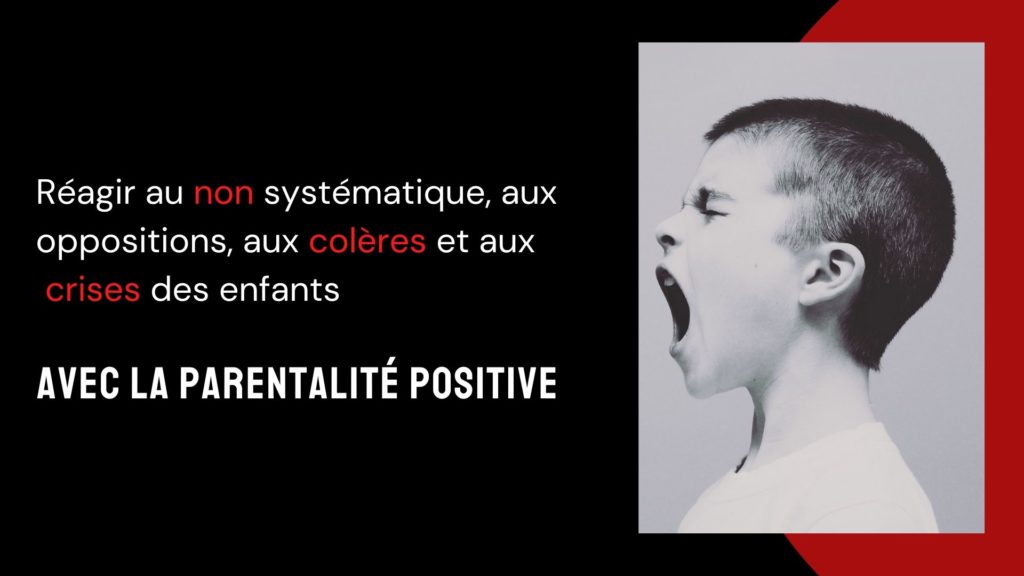
Responding to the constant no, to opposition, to anger and to children's crises with positive parenting starts with one shift: looking at needs and context rather than at control. Instead of asking how to punish or reward, you ask how to meet the child where they are and how to adjust the surroundings that set them off.
This approach treats a meltdown as information, not manipulation. It also asks something of the adult: to stay regulated, to teach emotional skills in calm moments, and to set limits without attacking the child's dignity. The sections below walk through each of these ideas in turn.

Quick takeaways
- Stress and anger differ: a meltdown is often a biological discharge, not defiance.
- The no phase around 18 months to 2 years is about autonomy, and digging in prolongs it.
- Teach regulation tools in calm moments: stomping, breathing, blowing through a straw.
- Children copy your regulation more than they hear your instructions.
- Replace some flat no's with listening plus a suggestion to lower the load.
- Assertive limits protect dignity: firm boundaries without guilt or humiliation.
Stress and anger are not the same thing
Parents often confuse stress and anger. When a child is under stress, they sit in extreme tension, and the smallest external trigger can set off a discharge crisis. This reaction is biological: the child may freeze, flee or attack, and in the presence of an attachment figure the usual reaction is attack. Anger, by contrast, is more direct and shorter.
Every child goes through an opposition phase around eighteen months to two years, testing who they are and asserting the right to choose. The more parents dig in and try to keep the power, the longer that phase tends to last. The no phase is an autonomy phase, the ground on which the child learns to say "I".
Why the supermarket breaks down
The supermarket crisis is a natural, normal discharge, because a child's brain is not built for a hyper-stimulating store. It is neither opposition nor anger: it is a release of stress. Give the brain a direction, such as pressing the green button or choosing the apples, and name what the child is living through: "it's hard to...", "your brain is all jumbled by all these lights".
Teach emotional skills instead of punishing
When a child loses sight of their attachment figure, they freeze in panic. They do not suddenly become "good", and they certainly do not absorb a lesson. The problem is that this immobilisation is temporary and fear-driven: when the child unfreezes, the stress is still there because it was never discharged, which can open the door to aggression.
Encouraging motor discharge, whether shouting, moving, jumping or climbing, is a good way to bring the stress level down. Calm moments are the time to teach tools for regulating what happens inside: stomping feet, breathing, blowing through a straw. A child who takes hours to settle at night often needs the same kind of calming bedtime routine rather than a lecture at midnight.
What you say in those calm moments matters less than what you model. Children copy us far more than they listen to us, and when we show patience we are teaching patience and self-regulation. That is also why the way adults speak to each other at home shapes the hooligan parents dynamic children absorb.
| Situation | What is really happening | What helps |
|---|---|---|
| Constant no | Autonomy phase, testing "I" | Offer choices, avoid power struggles |
| Supermarket meltdown | Stress discharge from overstimulation | Give a task, name the difficulty |
| Child freezes when you disappear | Panic, not obedience | Reconnect, then allow discharge |
| Laughing in your face | Distress, seeking attachment | Restore connection calmly |
| Hitting or shouting | Overloaded nervous system | Motor discharge, then a calm limit |
| Repeated refusals | Brain overload from too many no's | Listen, then suggest an alternative |
Children regulate through our own regulation
Movement is easy to forget. It helps to have a place at home where the child can let the tension out: a small trampoline, a ball pit, a corner with cushions. Open-ended play materials serve the same purpose, which is one reason a list of open ended toys is worth keeping in mind when you set up that space.
Faced with a child's request, you can sometimes replace the flat no to avoid overloading the brain: stop, offer emotional listening ("yes, you want to watch the cartoon", "it makes you angry when..."), then a suggestion ("yes, it's hard for you when... and you would have preferred...", "and we're going to...", "what would you say to...?").
This is not about never saying no. It is about saying it without adding a layer of stress the child cannot process. Independent play helps here too, since a child who can occupy themselves has more room to settle: see these independent play ideas for age-appropriate options. For families juggling work and home, the practical childcare at home arrangements also shape how much bandwidth everyone has at the end of the day.
Understand the stress mechanism to answer kindly
When a child laughs in their parents' faces, they are often in such distress that they are trying to recover attachment. Reading that signal correctly changes the response: instead of a reprimand, the child needs the connection restored and help to come down.
When parents welcome emotions, accompany the child, give them tools to regulate stress and model self-regulation, that child will later manage stress better as a teenager and adult, with fewer emotional discharge crises. Punishing, isolating, humiliating or shouting teaches nothing about regulation. Adults who were never helped to regulate in childhood find themselves unequipped under stress, because it is hard to pass on what you never received.
A kind education is steeped in emotional intelligence: expressing personal limits and being assertive without aggression. Being an assertive parent means saying yes and no without guilt and without damaging the child's dignity. These skills often require work on traumatic memory, and that inner work sits alongside the ordinary logistics of family life, from large family routines to the small ceremonies that mark a childhood, like the Tooth Fairy letter a child treasures.

Set limits without guilt or humiliation
Assertiveness is the quiet middle path. You can hold a boundary firmly and still keep the child's dignity intact: "I won't let you hit" is a limit, "you're being awful" is an attack. The first teaches, the second wounds.
Practical supports help parents stay in that middle ground. Knowing what is normal at a given age, including the odd physical bump or illness that throws routines off, keeps you from reading every hard day as defiance; a calm guide to vomiting in children is more useful at 2 a.m. than a lecture on behaviour.
Structure also lowers friction. Predictable mealtimes, including folic acid foods worked into everyday meals, and clear routines around screens, such as a mobile phone contract for older children, reduce the number of battles you have to fight. None of this removes the no phase. It simply gives the child fewer reasons to escalate and gives you more room to respond rather than react.

My hands-on take
In our house, the supermarket was the breaking point for months. I tried reasoning at the till, then bargaining, then leaving with a screaming child and a half-finished shop. What finally changed things was boring and unglamorous: I started giving my child a job before we went in. You hold the list. You find the green lid. It did not end every meltdown, but it cut the number of them, and it gave me something to say instead of "stop that".
The other change was on my side. I noticed that my own tension rose the moment I saw the first sign of a wobble, and my child read that instantly. So I started practising the calm script at home, out loud, when nothing was happening: "you really wanted that, and it's hard". Saying it in a quiet moment made it possible to say it in a loud one. I still get it wrong. But the repair afterwards, sitting down and reconnecting, has become the part I trust most.
Frequently asked questions
Is the constant no a sign of bad parenting?
No. Opposition around eighteen months to two years is a normal autonomy phase in which the child is building a sense of self. Parents who fight for power usually stretch the phase out rather than shorten it.
Should I punish a supermarket tantrum?
A supermarket meltdown is usually a stress discharge, because a child's brain is not built for that level of stimulation. Giving a small task and naming the difficulty works better than a consequence.
Can I still say no?
Yes. Assertive parenting means saying yes and no without guilt and without attacking the child's dignity. The aim is to reduce unnecessary no's, not to abolish limits.
Why does my child laugh when I'm angry?
Laughter in that moment is often a sign of distress and an attempt to recover attachment. Reconnecting and helping the child settle teaches more than a reprimand.
Product Reviews
 Best Toys for Dogs With High Prey Drive |
Best Outdoor Toys for 3-4 Year Olds |
Best Outdoor Toys for 6 Year Olds |
Best Harness for Poodle |
Best LEGO Sets for Adults |
Best Travel Toys for 4 Year Olds on Airplane |
Best Toy Stores in Washington DC |
Best Potty Training Toys |
Best Toys for Tripod Dogs |
Maillot equipe de france







