


Positive messages to prevent aggressive behavior in children work best when they start with connection rather than correction. Whatever the child's age, the first step is to recognize, decode and put words to the needs or feelings behind the behavior. A young child may hit out of excitement, anger, distress, insecurity or simple clumsiness.
Whatever the "misbehavior," the relationship stays the priority. That principle is undermined when we ignore a child's behavior, or confine them without explaining why, without suggesting alternatives and without reconnecting once they are receptive again. To socialize, a child needs to understand, learn and express themselves, and that process does not happen in isolation.

Quick takeaways
- Decode the need or feeling behind aggressive behavior before reacting.
- Notice and name the small positive gestures you usually overlook.
- Use quick nonverbal signals like a smile, wink or wave.
- Keep encouragement immediate and describe the action you saw.
- Spend short, regular moments of undivided attention with your child.
- Set limits while still explaining, offering alternatives and reconnecting.
Why positive messages work better than reprimands
There appears to be a link between, on one hand, ignoring positive behaviors while responding to aggressive ones with attention through scolding or even punishment, and on the other hand, more aggression. Positive reinforcement, through recognition of a child's positive gestures and efforts to improve, helps desirable behaviors become part of the child's repertoire.
Some children develop inappropriate behaviors in reaction to educational attitudes centered only on what must be suppressed. In that case, a non-aggressive child seeking recognition may reproduce gestures that were never part of their repertoire, simply to attract attention. It is therefore important to learn to notice the small gestures children make that usually go unseen, since it is mostly the behaviors that disturb us that catch our eye. If you want to understand what lies behind difficult moments, these reasons behind behaviors are worth exploring.
Notice what usually goes unnoticed
Training your eye toward the calm, cooperative moments is a skill, not a personality trait. The more you practice, the more naturally you spot the small efforts a child makes every day.

Nonverbal signs that send a positive message
There are many ways to give positive attention without saying a word: a smile, a wink, a wave of the hand, a sincere round of applause, or any other sign agreed upon with the child. These small signals cost nothing and can be delivered instantly, even across a crowded room.
Nonverbal messages are especially useful with young children who do not yet process long explanations, and with older children who may feel embarrassed by loud praise. A quiet thumbs-up can carry the same weight as a sentence. For more ideas on encouraging independence through everyday moments, see these independent play toys. If you are also planning meals together, try meals of children's characters for fun inspiration.
Agreeing on a private sign with your child also builds a small shared language between you. It becomes a reminder that you are paying attention, even when you are busy or distracted. For parents thinking about their own wellbeing too, it helps to know which contraceptives are suitable after childbirth.

| Tool | How it looks | Best moment to use |
|---|---|---|
| Nonverbal sign | Smile, wink, wave, agreed signal | Across a room or in public |
| Descriptive praise | Naming the action and your satisfaction | Right after a positive gesture |
| Undivided time | Ten quiet minutes together | Between conflicts or after school |
| Gentle limit | Explaining, suggesting alternatives | When a boundary is needed |
| Reconnection | Calm return after a difficult moment | Once the child is receptive |
Words of encouragement that describe effort
Encouragement works best when it is immediate and, as far as possible, descriptive: describe what the child did and the satisfaction the adult felt. Instead of a vague "good job," try naming the action, such as noticing that the child shared a toy or waited patiently.
Descriptive words help a child understand exactly what to repeat next time. They also avoid the trap of praising only outcomes, which can make children afraid of mistakes. If your child is working on language and expression, this guide on speech therapist signs can help you spot when extra support might be useful.
Keep it specific and sincere
Praise that sounds automatic loses its value quickly. A short, honest sentence about what you actually saw lands far better than a long speech.

Attention as a pure act of love
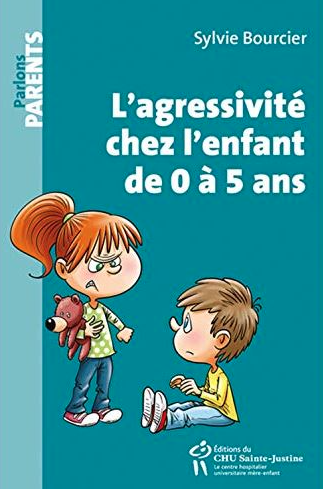
This approach requires observation, attention and time. In her book on aggression in children from birth to five, Sylvie Bourcier describes a mother who used the peaceful stretches between her children's arguments to catch up on housework. She later realized it benefited the whole family more to spend ten minutes with her children, putting into words how much she enjoyed being with them, how pleasant it was to play together and how she loved sharing those good moments.
After that, the children had all the motivation they needed to repeat the valued gestures. Positive attention rests on the conviction that every child can develop harmoniously. It validates and encourages the child's emotional autonomy and reassures them about their worth. Simple shared routines, such as a tie-dye activity or a calm craft, create easy opportunities for this kind of warm, undivided attention.

Building a habit of positive attention
Positive attention is not a one-off technique but a daily habit. It grows out of small, repeated choices: pausing to watch before stepping in, naming what you see, and offering a warm signal when things are going well. Over time, children learn that connection is available without having to provoke it.
This does not mean ignoring aggression or unsafe behavior. Limits still matter, but they work best inside a relationship where the child feels seen. When you do need to set a boundary, explain it, suggest an alternative and reconnect once the storm has passed. Choosing foam block toys for cooperative play or planning calmer visits with relatives can reduce the situations where frustration builds up in the first place. Everyday care routines, like learning how to give drops calmly, can also head off friction.
The goal is steady, low-key consistency rather than perfection. Some days will be harder than others, and that is normal. For a fun shared project, see our LEGO set review.

My hands-on take
In my own home, the biggest shift came when I stopped waiting for calm to do chores and started treating calm as the moment to sit down. Ten minutes on the floor with my child, saying out loud that I liked playing together, changed the tone of the whole afternoon far more than any lecture after a meltdown ever did.
I also learned to catch myself narrating only the problems. Now I try to name the small things, like waiting a turn or handing over a toy, even when I am tired. It is not perfect, and some days I forget entirely, but the habit has made our home noticeably warmer.
Frequently asked questions
Does positive attention mean ignoring aggressive behavior?
No. Limits still matter, but they work best inside a connected relationship. Explain the boundary, suggest an alternative and reconnect once the child is calm and receptive.
What if my child only seeks attention by acting out?
Children who feel unnoticed may reproduce gestures just to attract attention. Noticing and naming small positive behaviors gives them another, calmer route to being seen.
How long should special attention time last?
It does not need to be long. A short, regular moment of undivided attention, with words about how much you enjoy it, can be enough to motivate repetition of valued gestures.
Can encouragement be too much?
Encouragement works best when it is specific and sincere. Vague or automatic praise loses value, while describing what you actually saw helps a child know what to repeat.
Product Reviews
 Best Toys for Dogs With High Prey Drive |
Best Outdoor Toys for 3-4 Year Olds |
Best Outdoor Toys for 6 Year Olds |
Best Harness for Poodle |
Best LEGO Sets for Adults |
Best Travel Toys for 4 Year Olds on Airplane |
Best Toy Stores in Washington DC |
Best Potty Training Toys |
Best Toys for Tripod Dogs |
Maillot equipe de france







