


Mon ami is a picture book that puts the building of relationships at the centre of the story: a little apprehension, a good deal of curiosity, and a conversation that turns into a friendship between children.
It follows Archibald, a boy who meets a new classmate named Sam. Sam is both new to the school and different from the others, and the way the two boys slowly come together gives parents a warm, concrete starting point for talking about difference with young children.

Quick takeaways
- A gentle picture book about friendship and accepting difference, for ages three and up
- Archibald first fears Sam, then joins him on his bench out of curiosity
- Sam shares an imaginary world of dragon clouds and cyclone spinning tops
- The trees in the park mirror how every child is different and brings something rich
- Mirror sentences show two characters feeling different things at once
- Encouraged by friendship, Sam eventually plays with the other pupils
Why Mon ami works for talking about friendship
This album comes from a collection built entirely around kindness, and it shows. Archibald appears in everyday situations, and the guiding lines of the authors — benevolence, unconditional love, encouragement, the parent-child bond and joy — run through every title in the series.
The earlier book in the collection had already won me over completely, and this new opus keeps the same tone. If you are looking for more stories that carry that same gentle spirit, our piece on Arre little donkey is a good companion read for the shelf.
What makes the book useful is that it does not lecture. The friendship grows through small, believable moments, which is exactly how children recognise their own playground experience.
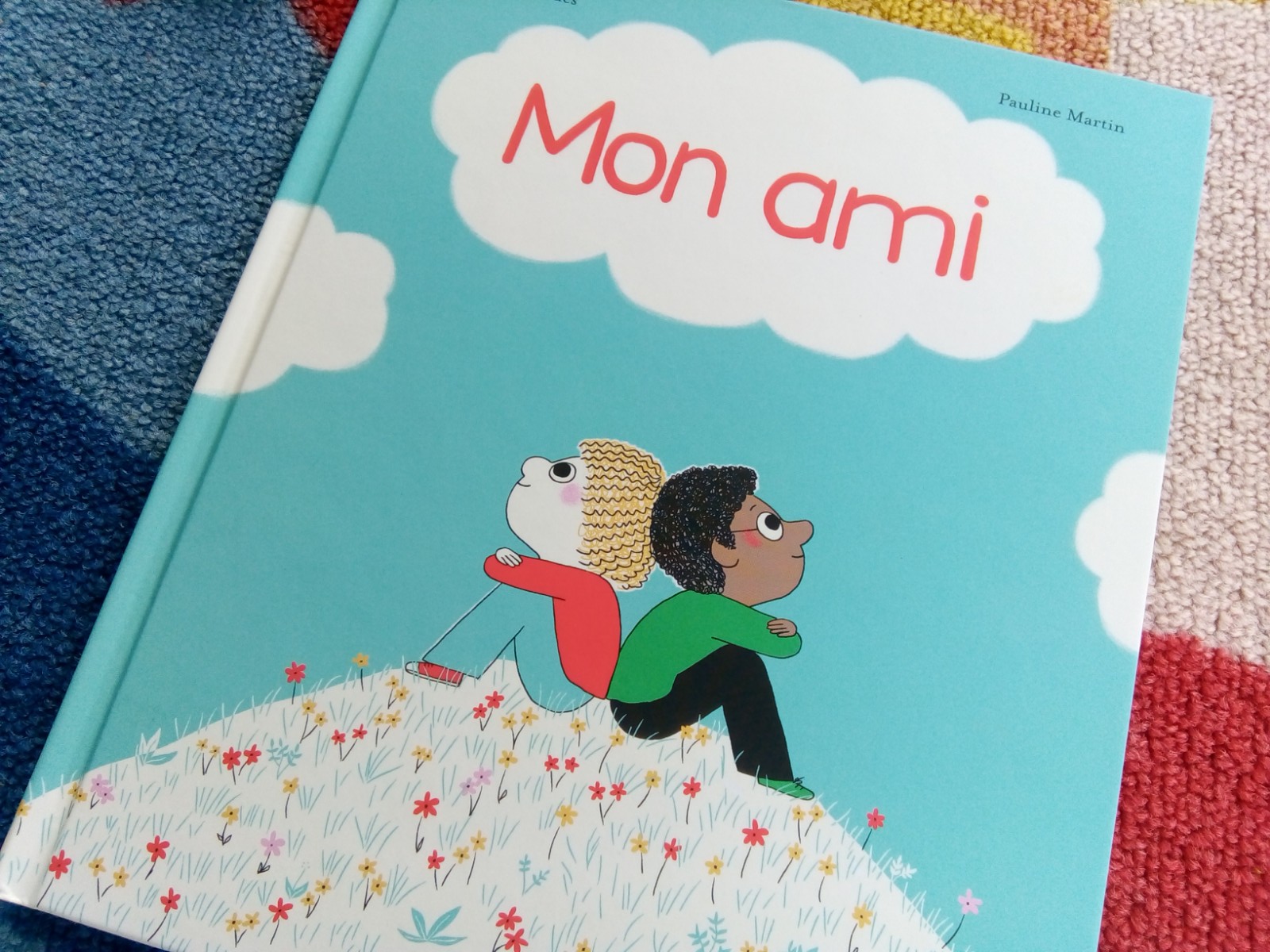
A boy who watches the clouds
In this story, Archibald meets a boy who is not quite like the others. Sam is new at school and different at the same time. Rather than play with the other children, he likes to spend break time looking at the clouds and inventing imaginary stories.
At first Archibald is a little afraid of him and finds him odd, then ends up joining him on his bench. Sam opens the doors of his heart and his imagination, and Archibald discovers, amazed, a world he had never explored: a dragon cloud, a cyclone spinning top.
That first step is the heart of the book. Children often need a small model for how to approach someone who seems strange to them, and Archibald provides it without any grand gesture — he simply sits down. Just as in children and sports, small everyday moments teach children how to be with others.

| Story moment | What Archibald does | What it teaches |
|---|---|---|
| First meeting | Feels afraid, finds Sam odd | Apprehension about difference is normal |
| The bench | Sits down and listens | Curiosity and courage move things forward |
| The clouds | Explores Sam's imaginary world | Exchange brings richness to both children |
| The trees | Compares different trees in the park | Every difference brings something of its own |
| The return | Says the difference is what he likes most | Acceptance is spoken out loud |
| The playground | Plays alongside Sam and the others | Confidence spreads to the whole group |
For families looking to share such moments outdoors, rural houses near Barcelona offer a calm setting to keep exploring together.
The trees in the park explain difference
The authors then skilfully draw a parallel between the differences among children and those among the trees in the park where Archibald likes to play. Every tree is different, yet each one brings something rich: he can climb some, hide behind others, or let the leaves of the small ones tickle him.
It is a simple image, and that is why it lands. A child does not need an abstract speech about diversity; a row of trees they can actually touch does the job. The same idea of discovering the world through play sits behind our selection of psychomotor skills games you can set up at home.
When Sam comes back to school after a week away, Archibald tells him plainly that the very thing that makes him different is what he likes most about his friend. Encouraged by that friendship and trust, Sam then starts playing with the other pupils.

How a relationship is built, step by step
The story highlights the construction of relationships with real precision: a little apprehension about what is different at the start; courage and curiosity to go beyond that difference; a sharing of visions and a richness born from the exchange; and a double positive influence that benefits everyone.
That last point matters. Sam is not the only one who gains — Archibald gains a friend and a whole imaginary world. Reading the book aloud is an easy way to open the conversation, much like a shared activity such as children learn dance can build confidence through doing rather than talking. For nervous children, the same gentle approach can help, and families expecting a second child may find the book a useful way to prepare for change.
What to notice while reading
Watch the mirror sentences the authors use to describe Archibald's emotional experience on one side and Sam's on the other. They quietly show children that two people can feel different things in the same moment.

Illustrations and construction
This album is a magnificent hymn to friendship and acceptance, superbly served by its illustrations and by its construction — notably the mirrored phrasing used to describe the emotional experiences of Archibald on one hand and Sam on the other.
The pictures carry as much of the meaning as the words, which makes the book work well with children who are not yet reading. For families who like to mix paper books with screens, our list of children's apps offers options that respect the same calm pace. Just as LEGO's color choices make building intuitive, these illustrations guide young readers gently.
It is recommended for ages three and up. Mon ami, by Astrid Desbordes and Pauline Martin, is available in libraries, bookshops and online. For more on inclusive parenting, see this father's decision.


My hands-on take
I have read this one aloud more times than I can count, and the part that always gets a reaction is the bench. My child stops me there every time to ask why Archibald was scared, and that question is worth more than any explanation I could prepare in advance.
What I appreciate as a parent is how little the book insists. It never tells children to be kind; it shows a boy sitting down next to someone, and lets the rest follow. The mirrored sentences are subtle enough that younger children simply enjoy them, while older ones start noticing that two people can live the same moment differently. If you read it with a group, leave a pause after the trees page — that is where the conversation usually starts on its own.
Frequently asked questions
What age is Mon ami suitable for?
The book is recommended for children aged three and up. The short text and expressive illustrations also make it readable with slightly older children who want to discuss the story afterwards.
Who created the book?
Mon ami is written by Astrid Desbordes and illustrated by Pauline Martin, published by Albin Michel Jeunesse. It belongs to a collection of albums following the character Archibald in everyday situations.
Where can I find a copy?
It is available in media libraries, in bookshops and through online retailers. Borrowing it first is a good way to check whether the tone suits your child before buying.
What is the main message?
The story shows that the thing which makes someone different can be exactly what makes them worth knowing. It also shows that friendship can help a shy or isolated child join the group.
Product Reviews
 Best Toys for Dogs With High Prey Drive |
Best Outdoor Toys for 3-4 Year Olds |
Best Outdoor Toys for 6 Year Olds |
Best Harness for Poodle |
Best LEGO Sets for Adults |
Best Travel Toys for 4 Year Olds on Airplane |
Best Toy Stores in Washington DC |
Best Potty Training Toys |
Best Toys for Tripod Dogs |
Maillot equipe de france







