


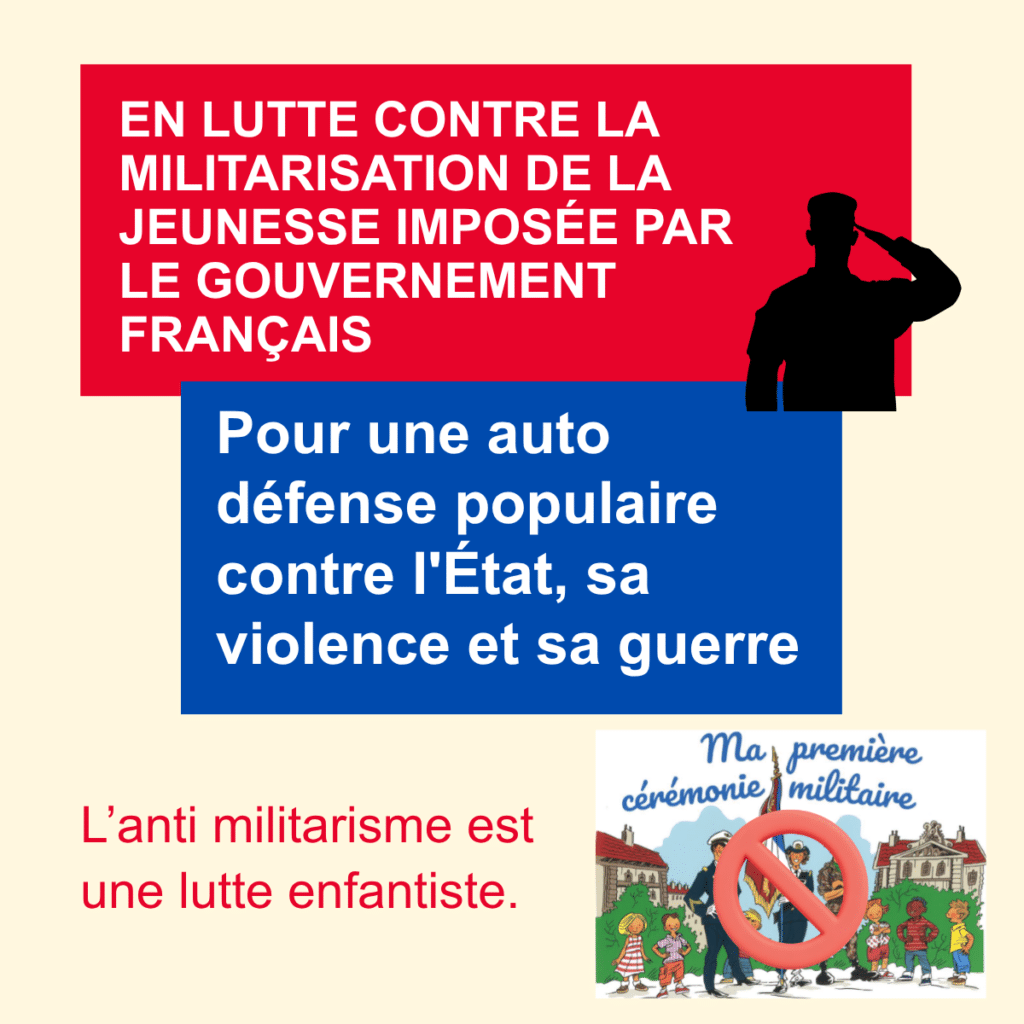
Militarization of youth is not a slogan: it is a set of concrete practices that reach children through school partnerships, public events and recruitment messaging. In France, defence and security classes, military visits to classrooms and army-sponsored sport are presented as ordinary career guidance.
This article unpacks the logic behind that trend, the forms it takes in society and in schools, and the practical questions a parent can ask when the army enters their child's timetable.

Quick takeaways
- Militarization of youth is driven by an economic system that profits from war and needs new markets.
- France is the world's second arms exporter, so conflict is commercially useful.
- Arms fairs and influencer partnerships build a positive image of the military.
- Around 1,200 defence classes involve 32,000 pupils, with a target of tripling by 2030.
- Parents have no access to the content delivered by military speakers in class.
- Free play and open family conversation are practical counterweights.
Why the Arms Economy Pushes Toward Militarization
The starting point is economic. War secures resources such as oil, gas, rare earths and magnets, protects financial profits and disciplines the population. Neoliberal capitalism in crisis needs new outlets for goods, cheaper production costs and dependent markets in the Global South, which is why imperialist resource capture matters.
War is also a market in itself. Weapons produced by the military-industrial complex need buyers, and France is the second-largest arms exporter in the world behind the United States, with international orders and deliveries rising in recent years. The country therefore has a direct interest in conflict.
Repression at home
The same funding pays for tools first designed to crush colonial resistance, now used against popular movements in mainland France and overseas territories: workers, unions and young people. It is a reminder that play and free childhood matter, as campaigns like importance of play keep arguing.
How Militarization Shows Up in Society
State investment in weapons has become an end in itself, serving both corporate profit and internal control. State and industry walk hand in hand, as shown by arms fairs such as Eurosatory and the Paris Air Show, where equipment is displayed, tested by buyers and sold.
These events promote security industries, preserve France's international influence and generate profit for exhibitors, from direct arms producers to technology and service suppliers. Children grow up surrounded by these messages long before they can question them, much as they absorb stories about magical characters without asking who benefits.
A softer face
Sport sponsorship, influencer staging and military equipment lent to selected films build a positive image, while films critical of the political line are refused. The pattern is familiar to anyone watching how childhood tastes are shaped, from toys for car lovers to cartoon franchises.
| What to ask | Why it matters | Where to ask |
|---|---|---|
| Who runs the session? | Identifies military vs civilian staff | Head teacher |
| What content is shown? | Parents currently have no access | School administration |
| Is participation optional? | Conscience and opt-out rights | Local education authority |
| How often does it happen? | Frequency shapes normalisation | Class teacher |
| Are injuries and trauma discussed? | Balanced view of military careers | Session organiser |
| Are commemorations balanced? | Memory framing matters | School council |
Normalising War Through Propaganda and Careers
The goal is recruitment and social control from childhood, built on adherence to an authoritarian, nationalist and warlike discourse. Young people are habituated to the army's presence in public space and in schools, and military careers are framed as desirable professional outlets.
What is rarely mentioned: physical injuries, the thousands of wounded veterans, and post-traumatic stress among soldiers. Parents who want to keep childhood grounded may find it useful to look at how other families handle big transitions, such as family life stages or the arrival of a sibling described in big brother jealousy.
Marketing to the very young
Recruitment messaging reaches children who are still learning to read, which is why the tone of what they hear at home matters. Talking about how children learn can help you gauge what your child actually understands of uniforms and war.
Defence Classes and the School-Army Partnership
Partnerships between education authorities and the military are diversifying. There are around 1,200 defence and security classes in France covering 32,000 pupils, and the government aims to triple that number by 2030.
From the final primary year, children can follow a paramilitary pathway in partnership with an army or gendarmerie unit. Military personnel intervene directly in class several times a year through lessons and ceremonies, and parents have no access to the content presented by military speakers.
Trips and commemorations
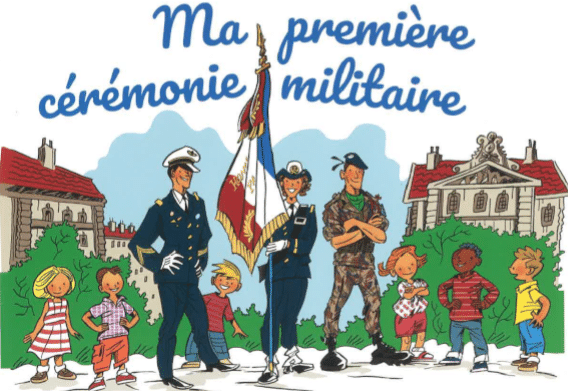
School outings themselves are militarised through an academic trio linking education authorities, the national defence institute and the ministry of the armed forces. The commemorative calendar is densified, celebrating French war dead and victories. Families navigating school choices can compare notes on finding a preschool and on how much outside influence they want.
What Parents Can Actually Do
You cannot control every assembly or classroom visit, but you can ask questions. Request the programme of military interventions, ask who supervises them and whether alternative activities exist for children who opt out.
At home, keep the conversation open: ask what your child saw, what they thought and what questions came up. Balance the uniform-and-heroes narrative with age-appropriate honesty about injury, trauma and the arms trade, the way you would handle other heavy topics such as child ear pain or camphor oil danger calmly and factually.
Protecting free play
Free, unstructured play remains one of the best counterweights to early recruitment logic. Simple toys and games, from toys under twenty dollars to building sets covered in 10 Best Storage Containers, leave room for imagination rather than obedience.

My hands-on take
When my own child came home talking about a soldier who visited class, my first reflex was to ask what he remembered. He recalled the boots and a flag, nothing about the lesson. That told me more about the format than any brochure could.
I now keep a simple habit: after any outside intervention at school, we talk at dinner about who spoke, what they wanted us to feel, and what was left out. It takes five minutes and it turns a one-way message into a conversation. I also protect boring, aimless playtime, because a child busy building a cardboard castle has less room for someone else's agenda.
Frequently asked questions
At what age does military contact start in French schools?
Paramilitary pathways can begin in the final primary year, through partnerships with army or gendarmerie units. Defence and security classes then continue through secondary school.
Can parents refuse their child's participation?
Opt-out rules vary by school and activity, so ask the head teacher in writing. Requesting the programme in advance gives you a basis for discussion.
Is this only a French issue?
No. Many countries use school partnerships and sport sponsorship to soften the military's image. The specific numbers and structures differ, but the recruitment logic is similar.
Does this mean military careers are bad?
Not necessarily. The point is informed choice: children should hear about injury, trauma and the arms trade as well as prestige and travel.
Product Reviews
 Best Toys for Dogs With High Prey Drive |
Best Outdoor Toys for 3-4 Year Olds |
Best Outdoor Toys for 6 Year Olds |
Best Harness for Poodle |
Best LEGO Sets for Adults |
Best Travel Toys for 4 Year Olds on Airplane |
Best Toy Stores in Washington DC |
Best Potty Training Toys |
Best Toys for Tripod Dogs |
Maillot equipe de france







