


Helping children cope with fear starts with a simple shift: instead of trying to make the fear disappear, you move forward with it. Dismissing the emotion with "don't be scared", minimising it with "there's nothing to worry about", judging it, or rushing to fix everything on the child's behalf all tend to leave the fear untouched.
The approach below comes from the idea that fear is a natural, passing emotion, and that a calm, non-judging presence does more than any quick reassurance. Each step is small, practical and can be used at home the same evening.

Quick takeaways
- Move forward with the fear instead of denying or judging it
- Offer physical comfort, but never force contact
- Breathe together, hands on belly and chest
- Name the sensations and rate the fear from 0 to 10
- Reformulate what your child says to show empathy
- Ask the child to find their own small solutions
Start with the body. Holding a frightened child, stroking their hair or simply sitting close helps them settle and reconnect with the thinking part of the brain. If your child pulls away, don't force contact: a quiet, steady presence without judgement is already comforting. This kind of calm, attentive caregiving is the same foundation you rely on during everyday struggles, such as when [L10|baby sleeps badly] and everyone is short on patience.
Next, invite slow breathing. Ask the child to place one hand on the belly and one on the chest, then feel the belly rise and fall several times. Breathe along with them: it models the exercise and helps you return to your own emotional balance too. A simple breathing game can work the same way as a favourite toy that box gives play, turning a tense moment into something shared.

Name the emotion and the sensations
Remind your child that fear is natural and temporary, like every emotion. Reassurance is less useful here than affectionate, understanding company. Then help them put words to what they feel: "How does it feel in your body? Where does it happen? Is it a little fear or a big one?" You can also ask them to rate it from 0 to 10, with 10 being the biggest fear in the world.
This naming work matters for all children, including the quieter ones. If you are wondering whether so shy behaviour is part of the same picture, giving feelings a name often loosens the knot. It also helps to remember that family life comes in many shapes, and new family models face exactly the same emotional questions.
Explore the thoughts behind the fear
Invite the child to say what is going through their head: "If I understand, it's that...", "I get the impression it's ... that scares you, is that right?" When they speak, reformulate what they said. This shows empathy and gives them room to explore further and live the emotion fully.

| Step | What you do | Why it helps |
|---|---|---|
| Comfort | Hold or sit close, no judgement | Reconnects the child with calm |
| Breathe | Hands on belly, slow breaths | Settles the body |
| Remind | Fear is natural and passing | Normalises the emotion |
| Name | Describe sensations, rate 0-10 | Makes fear understandable |
| Reformulate | Repeat back what they say | Shows empathy, opens dialogue |
Go back to the trigger and look for solutions
A child is never afraid for nothing, even when it looks like nothing to an adult. The trigger may be earlier, with something in the present setting it off again: a music lesson that went badly last week, then a panic the following week at the idea of going back. Naming that link gently often helps.
Then ask the child what they can do, here and now, to keep both their safety and their freedom: "The fear is here, what can you do with it? You could squeeze my hand very hard, sing, or remember a moment when you felt proud." Letting them choose builds confidence, much like choosing a toy that suits their age, whether you browse toy stores Austin or toy stores Chicago.
Train the imagination
Finally, stretch their imagination with "What if...?" questions and anticipated scenarios, so the child learns to listen to the fear and move past it with their own solutions.
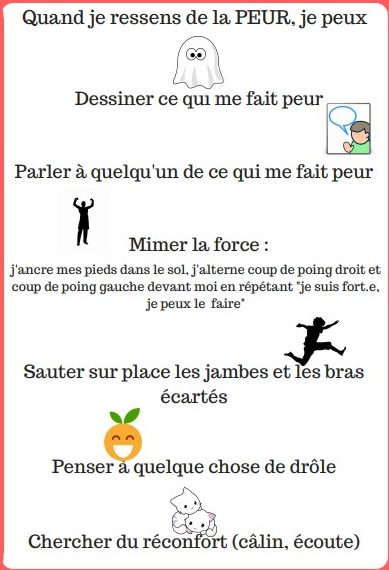
Everyday moments where fear shows up
Fear rarely announces itself at a convenient time. It can surface at bedtime, at the school gate, before a party or during a busy morning when everyone is rushing. Preparing a small routine in advance, a few calming words and a breathing pause, makes those moments easier for both of you.
Practical logistics matter too: a calm departure is easier when the bags are packed and the trunk for every trip is ready the night before. And when the fear is about being away from you, it helps to know that childcare at home options can be discussed calmly with your child beforehand.
Some children express fear through shyness or withdrawal rather than tears. Others show it through small rituals or a need for reassurance about everyday things, the way a child might ask endless questions about whether you will keep LEGO boxes or throw them away. Answer patiently and consistently; predictability is soothing.

Building a calm toolkit over time
These ten steps are not a one-off fix but a set of habits. Used regularly, they teach a child that fear can be felt, named and carried rather than hidden. The adult's role is steady company: present, warm and non-judging, even in silence.
Over the years the tools stay useful. A five-year-old may simply need a hand to hold, while an older child can rate the fear, describe the thoughts and choose a solution. Reading together about emotions, or about characters who face something difficult, gives children another language for what they feel.
Keep the tone light and the steps short. Two minutes of breathing and one good question often do more than a long lecture. What matters is that the child learns, slowly, that fear passes and that they are not alone with it.
My hands-on take
In my own home, the belly-and-chest breathing is the step I reach for most. The first few times, my child found it silly and refused, so I stopped asking and simply did it myself, slowly, without saying anything. After a while, the hands went onto the belly on their own.
The other thing I learned was to stop rushing to solve the problem. Asking "what could you do with the fear?" felt awkward at first, but the answers were often better than mine, a hand squeeze, a song, a memory of a proud moment. It takes patience, and some evenings it doesn't work at all, but the habit of naming the fear out loud has made our difficult moments shorter and calmer.
Frequently asked questions
Should I tell my child not to be afraid?
No. Saying "don't be scared" tends to dismiss the emotion. It is more useful to acknowledge the fear and stay close while it passes.
What if my child refuses physical comfort?
That is fine. A calm, non-judging presence, even in silence, is already reassuring. Offer comfort without insisting.
Why does my child seem afraid "for nothing"?
A child is never afraid for nothing. The trigger may be an earlier event that something in the present brings back.
How do I help with the thoughts behind the fear?
Invite your child to say what is going through their mind, then reformulate it gently so they feel heard and can explore further.
Product Reviews
 Best Toys for Dogs With High Prey Drive |
Best Outdoor Toys for 3-4 Year Olds |
Best Outdoor Toys for 6 Year Olds |
Best Harness for Poodle |
Best LEGO Sets for Adults |
Best Travel Toys for 4 Year Olds on Airplane |
Best Toy Stores in Washington DC |
Best Potty Training Toys |
Best Toys for Tripod Dogs |
Maillot equipe de france







