


Emotional journaling is a simple, low-cost way to identify and express what you feel so that your emotions make sense instead of piling up. Writing stressful situations down can help you get a handle on them and loosen their grip, and it often clears your head enough to start solving the problem itself.
It also helps you know yourself better: you notice the messages behind your emotions and can care for your needs more effectively. The emotional-skills framework set out by Mikolajczak, Quoidbach, Kotsou and Nelis offers useful markers for keeping an emotional journal, and every one of them is easy to try at home.

Quick takeaways
- Write to clarify what you feel, even when you think you feel nothing
- Track goals, difficulties and successes to see how far you have come
- Write before a hard conversation so you can speak calmly and precisely
- Keep a flexible log: notes, quotes, drawings or collages all count
- Build an emotion vocabulary to name feelings more precisely
- A few lines a day is enough; consistency matters more than length
Clarify What You Are Living Through
Ask yourself two plain questions: what is happening in me right now, and what matters to me right now? Putting your experience into words makes it more concrete and precise, helps you sort the significant events from the noise, and gives you a little distance from them.
You do not need to know what you feel before you start. Write without thinking it through and meaning often appears on its own, as if your hand knew better than you did. Another option is to write as though you were speaking to someone you trust completely. Parents who wonder how children understand the world can use the same exercise to slow down and look at a situation from their child's side.
Notice Your Wins and What You Have Learned
Just as a parent barely notices the daily changes while a child grows, we rarely have a clear picture of our own path and learning. Writing down your goals, difficulties and successes lets you measure the ground you have covered, take stock and adjust direction.
It also helps you look for a certain coherence between what you value and how you actually spend your days. If reading together is one of your goals, a quick note about it belongs in the journal too — see reading to baby for ideas on where to start, and illustrated children's books when you want something to share. The first three years are especially worth noting, and seasonal moments like how children prepare for Santa can become memorable journal entries.

| General feeling | More precise words | What it may point to |
|---|---|---|
| Bad | uneasy, drained, irritated, disappointed | an unmet need or a boundary crossed |
| Good | relieved, proud, touched, hopeful | something worth repeating or protecting |
| Angry | frustrated, hurt, overlooked, impatient | a limit that needs stating |
| Sad | lonely, let down, nostalgic, grieving | a loss or a need for connection |
| Anxious | worried, tense, uncertain, overwhelmed | something to prepare or ask about |
| Calm | settled, grateful, content, rested | what restores you and should be kept |
Prepare a Difficult Conversation
When you want to talk to someone but the emotional charge risks being too high, writing before the meeting is genuinely useful. It helps you understand your own position and clarify what you want to say, so that face to face you can communicate more accurately and calmly.
If you lose your thread mid-conversation, your notes are there to bring you back. This works for small everyday talks as well as bigger ones, such as planning a return after a break — going back to work is a good example of a topic worth writing about first.
Keep a Loose, Personal Log
A journal can also hold an idea, a quote or a sentence that moves you. There are no fixed rules: some people draw in theirs, others make collages. In a helping relationship, a log becomes a valuable observation tool.
Build an Emotion Vocabulary
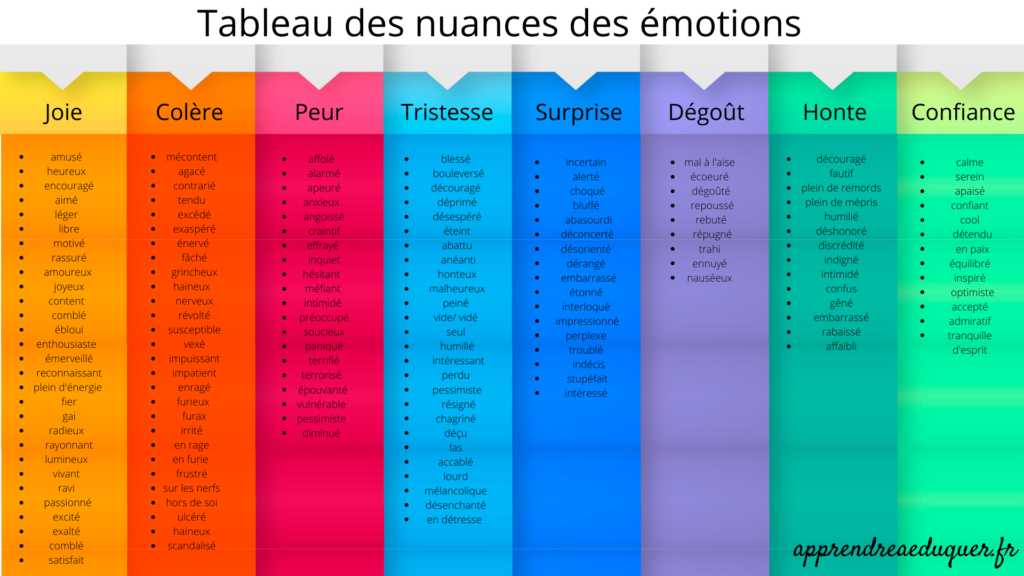
This writing work assumes you can identify and name emotions, and a vocabulary list sharpens emotional awareness by reflecting the nuances of the register. The table below is not exhaustive, but it widens the words you have available.
A broader lexicon helps you refine your thinking and find the words that best match what you actually lived. Keep the list nearby while you write, and add words that feel right to you. The same naming habit serves well when you talk with children about feelings, and it pairs naturally with how love arises in the early months of parenthood. Just as Barron Trump and choosing nipple creams show, everyday parenting topics offer plenty of chances to practice naming feelings.
Make the Habit Stick
You do not need a long session. A few lines at the end of the day, or a page before a hard conversation, is enough to start. Choose a moment you can protect, keep the notebook where you will see it, and let some entries be messy.
Some days you will write about your child, some days about yourself. Both count. If you want a gentle way in, jot down a line about a book you read together, or about a toy your child keeps returning to — the outdoor toys list works well as a prompt for what play actually looked like that day.

My hands-on take
I started keeping a notebook after a stretch when every evening felt the same and I could not have told you why I was tired. Writing three lines before bed changed very little at first, then slowly a lot: I began noticing that the tense days were the ones with an unresolved conversation in them, not the busy ones.
What helped most was keeping a small list of feeling words on the inside cover. When "bad day" was the only phrase I had, I would scan the list and usually find something truer, like disappointed or overlooked. My entries are still messy and often very short, and I still skip days. But the notebook has become the place where I work out what I actually want to say before I say it out loud.
Frequently asked questions
Do I need to be good at writing to keep an emotional journal?
No. The point is expression, not style. Short, messy notes work as well as long paragraphs, and you can draw or paste things in instead of writing.
What if I do not know what I am feeling?
Write anyway, without overthinking it. Meaning often surfaces as you go, or you can write as if addressing someone you trust completely.
Can an emotional journal help before a difficult conversation?
Yes. Writing first clarifies what you want to say and lowers the emotional charge, and your notes can steady you if you lose your thread during the talk.
How do I find the right words for my emotions?
Use a short vocabulary list and look for the most precise term rather than a general one. A wider lexicon makes your thinking clearer over time.
Product Reviews
 Best Toys for Dogs With High Prey Drive |
Best Outdoor Toys for 3-4 Year Olds |
Best Outdoor Toys for 6 Year Olds |
Best Harness for Poodle |
Best LEGO Sets for Adults |
Best Travel Toys for 4 Year Olds on Airplane |
Best Toy Stores in Washington DC |
Best Potty Training Toys |
Best Toys for Tripod Dogs |
Maillot equipe de france







