


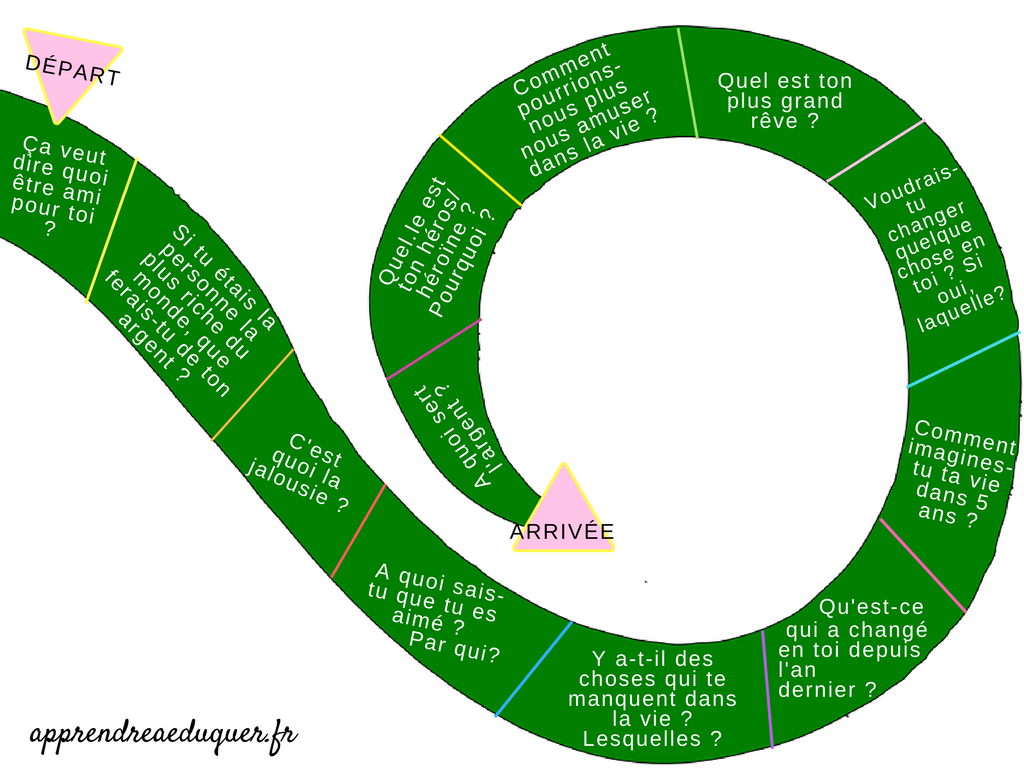
The emotional goose game is a simple family board game built around heart-to-heart questions, designed to spark genuine conversation rather than competition. Its aim is to share and cultivate positive emotions together, tightening family bonds and creating a more harmonious atmosphere at home.
Rooted in the principles of positive psychology, the game works best when a caring framework is set first. Questions are invitations, never obligations, and every participant should know that all emotions and all answers are acceptable.

All you need is a die, a token per player and the question board. The benefits are quiet but real: talking about positive experiences, feeling connected to yourself and to others, building a sense of belonging, and learning to name and communicate what you feel.
Quick takeaways
- Questions are invitations: anyone may pass on a question without explanation.
- Set the framework first: no judging, no mocking, all emotions acceptable.
- Use the classic goose game rules, with an exact roll needed to finish.
- Revisiting a square lets another player invent a fresh question.
- Add your own prompts about self-esteem, wishes, needs and fears.
- Keep sessions short and end while everyone still enjoys it.
What the Emotional Goose Game Is and Why It Works
This is a classic goose game format with a twist: instead of moving and staying silent, the player who lands on a square answers the question written there. The questions focus on emotions, relationships, memories and wishes, so the board becomes a gentle excuse to talk.
The stated goals are to share and cultivate positive emotions in the family, to strengthen bonds and to create a more harmonious family atmosphere that supports cooperation and communication. It draws on positive psychology principles, which emphasise what is going well rather than what is going wrong.
Because the format is familiar, children often relax into it quickly. If your family already enjoys structured play, you may find the same easy rhythm in affordable family toys that keep everyone at the table together. Even small hiccups, like a school handling late arrivals, show how shared rituals can keep things calm.
Who it suits
It works with children old enough to answer open questions and with adults willing to answer honestly. Mixed ages are fine, as long as the youngest players are allowed shorter answers.
Setting a Kind Framework Before You Start
Before the first die is rolled, agree on the ground rules together. Remind everyone that the questions are proposals, not obligations, and that anyone has the right not to answer a question. That single rule protects shy children and tired parents alike.
Insist on authenticity and kindness: nobody judges and nobody mocks. Repeat that every emotion, whether your own or someone else's, and every answer is acceptable. This is the difference between a game that opens people up and one that closes them down.
If a child is reluctant to speak in a group, give them time and let another player go first. Some children express feelings more easily while drawing or moving, so keep simple toddler toys nearby for younger siblings who want to join in without answering. If a child seems unsettled, consider why young children get car sick before travelling to a game session elsewhere, and plan rainy day home activities for calmer follow-up play.
| Element | What it involves | Practical tip |
|---|---|---|
| Players | Every family member who wants to join | Let reluctant players observe first |
| Equipment | Die, one token per player, question board | Laminate the board for reuse |
| Turn | Roll, move, answer the question landed on | Keep answers short with young children |
| Finish | Exact number required to reach arrival | Move back for extra points |
| Repeats | Landing on a visited square | Nominate another player to ask a question |
| Framework | Kindness, authenticity, no obligation | Repeat the rules before every game |
The Simple Rules of Play
Each family member chooses a token and places it on the start square. The first player rolls the die and moves forward as many squares as the number shown, then answers the question on the square where they land. Play continues clockwise.
As in the traditional goose game, you need the exact number to finish. If you roll more than needed, you move back from the arrival square by the extra points. If a player lands on a square they have already visited, they can nominate another player, who then asks a question of their own invention.
The rules are deliberately flexible and can be changed to suit your mood or your children's needs. Shorter games, easier questions or a no-timer version all work, much like adapting outdoor play equipment to the age and energy of the children using it.
Example Questions to Add to the Board
Once the printed questions are used up, or if you want to build your own board, these prompts give a good sense of the tone. They move from self-awareness to imagination, then to needs and fears.
Self and imagination
What do you like about yourself? If you had a magic wand, what would you change in your life? If you could turn into someone else for 24 hours, who would you choose, and why?
Desires and needs
If you listed your five biggest wishes, leaving out buying presents, what would be on the list? What do you need right now from a brother, a sister, a friend or a parent? What are you most afraid of in the future?
Finally, ask what the player is passionate about at the moment and why. Passions shift quickly in childhood, and this question catches them in the moment, much like the small changing interests behind child personality traits. Just as you might smear after sun to care for skin after a sunny day, or learn about bilirubin and newborns to care for a baby's health, these questions help you care for a child's inner world.

Getting the Most Out of Family Game Time
Choose a calm moment rather than a rushed evening, and keep the session short enough to end on a good note. A game that stops while everyone is still enjoying it is far more likely to be requested again.
Listen without correcting, and resist the urge to turn an answer into a lesson. When a child shares something difficult, acknowledge it simply and thank them for telling you. Modelling that behaviour yourself, by answering honestly, teaches more than any instruction.
Keep the board somewhere accessible so it can come out on a rainy afternoon or a quiet Sunday. Families who rotate between games often pair it with outdoor toys for five-year-olds for the days when energy needs to go outside instead.

My hands-on take
We first played this on a grey Sunday when nobody wanted to go outside. I expected the usual silliness, but the die did most of the work: landing on a square gave everyone permission to say something they would not normally bring up at dinner. My youngest passed on two questions and answered a third in a single word, and that was fine.
What I learned is that the framework matters more than the questions. The evening we forgot to repeat the no-judging rule, an answer got teased and the game ended early. Since then we say the rules out loud every time, keep the board on a shelf near the kitchen table, and stop after a handful of rounds. It has become one of the quiet rituals we actually keep.
Frequently asked questions
What if my child refuses to answer a question?
That is allowed and should be stated clearly before the game begins. The questions are invitations, so a child can pass and let the next player take their turn. Accepting the refusal calmly keeps the game a safe space.
Can we change the rules?
Yes, the rules are meant to be adapted to your family's needs and desires. You can shorten the board, simplify questions for younger children, or skip the exact-roll finish. The point is conversation, not competition.
What do we need to play?
A die, a token for each player and the printed question board are enough. If you build your own board, write questions on squares in the same spirit as the examples. Keep it simple so setup never becomes a barrier.
Is it suitable for mixed ages?
It generally works well when children can answer open questions, with adults adapting their own answers to the group. Younger children can take part with shorter, simpler prompts. Let each player answer at their own level.
Product Reviews
 Best Toys for Dogs With High Prey Drive |
Best Outdoor Toys for 3-4 Year Olds |
Best Outdoor Toys for 6 Year Olds |
Best Harness for Poodle |
Best LEGO Sets for Adults |
Best Travel Toys for 4 Year Olds on Airplane |
Best Toy Stores in Washington DC |
Best Potty Training Toys |
Best Toys for Tripod Dogs |
Maillot equipe de france







