


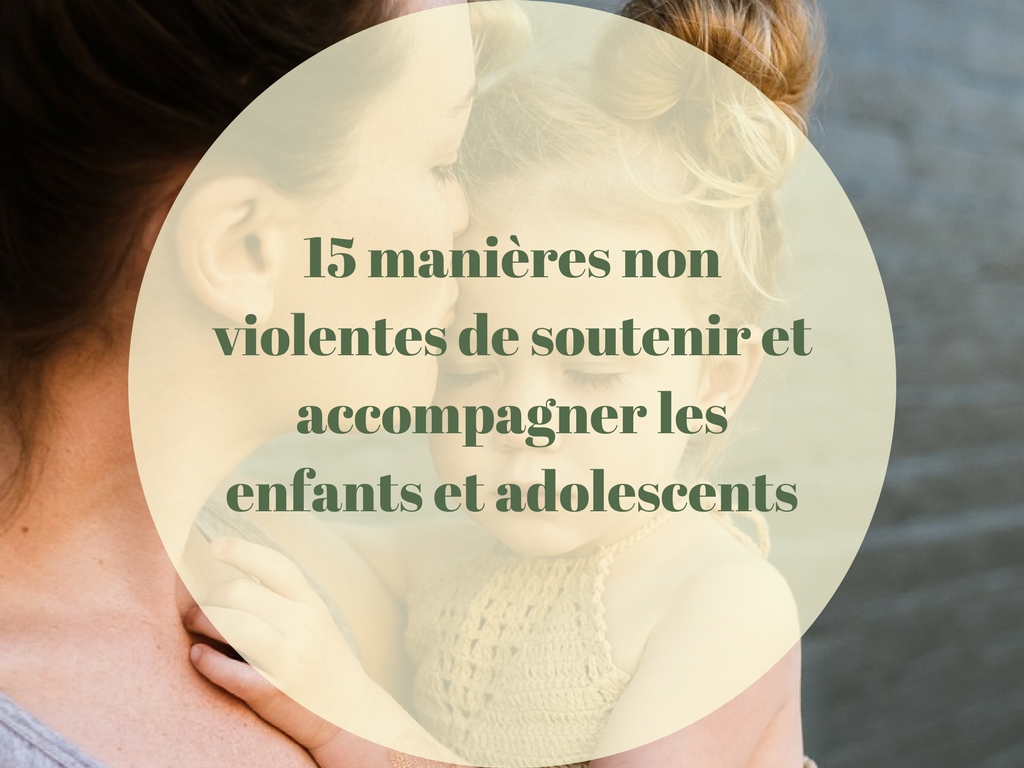
Nonviolent ways to support children and teens start with one simple idea: your real power lies in connection, not control. Picture yourself as the aircraft carrier and your child as the plane that lands to refuel. That image, drawn from attachment theory, captures what children of every age need: a reliable, loving base they can return to.
From that base, a handful of practical attitudes do most of the work. They replace shouting, threats and endless negotiation with honesty, guided choices, fair rules and calm examples. None of it requires perfection, only repetition.

Quick takeaways
- Connection is fuel: fill the tank with play, laughter, listening and time.
- Share worries honestly instead of trying to control outcomes.
- Use open questions to build your child's own problem-solving power.
- Phrase rules as "when… then…" and decide them together.
- Model calm out loud so your child can copy it.
- Welcome emotions before offering solutions.
The Power of Love: Be the Aircraft Carrier
Children turn first to their main attachment figure when something feels dangerous, and that need never disappears. Teens and adults alike want to know their parents are unconditional, loving supporters. A child whose emotional tank is nearly empty becomes more irritable, more easily overwhelmed, and may act out simply to get attention and refill it.
So treat connection as fuel. Grab small chances to play, laugh, smile, hug, listen and spend unhurried time together. If you are raising a baby and juggling exhaustion, the piece on mother's sleep is a gentle reminder that your own rest is part of the fuel supply. The same care applies to touching food safely.
Everyday ways to refuel
A two-minute game in the kitchen, a shared joke, a walk with no agenda: these small deposits matter more than grand gestures. When connection is steady, correction lands more easily, which is why accompanying from love rather than fear changes the whole tone of a household.
The Power of Authenticity and Vulnerability
Trying to control, forbid and impose limits mostly earns shrugs, hidden laughter or open rebellion. That does not mean letting children do whatever they like. It means sharing your worries about their safety, health and future while expressing your emotions and making sure the message of love comes through.
This requires acknowledging the child's freedom. Vulnerability works because when the adult changes attitude, the child can change too. You can then solve problems together, with care for each other's needs. Speak slowly when voicing a concern about a decision, so your child has time to take the message in. Just as you would plan for proper rest before a hard conversation, give everyone room to pause.
What it sounds like
Instead of "You never listen", try "I get scared when I don't know where you are, and I'd like us to find a system that works for both of us." The honesty is real, the limit is still there, and the relationship stays intact. The same care applies to everyday items, so check teethers regularly.

| Situation | Less helpful | More helpful |
|---|---|---|
| Child is irritable | Demand an explanation | Offer a short game or hug first |
| Teen makes a risky plan | Ban it outright | Share your worry slowly, then ask questions |
| Rule keeps being broken | Repeat the ban louder | Rewrite it as when… then… together |
| Child is upset | Fix it immediately | Name the feeling and stay close |
| You feel angry | Hide it and snap later | Narrate your breathing out loud |
The Power of Freedom: Let Them Think
Freedom builds security because it lets children develop personal power and feel capable. This is authentic freedom, rooted in a secure emotional bond. "Do what you want, I don't care" is not freedom; the missing connection is what makes it frightening.
Use freedom by calling on your child's thinking. Ask open questions: and then what? What happens after that? What might someone else say? What could you do then? You can also guide them toward their own strengths: how could you use your creativity, your empathy or your ability to sum things up here?
Curiosity instead of commands
Questions work at every age. Even toddlers benefit from being offered real choices, and the everyday funny phrases from children often show how seriously they take these small negotiations.
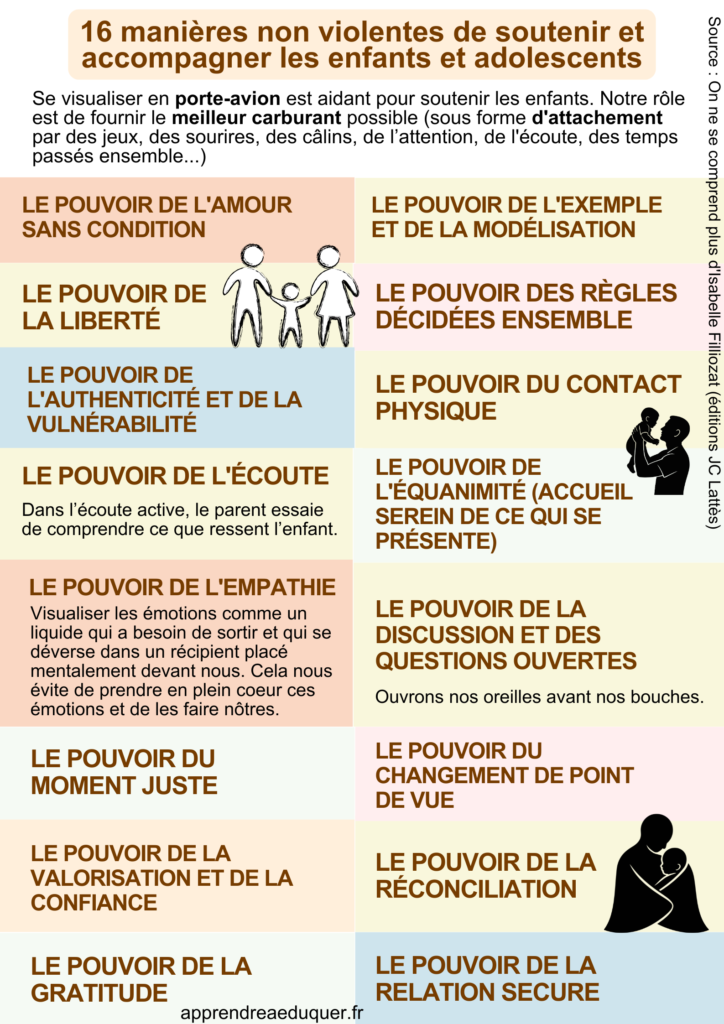
The Power of Rules: Procedures, Not Just Bans
A ban is a limit phrased as "don't". A rule is a procedure phrased as "when… then…". Children and teens are far more likely to follow a rule when it is stated in affirmative language, decided together, matched to their developmental level, and set within a generally warm relationship and home atmosphere.
Before expecting compliance, check that your child actually has the emotional and relational skills the rule requires. A rule about staying calm needs a child who knows how to calm down, and that skill is learned, not ordered.
Testing the fit
If a rule keeps failing, the rule or the skill is usually the problem, not the child. Rewrite it together, keep it short, and revisit it as your child grows.

The Power of Example and Modeling
Imitation is the main road to learning, and showing beats a thousand words. Say out loud what you are doing: "I can feel my jaw tightening and I want to shout. I'm stopping, breathing deeply, and we'll start again calmly." That narration teaches self-regulation better than any lecture.
You also choose not to model "do as I say, not as I do". Put the phone down when your child is talking to you, rather than answering a call mid-sentence. Small consistencies build trust, and trust is what makes children at six and older kids willing to cooperate.
Play as practice
Building, drawing and pretend play all give children a low-stakes space to rehearse patience and problem-solving. Simple screen free toys can carry a lot of that quiet learning.

The Power of Welcoming Emotions
Welcoming means receiving a child's emotions without judging, fixing or shutting them down. Name what you see, stay close, and let the storm pass. A feeling that is accepted loses its charge far faster than one that is argued with.
This is the same principle behind sitting the baby at the: the routine holds the child, and the child learns to hold the feeling. It also shapes how they handle bigger moments later, from growing long hair debates to friendship troubles.
Practical habits
Keep your voice low, get down to eye level, and avoid solving the problem in the first minute. Once calm returns, the earlier tools of questions, rules and honesty work again.
My hands-on take
I tried the out-loud narration one evening when I felt my own patience snap. Instead of raising my voice, I said I could feel my shoulders tightening and needed a minute to breathe. My child stared at me, then did the same thing, exaggerated and slightly funny, and the argument simply deflated.
The other habit that stuck was asking questions instead of issuing verdicts. "And then what?" has saved more conversations than any lecture I ever gave. It is slower, and sometimes I get it wrong and slip back into control mode. But the tank stays fuller, and refueling gets easier each time.
Frequently asked questions
Is this approach the same as letting children do whatever they want?
No. Limits and safety still matter. The difference is that limits are expressed honestly, decided together where possible, and paired with a clear message of love.
What if my teenager refuses to talk?
Keep the door open with short, low-pressure moments rather than long interrogations. Slow, honest statements about your own feelings often invite a response more than questions do.
How long does it take to see change?
It varies by child and situation. What matters is consistency: repeated small moments of connection and calm modeling gradually shift how a child responds.
Product Reviews
 Best Toys for Dogs With High Prey Drive |
Best Outdoor Toys for 3-4 Year Olds |
Best Outdoor Toys for 6 Year Olds |
Best Harness for Poodle |
Best LEGO Sets for Adults |
Best Travel Toys for 4 Year Olds on Airplane |
Best Toy Stores in Washington DC |
Best Potty Training Toys |
Best Toys for Tripod Dogs |
Maillot equipe de france







