


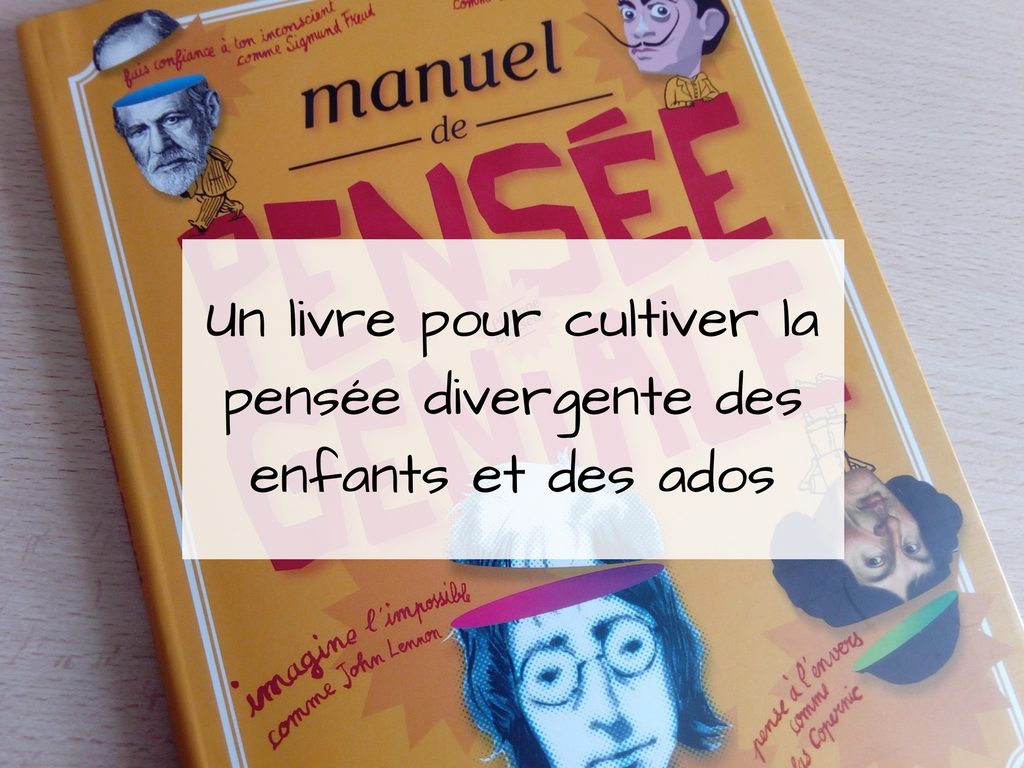
Creative thinking for kids is at the heart of a playful book that turns games, exercises and resources into a real training ground for the imagination. It invites children and teenagers to stretch their creative intelligence rather than memorise a single right answer.
This new edition of an earlier title built around the same idea draws on the working habits of 27 geniuses from very different eras: artists, scientists, thinkers and writers who share their "creative methods" with young readers.

The premise is simple and generous: geniuses think outside the box, beyond the frame imposed by school and society, and that way of thinking can be practised.
Quick takeaways
- The book offers games and exercises to train creative intelligence in children and teens.
- It draws on the creative methods of 27 geniuses from art, science, philosophy and literature.
- The core idea: several answers are possible, and getting things wrong is part of searching.
- Each double page turns one genius's habit into a concrete, playful prompt.
- Activities suit school, home, tutoring or therapy, with an adult guiding younger children.
- The aim is to discover how each child is brilliant, not how brilliant they are.
What the book is really about
Philippe Brasseur, the author, starts from the idea that great minds succeed because they thought differently. The book therefore offers small exercises designed to help young readers think in another way, bubble with ideas, discover their personal talent, become more curious and imaginative, and work with more determination.
At the "school of geniuses", there are several possible answers to a question, and you are allowed to search and to get things wrong before finding an answer. The real question is not how brilliant each person is, but how each person is brilliant: which talent makes us feel more alive and helps us contribute to the wellbeing of others.
If you want to warm up before opening the book, simple creativity games at home are a natural starting point.
Who it is for and where to use it
The book is aimed at children from around nine years old, as well as teenagers and even adults. Some exercises can be offered to younger children, but in that case an adult should act as a tutor and guide the activity.
The activities work in many settings: at school, at home, or in a professional context such as tutoring or psychological support. That flexibility makes it easy to slip a short exercise into a quiet afternoon or a homework break, and families who are also considering suitable small mammals can plan calm indoor sessions too.
Parents who worry about a child's reaction to a wrong answer may find it useful to read about handling disappointment first, so the child feels safe experimenting. On sunny days, it also helps to check sunburns in children before heading outside.
| Genius | Prompt | What it trains |
|---|---|---|
| Christopher Columbus | Keep a logbook of something new or frightening | Curiosity and courage |
| Einstein | Visualise in detail what you cannot see | Imagination |
| Van Gogh | List everything you have not yet tried | Perseverance |
| Dali | List ten rules, then ten permissions | Rule-breaking |
| Stravinsky | Name your prejudices, then do the opposite | Awareness of the box |
How each double page works
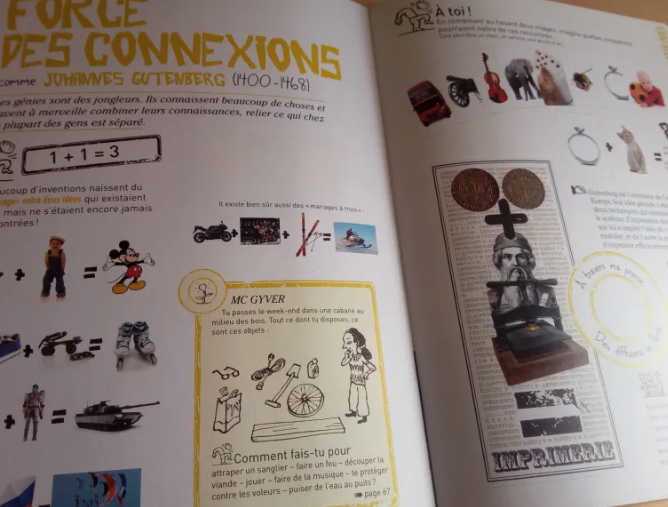
Every double page presents the way of thinking or working of a well-known genius, and all disciplines are represented, from Dali and John Lennon to Charles Darwin and Socrates. Each spread turns one habit into a concrete prompt.
Three examples of prompts
"Go into the unknown like Christopher Columbus": what if we kept a logbook where we wrote or drew what we did that was new or even frightening today? "Visualise like Einstein": what if we practised visualising in detail to imagine what we cannot see? "Persevere despite failure like Van Gogh": what if we made a list of everything we have not yet tried?
Dali, through the author, suggests listing ten rules we have been taught and then ten permissions we grant ourselves to break them. Stravinsky invites readers to become aware of the "box" before thinking outside it: pick a field you want to innovate in, list your prejudices by completing "Usually…", "You must always…", "Others expect me to…", then do exactly the opposite. As with frequent hair problems, the key is to identify the root cause first.
Why divergent thinking matters at home
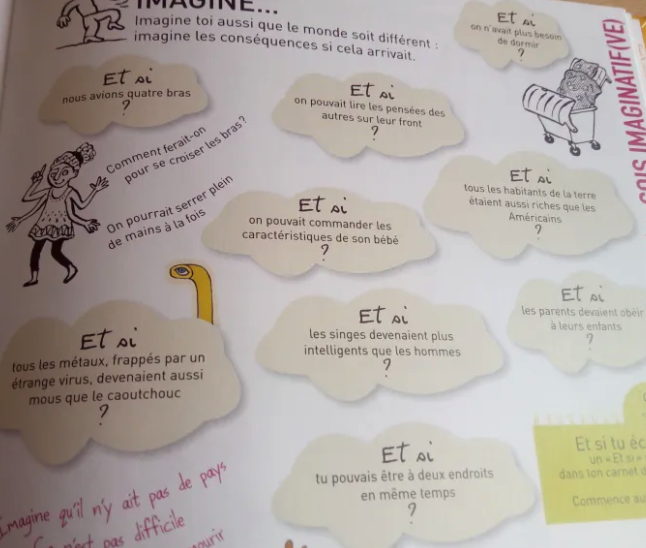
All the activities, quotations and examples in the book train creative intelligence and divergent thinking, the ability to generate many possible answers instead of one. That muscle is useful well beyond art class: it helps children solve problems, adapt and ask better questions.
The book is packed with inspiring anecdotes and motivating quotes, a goldmine for pushing children to think more and differently. It also gives parents a shared vocabulary for praising effort and curiosity rather than only results.
If your child is drawn to hands-on building, loose LEGO joints and similar fixes are a nice low-stakes way to practise trial and error together.

Making the ideas stick day to day
A book of exercises works best when it becomes a routine rather than a one-off. Try keeping a small notebook for the logbook prompt, or a "permissions" page on the fridge where the family adds new ideas.
You can also connect the exercises to everyday life: a museum visit, a walk, a cooking session. When a child is stuck, ask "what would you try if nothing could go wrong?" and let them answer without judging the result.
For families drowning in stuff, a clear-out can even become a creative challenge, as suggested in these tips on organizing toys and in this piece on reusing old toys.

Getting the most from the book
Read one double page at a time rather than rushing through, and let the child choose the genius that appeals to them. Some prompts take five minutes, others become week-long projects.
Keep the tone playful: the goal is not to produce a masterpiece but to enjoy the detour. If a child compares themselves to a famous name, remind them that the book is about methods, not about becoming a genius.
Finally, model the behaviour yourself. When you try something new or admit a mistake, you show that thinking outside the box is allowed for adults too. A few encouraging phrases repeated often can reinforce that message.
My hands-on take
I tried the Dali exercise with my own children on a rainy afternoon, and it turned into the liveliest conversation we had had in weeks. Listing the "rules" was easy; finding permissions to break them took a little courage, and that was exactly the interesting part.
What struck me most was how quickly the children stopped asking whether their answer was right. Once the frame loosened, they started offering ideas freely, and I found myself doing the same. I now keep a small notebook for the Columbus logbook prompt, and we add to it whenever something new or slightly scary happens. It is a simple habit, but it has made us all a bit more curious about the ordinary days in between.
Frequently asked questions
What age is the book suitable for?
It is designed for children from around nine years old, teenagers and even adults. Some exercises can be used with younger children if an adult guides them as a tutor.
What does "divergent thinking" mean?
It is the ability to generate many possible answers to a question rather than a single correct one. The book trains it through games, quotes and examples.
Can the activities be done at school?
Yes, they work at school, at home, in tutoring or in psychological support. The format is flexible enough for short sessions or longer projects.
Do children need to know the famous geniuses already?
No. Each double page introduces the person and their method through a simple, concrete prompt, so prior knowledge is not required.
Product Reviews
 Best Toys for Dogs With High Prey Drive |
Best Outdoor Toys for 3-4 Year Olds |
Best Outdoor Toys for 6 Year Olds |
Best Harness for Poodle |
Best LEGO Sets for Adults |
Best Travel Toys for 4 Year Olds on Airplane |
Best Toy Stores in Washington DC |
Best Potty Training Toys |
Best Toys for Tripod Dogs |
Maillot equipe de france







