


Calming words at bedtime can turn a nightly battle into a gentler transition, because the shift from day to night is a big one for a small child. It means moving from the group to solitude, from light to darkness, from noise to silence.
A child's nature is to play, observe, imitate, create, laugh, learn, explore and experiment, so stopping all of that to face quiet and darkness is genuinely hard. Sleep problems are common for exactly this reason, and they are not a sign that something is wrong with your child.

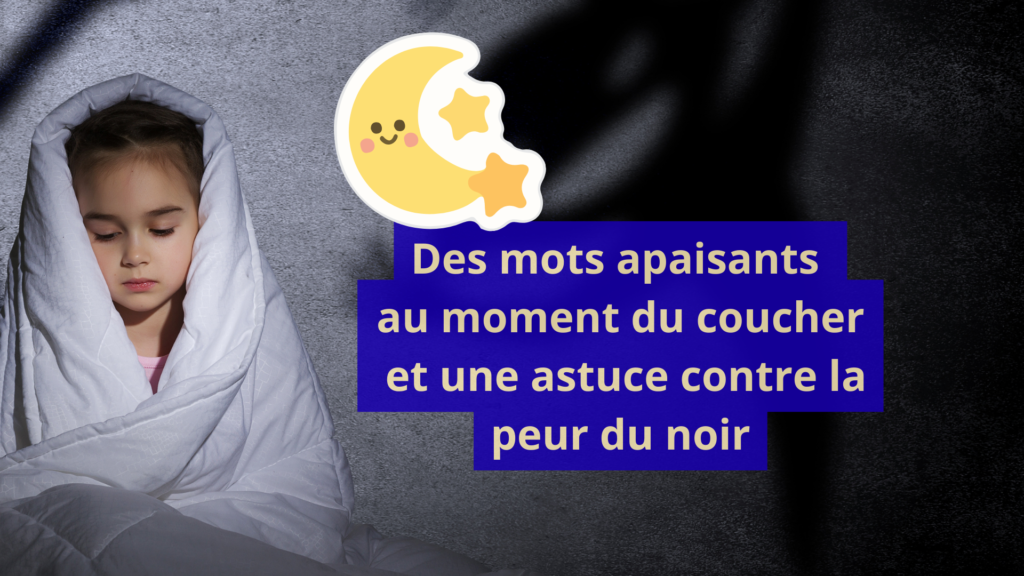
What helps is naming the night out loud, offering a small measure of control, and keeping the routine predictable. Below you will find a ready-to-use script, book ideas and a torch trick for children who are afraid of the dark.
Quick takeaways
- Name the night out loud: softer light, muffled sounds, everything slowing down.
- Validate the reluctance before explaining why sleep matters.
- Keep a short, predictable routine in the same order every evening.
- Offer a small torch instead of forcing total darkness.
- Choose a cool LED light rather than a large torch that heats up.
- Let your child make small choices, such as which bedtime book.
Reassuring words to say at bedtime
Putting words on the night can soothe and reassure children. One approach, shared by writer and screenwriter Sophie Carquain in her good-night kit, is to explain what is happening rather than simply insisting that it is time to sleep. The message starts with validation: it is normal not to want to go to bed, and wanting to keep playing or stay with us shows how much your child loves what they are doing.
From there, the script moves to a simple truth: nobody can live without rest, and we need sleep at least as much as food. Then it addresses what may actually be frightening — all the changes the night brings. The light grows softer, just enough to let our eyelids close; sounds are muffled because other people are going to bed too.
Why this framing works
It reframes the night as something that slows down rather than something that stops. Everything runs gently and silently, but nothing is dead, and thanks to sleep we wake up full of energy, ready to play again. If your child is sensitive to big feelings in general, this reflective style pairs well with children need gaze and the idea of staying present rather than rushing away.
Books that help children settle at night
Stories are a natural extension of calming words, because they let a child picture the night instead of imagining it. A book about what happens while you sleep can help tame the unknown, and a gentle falling-asleep story works as a resource you return to every evening. Picture books also give you a shared script, so you are not improvising when everyone is tired.
Keep a small shelf of bedtime books next to the bed and let your child choose one, since that small decision adds a feeling of control. For families juggling several children, the same principle of a calm, repeatable ritual is echoed in motherhood blogs that discuss realistic evening routines. If your child is a builder who needs to wind down with their hands first, a short tidy-up routine such as store LEGO sets can become part of the wind-down itself.

| Tool | When it helps | What to watch for |
|---|---|---|
| Calming script | Child resists or worries at lights out | Keep tone slow, repeat the same words |
| Picture book | Child needs help imagining the night | One story, not a negotiation |
| Small LED torch | Fear of the dark | Check it stays cool, secure batteries |
| Night light | Transition to darkness | Fade it out gradually |
| Predictable routine | Every evening | Same steps, same order |
A torch against fear of the dark
If a child is afraid of the dark, forcing them to sleep in total darkness is pointless. Instead, give them a small torch to keep under the pillow. It acts as a bridge between the night light being on and being off, and it hands responsibility to the child, who becomes master of the situation.
The wording matters: explain that you are switching off the night light, and that they can keep their torch close at hand and switch it on whenever they feel afraid. This is far more effective than a debate about whether the fear is real, a point explored further in fears inherited when anxious parents wonder where the worry came from.
Safety first
Watch out for the risk of burns from bedding: a small LED light is a better choice than a large torch that can heat up if it stays on for a long time. Check the light is cool to the touch, and keep the batteries secure.

Building a bedtime routine that holds
A routine does not need to be long, but it does need to be predictable. The same few steps, in the same order, tell a child's body what comes next: tidy up, bath, pyjamas, one story, calming words, light out. Predictability does the heavy lifting, so you can keep your own voice slow and quiet even on difficult evenings.
Try to avoid turning bedtime into a negotiation about the number of stories, because that keeps the brain alert. Instead, offer limited choices inside the routine, such as which book or which cuddly toy. Parents who feel anxious themselves often pass that tension on, which is worth noticing, as discussed in afraid of hurting and in want to be small about the wish to be little again.

When the evening feels like a battle
Some evenings will still be hard, and that is normal. What matters is that the pattern stays the same, so a difficult night does not reset the whole routine. If your child calls out repeatedly, respond briefly and calmly, repeat the same reassuring sentence, and return them to bed without a long conversation.
It also helps to look at the whole day: a very busy afternoon, a late screen, or a big change at home can all show up at bedtime. For younger children, simple outdoor play earlier in the day often supports better settling, and outdoor toys preschoolers offers ideas that tire children out in a good way. If you are managing the evening alone with a baby as well, manage breastfeeding has practical tips for making the routine workable.
My hands-on take
In our house, the script worked better than any threat or countdown. I started saying the same few sentences every night, slowly, and after a couple of weeks my child began finishing them for me. That was the moment I realised the words had become part of the routine, not a lecture.
The torch was the other turning point. We swapped the big old torch for a small LED one after I noticed the bedding felt warm where it had been left on. Now it lives under the pillow, and most nights it stays there unused, which feels like the whole point.
Frequently asked questions
Is it wrong to let my child sleep with a torch?
No. For a child who is afraid of the dark, a small torch under the pillow is a sensible transition between a night light and full darkness. It gives the child a sense of control rather than leaving them alone with the fear.
What should I say when my child says they are not tired?
Acknowledge it first, then explain simply that everyone needs rest, just as we need food. Describing how the night gets quieter and softer often calms the worry behind the protest.
How long should the bedtime routine be?
Keep it short and repeatable rather than long and elaborate. The value comes from the same steps happening in the same order, which signals to the body that sleep is coming.
Should I remove the night light completely?
Not necessarily. Fade it out gradually and pair the change with a torch the child can switch on themselves, so the darkness never feels imposed.
Product Reviews
 Best Toys for Dogs With High Prey Drive |
Best Outdoor Toys for 3-4 Year Olds |
Best Outdoor Toys for 6 Year Olds |
Best Harness for Poodle |
Best LEGO Sets for Adults |
Best Travel Toys for 4 Year Olds on Airplane |
Best Toy Stores in Washington DC |
Best Potty Training Toys |
Best Toys for Tripod Dogs |
Maillot equipe de france







