


Emotional explosions in gentle parenting are one of the most common hidden struggles: parents who deeply believe in kindness and respect still find themselves snapping, shouting and later regretting it. Being convinced by the values of positive education is not always enough to change daily habits.
This article looks at why our reactions escalate, how past experiences shape them, and which simple practices help us respond with care instead of repression. The goal is not perfection but more connection, one moment at a time.

Quick takeaways
- Gentle values need nervous-system support, not just conviction.
- Old wounds often explain why small behaviours trigger big reactions.
- Ask what need hides behind your child's behaviour before reacting.
- Sleep, breath, nature, movement and self-empathy build stress resistance.
- Hand over to someone else when you feel the explosion coming.
- Tender contact and repair after conflict lower tension for everyone.
Why gentle values are not always enough
Many parents who want a kinder approach feel helpless in front of their own excesses: sudden anger, reactions they later regret, words they wish they could take back. Believing in gentle values does not automatically rewrite the reflexes stored in memory.
We tend to get angrier precisely when our own parents did not respond to our emotions and needs in a similar situation. The behaviour we find “exasperating” in the child awakens our own history, our own wounds, which we would rather avoid than relive. Understanding this is the first step toward feeling small again without being overwhelmed by it.
Questions that build connection
Instead of asking how to stop the behaviour, ask why you cannot see the positive motivation behind it. If you had behaved this way as a child, what did you feel, and what did you need? How can you offer your child what you did not receive? These questions move us from repression toward connection.
Working through old wounds
Human nature should push us toward the “caregiving” hormones when our children show difficult emotions. Yet many of us struggle to respond with empathy because those emotions activate our stress circuit rather than our care circuit. In our own history, we felt fear or shame when our parents reacted punitively while we were upset.
Had we been welcomed in our emotions and accompanied with empathy, we would naturally feel that caregiving impulse when a child whines, is insolent, demands or refuses to cooperate. Behaviours are communication and always carry a positive motivation. A personal piece of inner work can be useful for parents who lose their temper without understanding why the principles never stick, and simple home science experiments can offer a calm, shared way to reconnect.
This is not about blame. It is about recognising that our children's difficult moments are often the doorway to a personal reflection we never allowed ourselves to finish. Sharing stories with children can also open gentle conversations about feelings.
| Technique | When to use it | With children? |
|---|---|---|
| Mental body scan | First sign of tension | Yes, quietly |
| Slow breathing | Before responding | Yes, together |
| Step away briefly | When voice rises | Only if safe |
| Hand over to partner | Repeated escalation | Yes |
| Gentle physical contact | After the storm | Yes |
| Time in nature | Daily prevention | Yes |
Lowering the stress that fuels outbursts
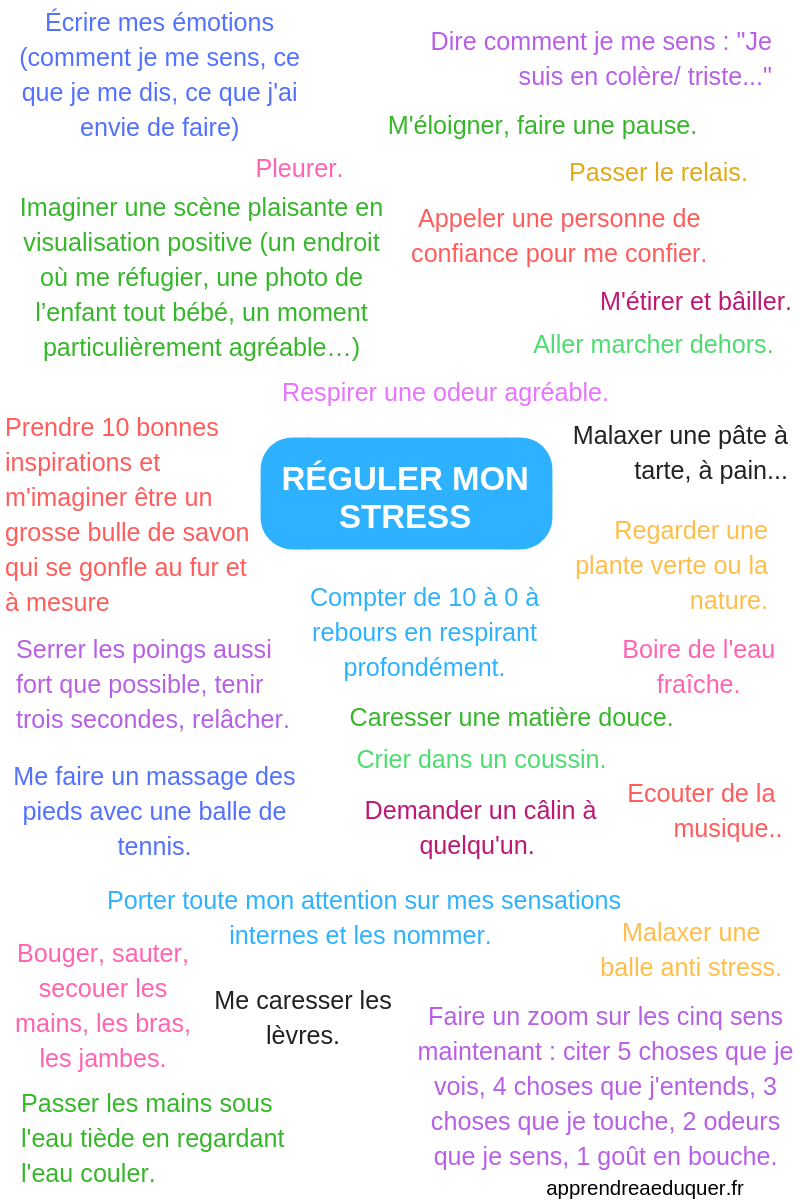
For some people, stress resistance is low because their parents never gave them the tenderness, empathy, respect and warmth needed to learn self-soothing in distress. The good news is that stress tolerance can be trained. Start with mental acknowledgement of what is happening in the body: sensations, contractions, where it sits and how it feels.
Add breathing, a diet low in refined white sugar, quality sleep, self-empathy (being there for yourself, welcoming your emotions with a big yes, offering yourself kindness), a pleasant activity that is ideally manual and creative, regular contact with nature and physical exercise. When you feel reactions turning explosive, a small calm-down checklist on the fridge can help, and some of these activities can be done with the children, much like learning to dance together.
Whenever possible, hand over to your partner, family, friends or a babysitter to avoid an explosion. Even a short break, like the pause of a bedtime routine done by someone else, can reset the tone of the evening. Remembering what babies feel can also deepen your empathy for early stress.

Provoking the emotion of love
Love is not a reward, but fuel. Without trust in the other person, love and friendship are impossible, and tender moments help lower stress levels so violent reactions become less likely. Seek moral and verbal support from family, friends, a community, a therapist or an association.
Offer gentle, consented physical contact and cuddles with your children or partner, and enjoy the calming effect of stroking a pet. Another powerful trick is to picture the “difficult” child as a tiny baby, shifting the image of an exasperating child into that of a small, dependent and fragile being.
These small gestures echo what we see in greeting without kisses, where consent and respect shape every affectionate contact.

Thinking in terms of needs and attachment
Every action, in children and adults, is motivated by a positive intention: feeding unmet fundamental needs. All humans share the same needs, which should not be confused with strategies, the acts we choose to satisfy them. Some people meet their need for rest by going to bed earlier, others by taking a nap.
Emotions and needs go together: emotions emerge to draw attention to an unmet need, and emotional education means finding the need hidden behind a feeling. The image of the emotional tank illustrates attachment: this reservoir of love must be refilled each time it empties, and the primary attachment figure plays a central role.
Understanding development helps too. A newborn's adaptation, much like the gradual newborn adaptation to the world, reminds us how much scaffolding young children still need from us.
Everyday anchors for calmer reactions
Regulation is built from repetition, not willpower. A few predictable anchors, practised when you are calm, make it easier to reach for them when you are not. Think of them as small habits rather than a performance to judge yourself against.
Play and shared joy matter as well. Choosing open ended toys that invite calm, focused play gives both of you a low-pressure way to reconnect after a difficult moment, and simple rituals like music or stories help close the day softly.
Finally, remember that repair matters more than perfection. Naming what happened, apologising simply and reconnecting teaches children that relationships survive conflict, which is itself a lesson in emotional regulation.

My hands-on take
I remember a evening when a spilled glass of water sent me into a shouting fit I barely recognised as mine. What helped was not a new rule but a small ritual: I started naming my body sensations out loud before responding, and I asked my partner to take over when my voice rose. Over weeks, the gap between trigger and reaction grew just enough to choose differently.
I also learned to repair quickly. A short apology, a hug and a calm explanation did more for our relationship than any perfect streak of patience ever could.
Frequently asked questions
Why do I lose my temper even though I believe in gentle parenting?
Because reactions are stored in memory and stress circuits, not in your values. When a child's behaviour echoes something from your own childhood, your stress response can override your intentions. Recognising this pattern is the first step to changing it.
How can I calm down in the middle of an outburst?
Start by noticing body sensations, then breathe slowly and, if possible, step away or hand over to another adult. Practising these steps when calm makes them easier to access under pressure.
Do I need therapy to stop reacting this way?
Not necessarily, but inner work on childhood wounds can help parents who cannot understand their own reactions. Support from a therapist, community or trusted person makes the process easier.
What if I already shouted?
Repair the connection afterwards: name what happened, apologise simply and reconnect. Children learn from seeing that conflict can be resolved with care.
Product Reviews
 Best Toys for Dogs With High Prey Drive |
Best Outdoor Toys for 3-4 Year Olds |
Best Outdoor Toys for 6 Year Olds |
Best Harness for Poodle |
Best LEGO Sets for Adults |
Best Travel Toys for 4 Year Olds on Airplane |
Best Toy Stores in Washington DC |
Best Potty Training Toys |
Best Toys for Tripod Dogs |
Maillot equipe de france







