


Being a big brother is not always easy, and this picture book takes that small, everyday truth seriously. It follows a little fox children can identify with as he discovers that sharing a home, a garden and a family with a younger sibling brings big feelings along with the fun.
The story is simple and warm: a broken construction, a quarrel, a father who listens, and two brothers who finally understand each other. It is the kind of album that reassures toddlers while giving parents a language for the moments when emotions run high.

Quick takeaways
- A little fox learns that being a big brother brings big, difficult feelings.
- The father offers empathy and time before any explanation or solution.
- A simple misunderstanding, not a naughty child, causes the quarrel.
- Once feelings are expressed, the brothers rebuild together with creativity.
- Bright colours and expressive faces make the emotions easy to read.
- Recommended for children aged four and up.
A Fox Called Archibald and His Family
Archibald lives with his parents, his older sister Zora and his little brother Zenko in a pleasant neighbourhood full of kind neighbours. With his friends he explores life with enthusiasm and a touch of mischief, and young readers are invited to recognise themselves in his adventures.
Through his story, toddlers can identify with a character their own age, feel reassured and make a new friend along the way. The setting matters too: a lush garden, bright colours and very expressive faces carry much of the emotion, so even a child who cannot yet read follows the quarrel and the reconciliation through the pictures alone.
Why the First Volume Works
In this opening volume, Archibald gets angry with his little brother and refuses to play with him any more, because Zenko has knocked down all his constructions. Archibald is sad and disappointed, and it is thanks to his father that the tension finally eases.

The Quarrel: When a Construction Falls Down
The album stages Archibald and Zenko in a very ordinary conflict. The elder is furious because the younger has destroyed his construction, and the father tries to comfort both children and bring them back together, but Archibald does not want to hear it.
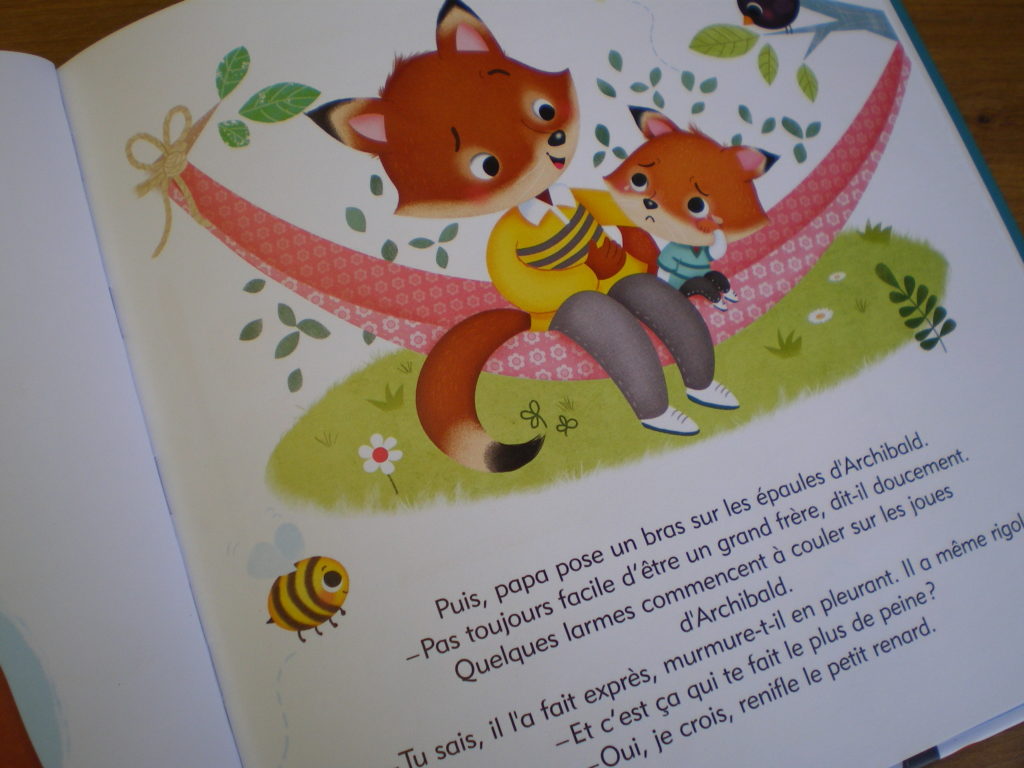
This is where the story becomes genuinely useful for parents. The father first tries a few logical explanations, then realises that what his big boy needs above all is empathy, not a lecture. He whispers something to the younger child, then takes time with the elder and simply says: “It is not always easy being a big brother!”
He then lets Archibald cry and express all his sorrow, without rushing him or telling him to calm down. That pause, that permission to feel sad, is what eventually makes dialogue possible again. For parents working on parenting without fear, it is a small masterclass in staying close instead of correcting. The same patient closeness matters when a child is keeping a child warm on a cold journey, or when he travels without parents and calls asking to come home.
| Story moment | What the parent does | What the child learns |
|---|---|---|
| The construction is knocked down | Stays calm and comforts both children | Strong feelings are allowed |
| Archibald refuses to make up | Tries logic, then switches to empathy | Being understood matters |
| The father names the difficulty | Says it is not easy being a big brother | His sadness has a name |
| Archibald cries | Waits and lets him express it | Emotions pass, connection stays |
| Zenko brings a drink | Lets the younger child apologise | Repair is possible |
| They rebuild together | Encourages the shared project | Collaboration after conflict |
Empathy First, Explanations Later
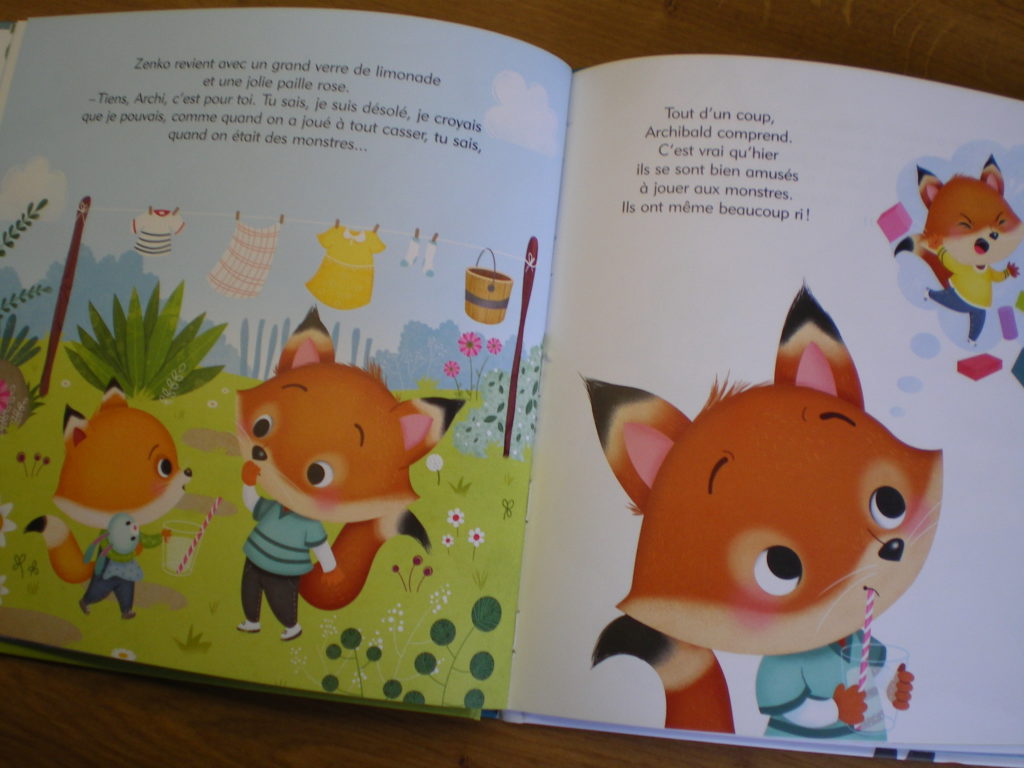
Only after that pause does the misunderstanding come to light. Zenko returns with a drink for his brother and apologises, and the two boys realise they had not understood each other at all. The last time, they had played at knocking constructions down while imagining they were monsters.
Zenko thought they were still playing that game, whereas Archibald wanted to show his construction to his sister and his grandmother this time. Once they have understood what really happened, the brothers decide to build something even better together, putting all their heart and creativity into it.
What I liked most is the order of the steps: emotions first, then explanations, then collaboration. Once the children have been able to express their feelings and give their point of view, working together becomes possible again. It is a useful reminder when siblings argue over toys, and it pairs well with improving self-improvement in children, since naming a feeling is already a skill. The same patience helps when choosing fine motor skill toys or outdoor toys that suit each child.
What Children Learn From the Story
The book does not pretend that sibling life is easy, and that honesty is precisely what makes it reassuring. It shows a big brother who is allowed to be sad and disappointed, and a little brother who is not cast as the villain but simply as someone who misread the situation.
For a child of four and up, this is a gentle way to practise perspective-taking: what did my brother think? What did I think? Where did we stop understanding each other? Those questions are the beginning of empathy, and they echo the way we educating children by guiding rather than forcing. The same patient, hands-on approach pays off in creative activities together, where children learn by doing.
Reading It Together
Because the faces are so expressive, you can pause on each page and ask your child what Archibald might be feeling. That small habit turns a bedtime story into a conversation about emotions, and it works just as well with a child who is expecting a new baby at home.

Illustrations, Age Range and Practical Use
The illustrations deserve a mention of their own: the colours are vivid, the faces are very expressive and the whole story unfolds in a lush garden. That visual warmth keeps the emotional scenes readable rather than heavy for a young audience.
The album is recommended for children aged four and up, which fits the way the text balances simple sentences with real emotional nuance. It sits comfortably next to other calm, screen-free activities in a family routine, whether you are choosing educational toys for toddlers or simply building together on the living-room floor.
It is available in libraries, bookshops and online, so borrowing it first is an easy way to test whether the theme resonates at home. If your child is drawn to characters and stories, you can also nurture that taste with movies about books and slow, shared reading time.
My hands-on take
I have read this one more than once with a child who was going through a very similar phase at home, and the line about it not always being easy to be the big one landed far better than anything I had tried to explain myself. What struck me was how the father stops arguing and simply sits with his son while he cries. I have since tried that pause in real life, and it is harder than it looks, but it changes the tone of the whole afternoon.
My practical tip is to keep the book nearby rather than on the shelf, because it becomes useful at the exact moment a quarrel happens. Opening it after a fight, when everyone has calmed down a little, gives us a shared story to point at instead of another lecture.
Frequently asked questions
What age is this picture book suitable for?
It is recommended for children aged four and up. The simple sentences and very expressive illustrations also make it readable for slightly younger children who are being read to.
Does the book blame the little brother?
No. The quarrel comes from a misunderstanding rather than from a naughty child, and both brothers realise they had not understood each other. That balance keeps the story fair to younger and older siblings alike.
What is the main message for parents?
The father first tries logic, then understands that his eldest needs empathy and time before any explanation. Emotions come first, and collaboration becomes possible once they have been expressed.
Can it help a child who is about to become a big brother or sister?
Yes, it gives a name to the mixed feelings that come with the role. Reading it together and talking about Archibald's face on each page opens a gentle conversation about what your child might feel.
Product Reviews
 Best Toys for Dogs With High Prey Drive |
Best Outdoor Toys for 3-4 Year Olds |
Best Outdoor Toys for 6 Year Olds |
Best Harness for Poodle |
Best LEGO Sets for Adults |
Best Travel Toys for 4 Year Olds on Airplane |
Best Toy Stores in Washington DC |
Best Potty Training Toys |
Best Toys for Tripod Dogs |
Maillot equipe de france







