


Positive parenting is not a magic formula but a set of everyday habits that build a home grounded in mutual respect and cooperation. Each parent who chooses this path, even imperfectly, moves their family a little closer to a calmer, more peaceful daily life.
The seven fundamentals below translate the core ideas of respectful parenting into practical moves you can try today: welcoming emotions, reasoning in terms of needs, prioritising connection, decoding hidden messages and involving your child in their own solutions. None of them requires special equipment, only attention and a willingness to slow down.

Quick takeaways
- Name emotions out loud so they can be released instead of piling up
- Teach the vocabulary of needs and lead by example
- Prioritise connection and contact before correcting behaviour
- Treat outbursts as clues about an emptied emotional tank
- Involve your child in finding solutions while keeping the limit
- Build a predictable, respectful family culture over time
Welcoming and Naming Emotions
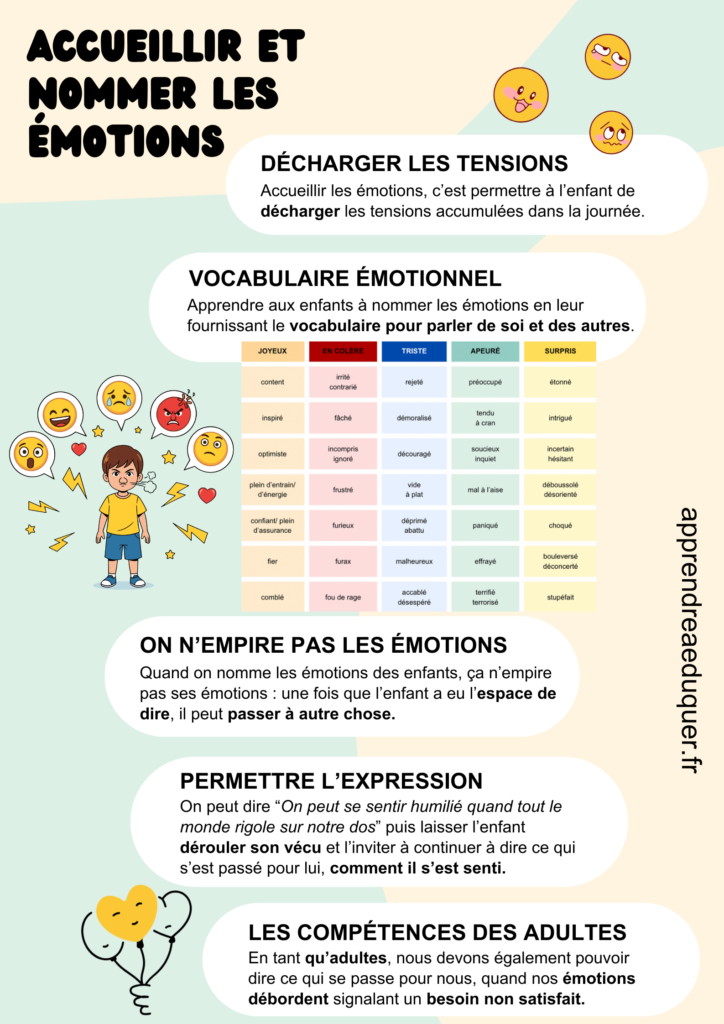
Welcoming emotions means letting your child discharge the tension built up during the day. To do that, children need vocabulary for talking about themselves and others, so give them words for what they feel and let them use them.
Naming an emotion does not make it worse. Once a child has had the space to say it, they can move on. A named emotion can be released, while an unnamed one crystallises and piles up with every other unspoken feeling until it explodes or turns into physical symptoms.
Try saying something like: “It can feel embarrassing or humiliating when everyone laughs behind your back,” then let your child unfold their experience and invite them to keep describing what happened and how it felt. As an adult, you also need to be able to say what is going on for you when your emotions overflow, signalling an unmet need.
Reasoning in Terms of Needs
You can give your child tools to express their needs: the vocabulary of needs and the value of example, because children do what we do, not what we say. Doing everything for our children puts them in a situation of frustration and dependence, whereas from the youngest age they are capable of finding solutions to everyday problems.
Think of how they learn to put on their coat at school, laying it on the floor upside down and sliding their arms in. That is not the adult method, but it works, and they will have plenty of time to learn the conventional way. We parents are transmitters, guides and facilitators of learning. The same logic applies to feeling full, to sleep and to feeling cold or warm. Parents often ask children to put on a coat when it is the adults who are cold.
We can teach children to recognise their own body signals: “What does your tummy say?”, “I saw you shiver, that is your body telling you it is sleepy,” or “I can see you clenching your teeth, you look tense.” For more on helping a child become aware of themselves and others, see these children need gaze. Body image is part of this awareness too, as these celebrities after giving birth show.

| Fundamental | What it looks like | Why it helps |
|---|---|---|
| Naming emotions | “You look humiliated” | Releases tension instead of storing it |
| Reasoning in needs | “What does your tummy say?” | Builds body awareness and autonomy |
| Connection first | A hug during a tantrum | Lowers stress and regulates feelings |
| Decoding messages | “Was school hard today?” | Finds the real trigger behind the crisis |
| Involving the child | “What would help?” | Turns resistance into cooperation |
Thinking in Terms of Connection and Contact
A hug can help lower the tension during a big tantrum or a conflict. Setting limits is like putting a lid on boiling milk, so why not turn down the gas instead? Love is the button that turns off the gas, a fuel for regulating stress.
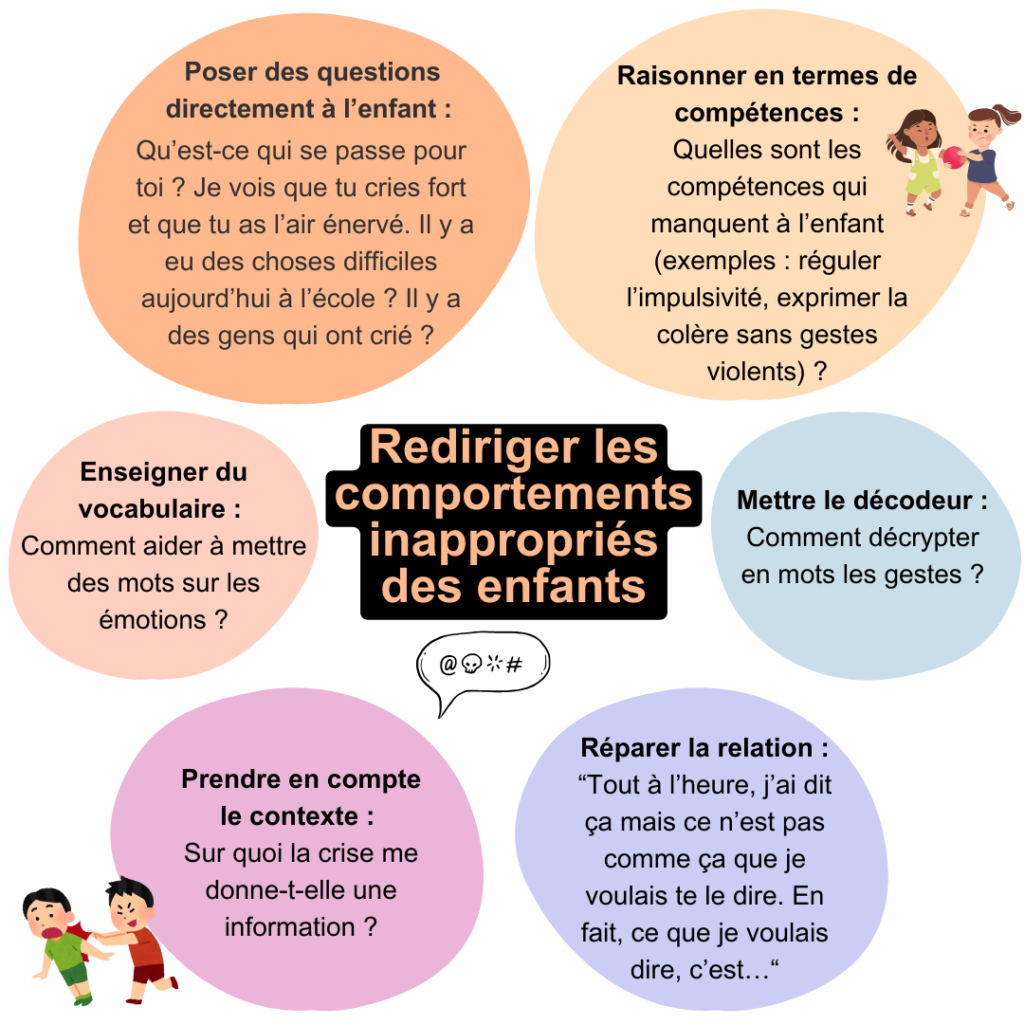
To “turn down the gas,” ask yourself a few questions: where do these inappropriate behaviours come from? What information is the crisis giving me? How can I put the child's gestures into words, and help them name their emotions? Which skills is the child missing, such as regulating impulsivity, expressing anger without violence or making a request?
Connection also means taking care of yourself, since a tense body struggles to stay patient. If carrying your child all day leaves you with back contractures, treat that as information too, and look after your own reserves as well as theirs.
Decoding Children's Hidden Messages
Parents are the source of unconditional love where children discharge and recharge after the stress of the day has emptied their tank. When a child grumbles on the way home from school, the broken biscuit is probably not what is irritating them but the difficulties of the day they need to release. The biscuit is only the trigger, not the main reason.
After an exhausting day of strong emotions, the slightest annoyance can set everything off in the evening: a toy that will not work, a jumper they cannot put on alone, a scratchy label. Encourage your child to talk through active listening: “What is going on for you? I can see you are shouting and look cross. Were there difficult things at school today?”
Filling an empty love tank at the end of the day can take just ten minutes of pure attention: playing together, a walk, a conversation without distractions or a snack shared side by side. For babies and toddlers, a calm goodbye also matters, as explained in to the nursery.

Involving Children in Solutions
Sometimes welcoming emotions is not enough: “I can see you are frustrated, I said no to the screen.” At that point, involve your child in finding a solution rather than imposing one. Ask what would help, offer two acceptable options, and let them choose.
This collaborative approach builds cooperation instead of resistance, because a child who helps shape the rule has a reason to follow it. It also teaches problem-solving, a skill they will use far beyond childhood.
Keep the frame firm and the tone warm: the limit stays, but the path to it is negotiated. Over time, children internalise this way of talking about needs and feelings, and it shows up in how they treat siblings and friends. If you are juggling parenting with other commitments, the same principle of small, realistic steps applies, much like the balance described in mother and study.
Building a Respectful Family Culture
These fundamentals work best as a culture rather than a technique. Model the language you want to hear, repair after difficult moments, and keep routines predictable so children know what to expect.
Respectful parenting also means preparing the environment: quiet corners for big feelings, toys within reach, and time outdoors to burn energy. A few well-chosen items can support this, whether you are browsing toys under twenty or planning bigger gifts with Christmas gift ideas. For younger children, outdoor toys for four offer plenty of scope for movement and discovery. Parents also need to look after their own bodies, so it helps to understand sciatica in pregnancy and how to ease discomfort.
Finally, remember that this is a long game. Progress shows up in small moments of cooperation, not in perfect days, and every repair after a rupture teaches your child that relationships can survive conflict. If your child dreams of long healthy hair, gentle routines and patience matter here too.



My hands-on take
In my own home, the single most useful change was learning to pause before reacting. When my child slammed a door over something trivial, I used to launch straight into the rule. Now I try a hug and a simple question first, and more often than not the real story comes out a few minutes later, usually something about a friend or a tricky moment at school.
I am not consistent at it, and some days I get it wrong and raise my voice. What has helped is treating repair as part of the method: going back afterwards, naming what happened for me, and starting again. The vocabulary of needs took practice, and I still catch myself asking for a coat because I am the one feeling cold. Small, repeated attempts have done more for our household than any perfect script.
Frequently asked questions
Does naming an emotion make a child cry harder?
No. Naming gives the feeling a shape and an exit, so once the child has said it, they can usually move on. Unnamed emotions tend to build up until they explode or show up physically.
What if welcoming emotions is not enough?
Then involve your child in finding a solution. Keep the limit firm but ask what would help or offer two acceptable options, so cooperation replaces resistance.
Why does my child melt down over small things in the evening?
Evening outbursts often reflect an emptied emotional tank after a demanding day. The broken biscuit or scratchy label is only the trigger, not the real cause.
Product Reviews
 Best Toys for Dogs With High Prey Drive |
Best Outdoor Toys for 3-4 Year Olds |
Best Outdoor Toys for 6 Year Olds |
Best Harness for Poodle |
Best LEGO Sets for Adults |
Best Travel Toys for 4 Year Olds on Airplane |
Best Toy Stores in Washington DC |
Best Potty Training Toys |
Best Toys for Tripod Dogs |
Maillot equipe de france







