


No spanking is a promise many parents make, yet the daily reality of tantrums, refusals and mealtime battles can leave even the calmest adult unsure what to do instead. A short guide written by parental companion Catherine Dumonteil-Kremer for the Non-Violent Education Day offers a reassuring starting point.
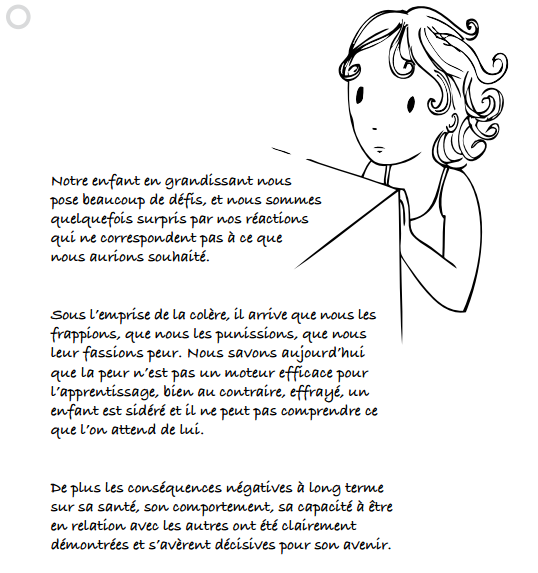
The booklet is full of kindness toward both parents and children. It acknowledges a truth few manuals admit: we can be deeply surprised when our child's reality does not match our expectations, and even when we know a child is dependent on us, answering every need, tolerating every cry or emotional storm is genuinely hard.

Quick takeaways
- Ask what solution is neither violent, punitive nor excluding before reacting.
- Build family rules around real needs, not social convention.
- Find relays: people who can listen and take over when you are drained.
- Listen to emotions and learn to tame your own adult reactions.
- Keep the emotional reservoir full through play and connection.
- Work on your past and inner child to break old patterns.
Start With a Question, Not a Punishment
Rather than reaching for a punishment when things go wrong, the guide suggests pausing and asking yourself a simple question: what could I put in place here that is neither violent, nor punitive, nor excluding? From that question, a second one follows naturally: what creative, non-violent solution could I find for this specific moment?
This reframing turns discipline into a small problem-solving exercise. It works for meals, mobility, tooth brushing and the endless oppositions of early childhood. If you are still refining your daily routines, our list of parenting mistakes offers a useful companion read, and sensory play ideas from our sensory toys guide can help children regulate themselves before a conflict escalates.
Why Creativity Beats Correction
A creative solution respects the child's need while protecting the adult's limit. It takes more thought than a smack or a threat, but it builds cooperation instead of fear.
Build Your Own Family Rules
The booklet encourages parents to establish their own family rules of life, based on what each member actually needs rather than on social convention. A household rule that exists only because "that's how it's done" is far harder to defend calmly at 7 a.m. than one rooted in real needs.
This also means accepting that your family rhythm may look different from the neighbours'. Sibling dynamics deserve particular attention here: understanding brother jealousy helps you set rules that protect the older child's place instead of simply demanding that they share. Health worries can also shape routines, so it helps to know when a sore throat is more than a passing cold and worth a doctor's visit, as our article on repeated tonsillitis explains.
| Situation | What we often do | Gentle alternative |
|---|---|---|
| Mealtime refusal | Insist or threaten | Offer a small choice and stay calm |
| Tooth brushing | Force or bribe | Turn it into a game or story |
| Opposition and "no" | Punish or exclude | Ask what need is underneath |
| Sibling conflict | Demand sharing | Protect each child's place first |
| Parent about to shout | Raise voice or hand | Pause, breathe, call a relay |
Find Support and Listen to Emotions
No parent should carry gentle discipline alone. The guide recommends finding relays, meaning people who can take over for an hour, listen without judging, or simply confirm that you are not failing. Support can be a partner, a friend, a grandparent or a local parent group.
Alongside that support comes the practice of listening to emotions, both your child's and your own. A crying child is not manipulating you; they are expressing something they cannot yet name. Stories remain one of the gentlest ways to open that conversation, and our piece on children's literature shows how a shared book can give big feelings a language.
Tame Your Own Adult Emotions
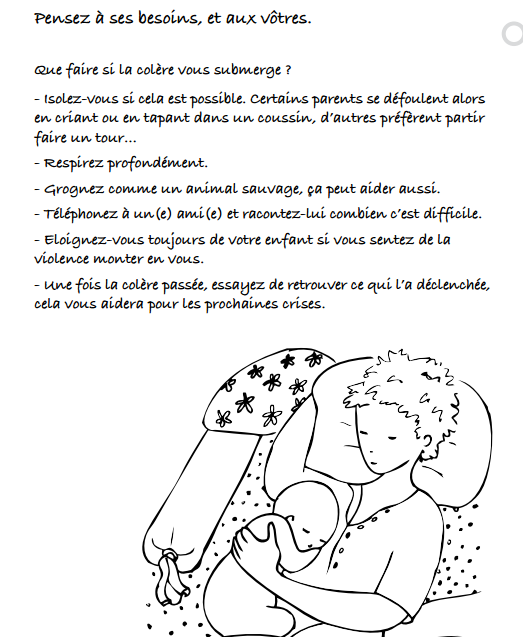
One of the most honest parts of the booklet concerns us, the adults. Learning to tame our own emotions is not optional self-care; it is the foundation of non-violent education. The moment we are about to shout or raise a hand is usually the moment our own reservoir is empty.
This is where playing with children becomes surprisingly powerful. Play dissolves tension, restores connection and often prevents the very behaviour we were about to punish. Family games are an easy entry point, and our selection of cheapest board games makes regular play affordable. For quieter moments, a simple building set from our toys for three year olds can keep little hands busy while you breathe.
Think in Terms of an Emotional Reservoir
The guide invites parents to reason in terms of an emotional reservoir, both ours and our children's. Every hug, attentive moment and repaired conflict fills it; every harsh word drains it. When the reservoir is full, a child copes far better with frustration, sharing and waiting.
Filling that reservoir is often simpler than we think, and it does not require expensive equipment. Our guide to toys for six year old boys and our roundup of toys for tripod dogs both remind us that the best play is the play shared with an attentive adult. Even a small brick project can become a moment of reconnection, as this story of bricks and illness shows.
Do the Work on Your Past and Inner Child
Finally, the booklet suggests working on our own past and our inner child. Many of our strongest reactions to a child's behaviour echo something we lived through ourselves. Recognising that pattern is the first step toward responding to the child in front of us rather than to an old memory.
This inner work pairs well with practical reflection on family life. Whether you are preparing a big celebration or simply reorganising the house, our Wedding pages everything you need guide and our ideas for 25 looks both show how planning ahead reduces the stress that so often spills onto children. The booklet closes with a bibliography on the harmful effects of punishment, on children's needs, and on setting limits with kindness.

My hands-on take
I remember the evening I realised that my raised voice was doing nothing except teaching my child to raise theirs. What changed things for me was the simple question from this kind of guide: what could I do here that is neither violent nor punitive? The first few times, I had no answer in the moment, and that was fine. I started writing down the flashpoints afterwards, mealtimes and tooth brushing mostly, and preparing one playful idea for each.
The other habit that helped was checking my own reservoir before blaming theirs. If I was running on empty, every small refusal felt enormous. A ten-minute game on the floor, with no phone nearby, often did more for cooperation than any consequence I had ever tried. It is not a magic method, and I still lose my temper sometimes, but repairing afterwards has become part of the routine rather than a failure.
Frequently asked questions
What does "no spanking, how do we do it" actually mean?
It means replacing physical punishment with creative, non-violent responses that respect both the child's needs and the adult's limits. The emphasis is on asking questions and finding solutions rather than correcting behaviour through fear.
Is this approach permissive?
No. The guide still asks parents to set limits and family rules; it simply asks them to be based on real needs and applied without violence or exclusion. Limits and kindness are presented together, not as opposites.
Why does the emotional reservoir matter so much?
A child with a full emotional reservoir handles frustration, sharing and waiting far better. Regular play, attention and repair after conflict fill that reservoir for both the child and the parent.
Where can I find more support?
Look for local parent groups, a trusted friend or partner who can take over for an hour, and reading on children's needs and the effects of punishment. The original booklet includes a bibliography for exactly this purpose.
Product Reviews
 Best Toys for Dogs With High Prey Drive |
Best Outdoor Toys for 3-4 Year Olds |
Best Outdoor Toys for 6 Year Olds |
Best Harness for Poodle |
Best LEGO Sets for Adults |
Best Travel Toys for 4 Year Olds on Airplane |
Best Toy Stores in Washington DC |
Best Potty Training Toys |
Best Toys for Tripod Dogs |
Maillot equipe de france







