


Emotional validation for kids is one of the quietest, most demanding parts of gentle parenting, and it often begins with unlearning two familiar phrases: "stop crying" and "it's not serious".
When parents discover emotional education, they quickly realise that much of the work is simply being present with a kind look, without rushing to offer a solution or a regulation technique. Techniques for calming emotions have their place, but they should never replace the simple act of recognising the emotion that is happening, in children and in adults alike.

So what happens when we remove those two phrases from our vocabulary, and what do we say instead?
Quick takeaways
- Tears are a healthy physiological release, not a behaviour to stop.
- "It's not serious" and "stop crying" deny the child's experience and block discharge.
- Let children cry and be angry to the end, inside a caring and safe framework.
- Adults need their pain recognised too, at every age.
- Handle your own emotions first, then return available to the child.
- Name what you see and stay close instead of fixing the feeling.
Why "stop crying" and "it's not serious" backfire
When a child cries, they are already solving the problem: tears are the body's physiological discharge of an emotion. Crying is useful and beneficial, and no one needs to be stopped from doing it, because tears are precisely how sadness, fear, anger and shame find relief. Every human needs to cry to let out the suffering tied to a wound, whether emotional or physical, and releasing emotion this way is nature's way of helping us heal and bounce back.
As parents, we sometimes tend to deny, minimise or immediately regulate a feeling, just to make the crying stop. Those interventions may calm a child partially, but letting them cry to the end inside a caring, emotionally safe framework is more useful for healthy emotional development. Saying "it's not serious" or "stop crying" denies the intensity of the emotion and the child's experience, and it blocks that discharge. The right to cry and to be angry belongs to girls and boys alike. If you are looking for calm, creative ways to spend time together, try making tie dye t shirts at home with your children.

A small story that changes how we see pain
One memory stays with me: my mother, when my daughter was small, fell and scratched her knee. She then said that we tell children all the time that it's nothing, but it really does hurt. That remark struck me twice over. As adults, we often ignore each other's suffering, emotional and physical, and even in adulthood we need our pain to be understood, welcomed and acknowledged.
That is the heart of emotional validation: it is not a reward for drama, it is a basic human need that does not disappear with age. Keeping this in mind makes it easier to stay warm and steady when a small disappointment produces big tears, and it connects naturally with respecting the caregiver as part of the same respectful stance. The same patience applies to changes for men after a baby arrives.

| What we say | What the child hears | A warmer alternative |
|---|---|---|
| "Stop crying" | Your tears are a problem | "You're really sad, I'm here" |
| "It's not serious" | Your pain doesn't count | "That hurt, it's okay to cry" |
| "Calm down now" | Feelings must be rushed | "Take your time, I'm staying" |
| "You're fine" | Hide what you feel | "Tell me what happened" |
| Silence and a technique | Fix it and move on | Presence first, tools later |
Getting clear about your own emotions first
Several levers can help us gain clarity about our adult emotions so we stop saying "it's not serious" or "stop crying" to a child in the grip of strong feelings. Day to day, let your own emotions pass through you as they are: "Yes, that's true, I feel this, and it is really hard." Treat yourself like a good friend, granting that emotional confirmation and kind self-empathy instead of denying or hiding difficult feelings.
When you need to support a child or another adult, it helps not to be inside the emotion yourself. Take a pause to cry, shout outside or into a cushion, jump, or shake your hands, then come back available for the other person. Regular discharge matters too: sad films, moving stories, emotionally charged songs, moments of introspection, an emotional journal, trusted people to talk to, playing with the children, and a few calming strategies for the moments you feel ready to explode. Remember that people who have overcome barriers show how emotional resilience can grow, and activities like Kangatraining can help you release tension while staying close to your baby.
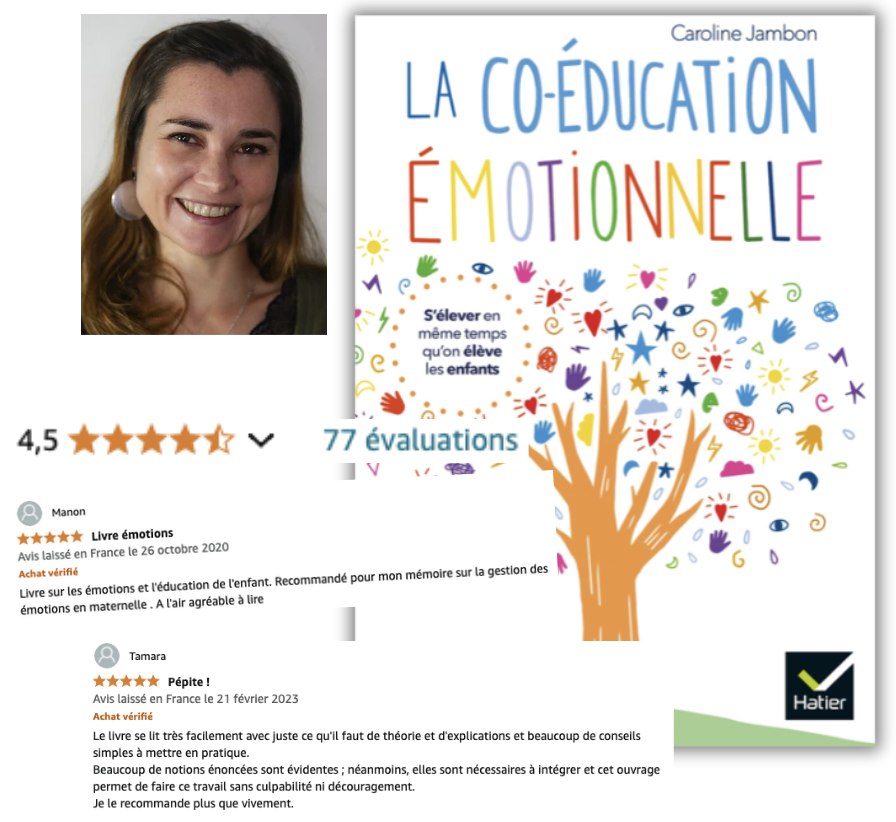
When everyday tools are not enough
When emotions are very strong and painful, this daily work may not suffice. It is then possible to bring back feelings lived in childhood within a safe framework, in order to move through suffering that was known back then. This can happen in a support group or with a professional therapist, letting out emotions reactivated by traumatic memory.
This is the deeper layer of emotional education: we grow as we raise, and our own history is part of the picture. A child who sees a parent take feelings seriously, without drama, learns that emotions are manageable. It also helps to notice how much pressure we put on ourselves, and how much we put on children, to be cheerful at all times, an expectation that shows up in many family celebrations where tears are treated as a problem.

What to say instead of shutting feelings down
Replacing the old phrases is mostly about naming what you see and staying close. "You're really sad, I'm here" or "That hurt, it's okay to cry" acknowledges the emotion without solving it. Then, once the wave has passed, you can think together about what might help next time.
This approach also protects children from learning that their feelings are inconvenient. It supports the kind of steady presence that matters during everyday care, from bath time products routines to bedtime, where small frustrations and big feelings tend to surface. The goal is not perfect calm, it is a relationship where emotions can be spoken.
My hands-on take
I remember catching myself mid-sentence one evening, about to say "it's nothing" when my child dropped a drawing. I stopped, sat down beside them and said instead that it was disappointing after all that work. The crying lasted longer than it would have with my old phrase, and then it simply stopped, and we talked about the drawing.
What helped me most was practising out loud on myself: naming my own frustration in the kitchen, taking a pause, shaking my hands. It felt awkward at first, then normal. My children now do it too, sometimes dramatically, and I take that as a good sign.
Frequently asked questions
Does welcoming emotions mean letting children cry indefinitely?
No. It means staying close and safe while the emotion runs its course, rather than stopping it. If a child is overwhelmed or unsafe, comfort and physical presence come first.
What if I am too upset to stay calm?
It is fine to take a short pause to discharge your own emotion, then return. A parent who regulates themselves models exactly what emotional education teaches.
Is this only for sad feelings?
No, it applies to anger, fear and shame too. The right to cry and to be angry belongs to all children, girls and boys alike.
Can regulation techniques still be used?
Yes, but never as a replacement for recognition. Acknowledge the emotion first, then offer a tool once the child is ready.
Product Reviews
 Best Toys for Dogs With High Prey Drive |
Best Outdoor Toys for 3-4 Year Olds |
Best Outdoor Toys for 6 Year Olds |
Best Harness for Poodle |
Best LEGO Sets for Adults |
Best Travel Toys for 4 Year Olds on Airplane |
Best Toy Stores in Washington DC |
Best Potty Training Toys |
Best Toys for Tripod Dogs |
Maillot equipe de france







