


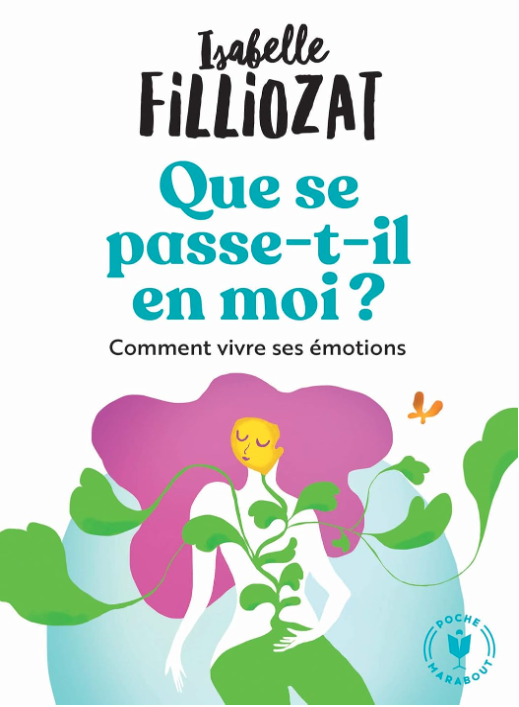
This emotional ABC breaks down the difference between sensations, emotions, feelings, mood and temperament, five notions we often mix up when we try to describe our inner world. Naming them accurately is the first step toward understanding what is really going on inside us.
An emotion is a short physiological reaction, while a feeling is a longer construction and a mood is a passing atmosphere. Knowing which is which helps us respond to children, and to ourselves, with far more clarity.

Quick takeaways
- An emotion is a short physiological reaction lasting only minutes.
- Sensations are the body's raw signals and last as long as the stimulus.
- A feeling is a lasting construction built from mixed emotions.
- Mood is a passing atmosphere lasting hours to days.
- Temperament is a learned emotional habit, not an identity.
- Naming the layer you are in helps you respond instead of react.
Emotions: a survival kit at your service
An emotion is a physiological reaction to a stimulus, a movement that travels outward. It usually lasts only a few minutes and unfolds in three stages: charge, tension and discharge. Perception of a sight, sound or smell is decoded in the brain, hormones are released, the body tenses to act or flee, then expression brings the body back to balance.
This is why tears and trembling can release fear, and why shouting can expel anger. Emotions serve a double biological purpose: producing a suitable reaction and regulating the body's internal state. Acknowledging them early, much as you would prepare calmly for chorionic biopsy, keeps stress from building up. Gentle positive sleep phrases can likewise help a child settle at bedtime.
Six primary emotions and their mixtures
We often mistake a blend of emotions for a single one. Anxiety, for instance, is not an emotion in itself but a mix of fear with anger, sadness, or all three. You can recognise these blends because they last far longer than the few minutes a healthy emotion needs. Sharing short Christmas stories together can also give children a gentle way to name and explore feelings.

Sensations: the body's raw information
A sensation is the information supplied by the sense organs, and it lasts as long as the stimulation does. Internal sensations such as a dry throat, clammy hands or a knot in the stomach tell us about our emotions, because emotions are information carried by the body.
Learning to notice these signals is a skill, and it grows with practice. Just as children build vocabulary through play, as with the language development toys that invite naming and conversation, they can also build a vocabulary for what their body feels. A simple question like "where do you feel it?" opens that door. The same patient guidance applies when you choose childcare at home, and it echoes the care taken when comparing water safety elements.
Adults benefit too: pausing to scan your own body before reacting gives you a moment to choose your response rather than simply discharge it.

| Layer | Typical duration | Where it comes from |
|---|---|---|
| Sensation | As long as the stimulus | The sense organs |
| Emotion | A few minutes | A stimulus decoded by the brain |
| Feeling | Long-lasting | A blend of emotions and imagination |
| Mood | Hours to days | Unexpressed emotion or hormones |
| Temperament | Years, but changeable | Habits learned in childhood |
Feelings: lasting constructions built on emotions
A psychology dictionary defines a feeling as a complex affective state, a combination of emotional and imaginative elements that persists even without any stimulus. A feeling is a construction, built on mixtures of emotions: hatred, jealousy, shame and guilt all belong here. Guilt, for example, is made of fear and anger turned against oneself.
Where an emotion gives energy expressed through bodily movement for a few minutes, feelings colour our thoughts for much longer. Resentment differs from anger in exactly this way: it is a long, swallowed anger that keeps recycling itself, while anger is a brief biological movement that mobilises energy to defend us.
Untangling the emotional knots
To free yourself from a feeling, look beneath it for the emotions composing it. Ask: anger plus fear, perhaps? Anger at whom, fear of what? This gentle untangling works for children too, and even a story about magical characters can become a safe place to project complicated feelings.

Mood and temperament: atmosphere versus habit
A mood is a passing state, an affective atmosphere colouring experience that lasts from a few hours to a few days. It is usually the result of an unexpressed emotion or a physiological process linked to hormones. Recognising a low mood as temporary, rather than as a verdict on your life, changes how you respond to it.
Temperament is an emotional habit learned in childhood, expressed in phrases like "I'm quick-tempered" or "I'm shy". Crucially, a temperament is not an identity: like any learning, it can be deconstructed and changed. That is a hopeful message to pass on to a child who has decided they simply are small again and helpless whenever something goes wrong.
Filliozat herself notes that specialists define these terms somewhat differently, and that this ABC is mainly a set of bearings for knowing yourself better.
Using the emotional ABC day to day
In practice, the sequence is simple: notice the sensation, name the emotion, then ask whether a longer feeling or a passing mood is underneath. This order prevents us from treating a five-minute emotion as a permanent character flaw, in ourselves or in a child.
Daily routines offer natural openings. A shared board game, like the visual acuity games that keep everyone focused and reacting, is a live laboratory for frustration, joy and disappointment. A calm moment after childcare, whether at a typical kindergarten or at home, is another good checkpoint for the day's emotional weather.
Keep explanations short and concrete, and let children see you doing the same work out loud.

My hands-on take
I started using this ABC at home almost by accident, mostly because I kept saying "I'm angry" when I was actually tired, hungry and worried all at once. Now, when my child melts down, I try to slow down and ask what the body is doing first: tight fists, fast breathing, a hot face. Naming the sensation out loud usually lowers the temperature in the room before we even get to the emotion.
The idea that stuck with me most is that a temperament is not an identity. I have caught myself labelling my child as "the shy one" far too quickly. Saying instead that shyness is a habit we are working on feels more honest, and it leaves room for change.
Frequently asked questions
Is anxiety an emotion?
No. Anxiety is a mixture of emotions, typically fear combined with anger or sadness. You can recognise it because it lasts much longer than the few minutes a genuine emotion needs.
How can I tell a feeling from an emotion?
An emotion is brief and shows up in the body as a movement, while a feeling persists even without a stimulus and colours your thoughts. If it has been there for days, you are probably dealing with a feeling.
Can a temperament really change?
Yes. A temperament is a learned emotional habit rather than a fixed identity, so it can be gradually reshaped with awareness and practice. Children especially benefit from hearing that who they are today is not who they must always be.
Product Reviews
 Best Toys for Dogs With High Prey Drive |
Best Outdoor Toys for 3-4 Year Olds |
Best Outdoor Toys for 6 Year Olds |
Best Harness for Poodle |
Best LEGO Sets for Adults |
Best Travel Toys for 4 Year Olds on Airplane |
Best Toy Stores in Washington DC |
Best Potty Training Toys |
Best Toys for Tripod Dogs |
Maillot equipe de france







