


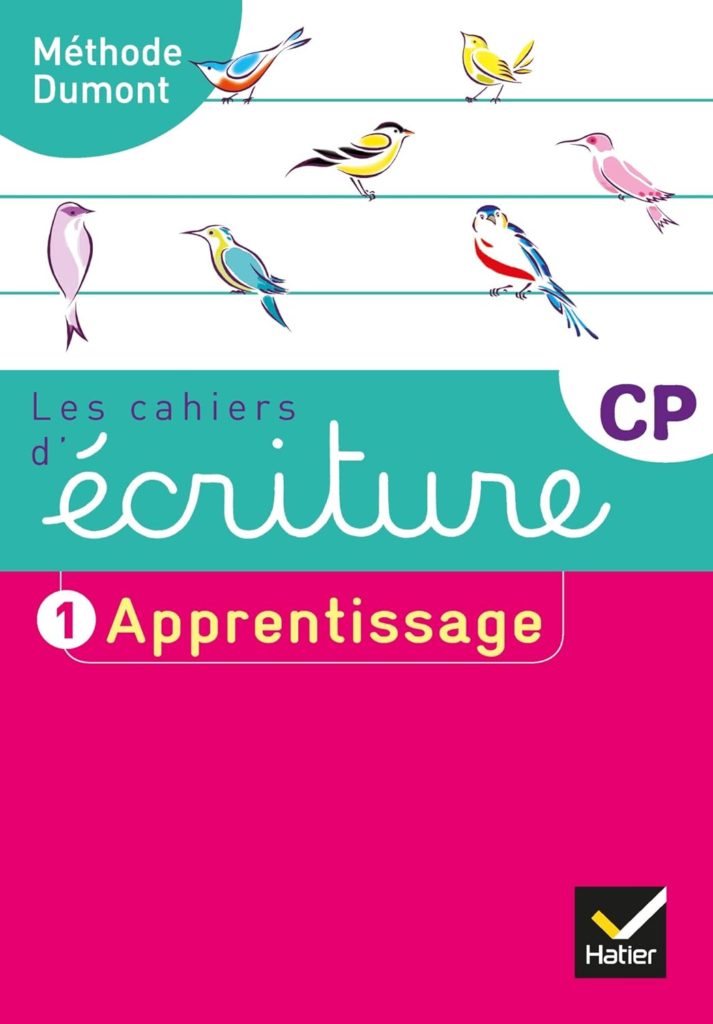
The Dumont method handwriting workbook offers a rational progression built on basic shapes and their derivatives, which makes observing letters far easier for young learners.
Its aim is to free children from writing difficulties as early as possible and, along the way, to stimulate their taste for reading. The approach was developed by Danièle Dumont, a doctor in language sciences who has spent most of the last thirty years observing handwritten script.

Her interest in how writing evolves even led her to study the handwriting of people living with Parkinson's disease. This article explains what makes the workbook special and how you can use it at home.
Quick takeaways
- Letters are built from two basic shapes: the loop and the bridge.
- Each page introduces only one new difficulty at a time.
- The first two pages teach pencil grip, line-following and spacing.
- Instructions move from observation to tracing, copying and sentence writing.
- The workbook works alone or as part of the wider method.
- It can also be used later as remediation for older children.
The two minimal units behind every letter
Every letter in this method is built from shapes that come from just two minimal units. The first travels from left to right "passing underneath", and its basic form is the loop. The second also travels from left to right but "passing above", and its basic form is the bridge.
From the loop, a child forms the letter e. By stretching the fingers upward, the letter l appears. Narrowing the loop as much as possible creates a "narrow loop", and adding a dot above a simple narrow loop gives the letter i. Doubling the stroke then produces the letter u.
This logic means children never face a difficulty they cannot yet overcome. Difficulties are introduced one at a time, and each page contains only letters already learned plus the new one. The progression follows how the writing gesture is established, but it also respects reading, which is why a letter like S appears early. If you want to support early literacy at home, pairing this with fun autumn stories keeps reading practice light and enjoyable, and these tips to learn English can help too.
Why the first two pages matter most
The first two pages are the foundations of the whole building, and they carry several goals at once. Children learn to hold the pencil correctly so their gesture stays steady, and they learn to follow the ruled lines of the workbook to place words properly. They also become aware of the spaces between lines so letters sit in the right place.
These early habits are easy to underestimate, yet they shape everything that follows, as research on parent child bonds suggests. A child who grips the pencil awkwardly or ignores the lines will struggle later, no matter how well they know their letters. Taking time on these pages pays off.
Good posture and a comfortable seat matter too, much like choosing the right everyday gear for family life, such as the warmest children's coats for colder months. A calm, well-prepared workspace helps a child concentrate on the small, precise movements this method asks for, and solidarity initiatives at Christmas can make sure every child has the basics to start.
| Step | What the child does | Skill built |
|---|---|---|
| 1 | Observes the letter in black | Visual perception |
| 2 | Traces blue letters several times | Gesture and control |
| 3 | Copies the letter alone | Independent formation |
| 4 | Reproduces connections | Fluency between letters |
| 5 | Copies common words and sentences | Real writing |
| 6 | Continues the reference pattern | Respect for ruled lines |
Clear, progressive instructions on every page
The instructions are clear and, like the letters, progressive. Children first observe the letter printed in black, then trace the blue letters with a pencil several times in a row. Next they copy the letter on their own, then reproduce the connections with letters already studied.
After that come the common words, followed by copying a word, a series of words, or a full sentence. Finally, children continue a pattern of reference marks while respecting the model, which consolidates perception and respect for the ruled lines. Children who struggle to follow the lines while writing will benefit from starting each writing session with these exercises.
This layered structure means a child is never thrown into free writing too soon. Each step prepares the next, and repetition builds confidence rather than boredom. For families who like to balance screen-free practice with play, toys for three year olds can offer a gentle reward after a session.
How the workbook fits into the wider method
This workbook belongs to the method created by Danièle Dumont, published in a teaching guide on the writing gesture for early years, but it can perfectly well be used on its own. In the full method, it is preceded by nursery workbooks on graphic space and basic shapes, and followed by a workbook for the next year focused on refinement and capital letters.
These workbooks can each be used independently, although they may lose some effectiveness and coherence when separated. The first learning workbook can also serve as remediation for children partway through the year or later.
The book is available in bookshops, cultural centres and online stores. Many parents find that a small, predictable routine at home makes a real difference, and simple habits like these echo the keys to a happy family atmosphere that helps children feel secure while learning. Quiet focus time can also ease fights between siblings, and calm, screen-free play with airplane toys supports the same steady attention.

Getting started at home without pressure
You do not need to be a teacher to use this workbook well. Short, regular sessions work better than long ones, and stopping while a child is still comfortable keeps motivation high. Let the child observe the black letter first and talk about its shape before any pencil touches paper.
Praise the effort and the control rather than perfect results. If a child becomes frustrated, return to an earlier page or to the line-following exercises, which rebuild the basic control the method relies on.
For families juggling several children, keeping the workspace organised helps, and even a small storage solution like the ones discussed in toys for the car can keep materials tidy between sessions. Patience and consistency matter far more than speed, and the method is designed to reward exactly that.
My hands-on take
When I first tried this workbook with my own child, I made the mistake of racing ahead. I wanted to see full words on the page, and I skipped the line-following exercises because they looked too simple. The result was a frustrated child and a pencil gripped far too tightly.
We went back to the first two pages and stayed there for a while. Just following the lines and placing shapes correctly changed everything. Once the grip relaxed, the letters came more easily, and the short sessions stopped feeling like a chore. My advice is to trust the slow order of the pages, keep sessions brief, and let the child observe each new letter before writing it. The patience you invest early saves a lot of struggle later.
Frequently asked questions
Can I use this workbook without following the whole method?
Yes. The workbook can be used entirely on its own, even though it belongs to a wider method. Using the companion workbooks may add coherence, but it is not required.
Is it suitable for a child who is already struggling with handwriting?
It can serve as remediation for children partway through the year or later. The gradual steps let you return to basics without overwhelming the child.
Why are some letters introduced early?
The progression follows the writing gesture but also takes reading into account. That is why a letter like S appears early, so children meet useful reading material sooner.
How long should a practice session last?
Keep sessions short and regular, and stop while the child is still comfortable. Consistency matters more than length for building a steady writing gesture.
Product Reviews
 Best Toys for Dogs With High Prey Drive |
Best Outdoor Toys for 3-4 Year Olds |
Best Outdoor Toys for 6 Year Olds |
Best Harness for Poodle |
Best LEGO Sets for Adults |
Best Travel Toys for 4 Year Olds on Airplane |
Best Toy Stores in Washington DC |
Best Potty Training Toys |
Best Toys for Tripod Dogs |
Maillot equipe de france







