


Calm down strategies for kids work best when a child can reach them quickly, without needing an adult to explain what to do. All children struggle to control emotional outbursts because their brains are still immature, and some are more easily overwhelmed by strong feelings than others.
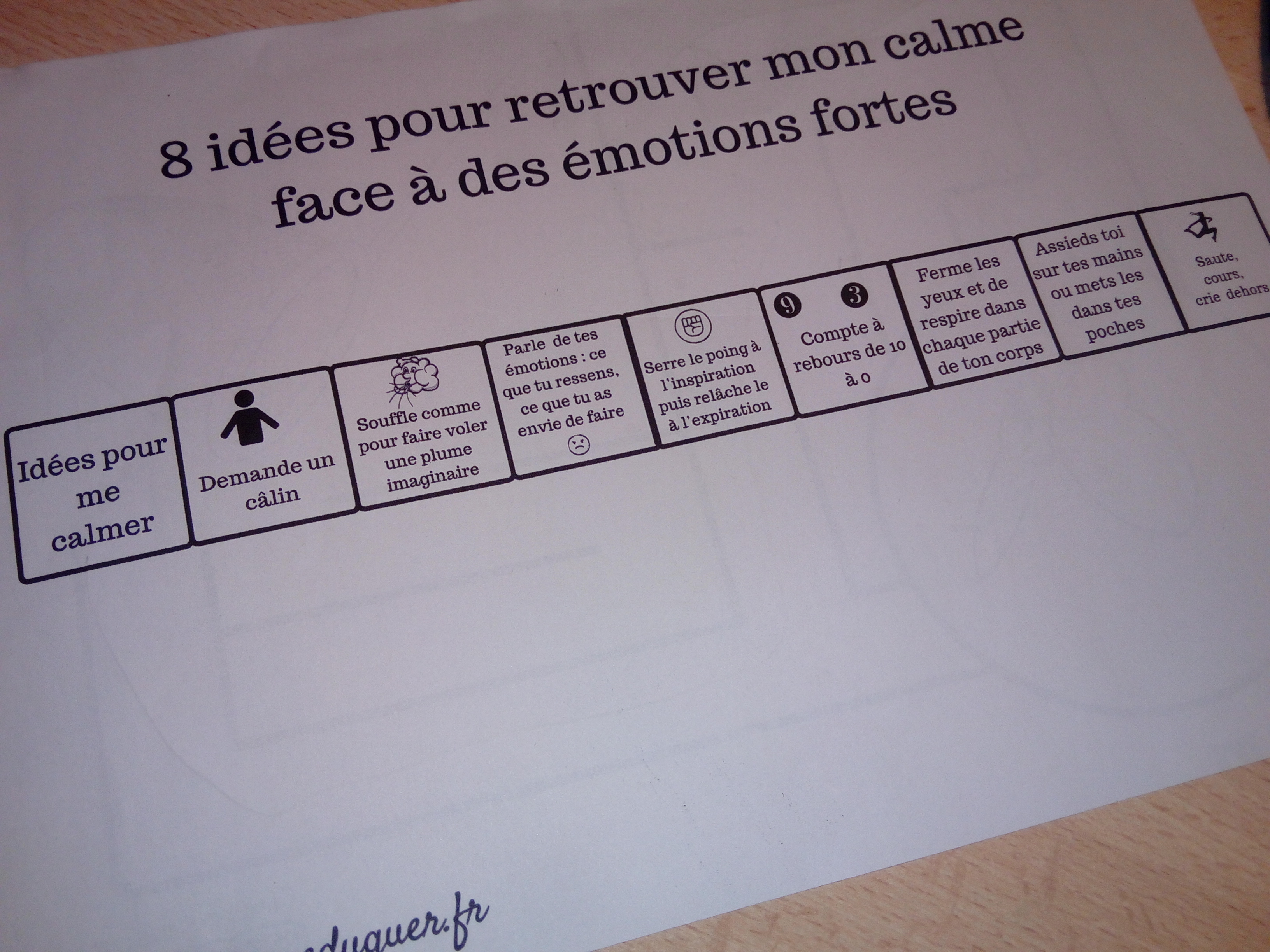
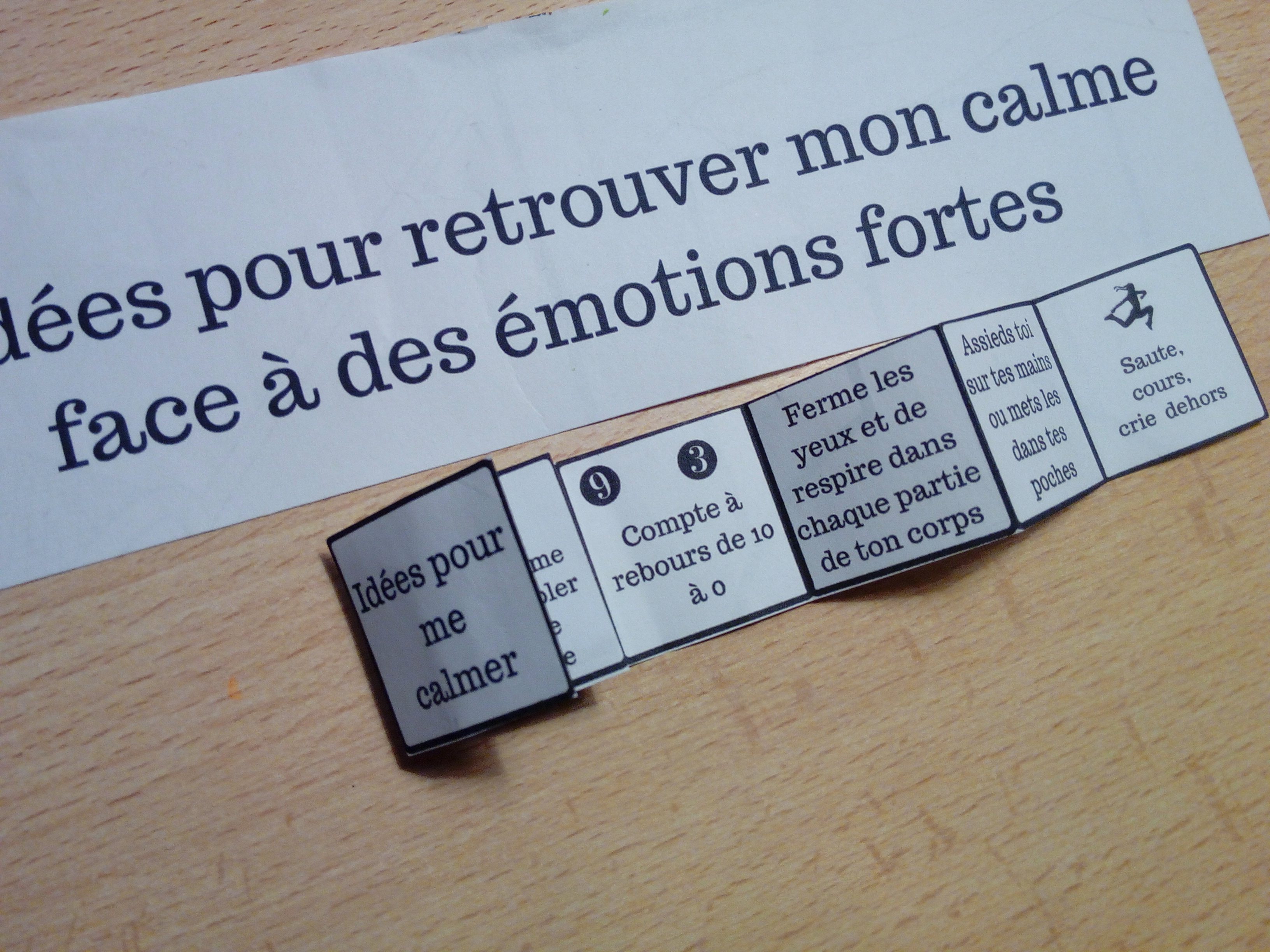
A small pocket booklet gives children a concrete tool to hold on to when emotions rise. It can slip into a trouser pocket or a pencil case, so the eight strategies inside are available wherever a child happens to be.

The booklet is not meant to deny feelings. It fits into a wider approach of recognising emotions: first notice the feeling in the body and in the thoughts, then choose a regulation strategy if one is needed.
Quick takeaways
- Print, cut and fold the booklet into an accordion so it fits a pocket or pencil case
- Recognise the emotion in the body and thoughts first, then choose a strategy if needed
- Practise the eight strategies at calm moments so they feel familiar
- Let the child pick the strategies that suit them rather than using the whole list
- Keep the booklet neutral and visible, not something that only appears during conflict
- Model the strategies yourself so your child sees adults using them too
Why Big Emotions Overwhelm Children
Children do not yet have a fully developed brain, so the part that helps them pause and reason is still under construction. That is why a child who knows every rule can still melt down over a small disappointment. Some children are simply more sensitive to being flooded by strong emotions.
This is also why positive discipline works better than punishment when feelings run high. A child who feels understood is more able to calm down than one who is told to stop crying. The goal is not to remove the emotion but to help the child move through it.
Recognise first, regulate second
Before reaching for a strategy, help the child name what is happening: a tight chest, a hot face, a wish to shout or run. Naming the feeling in the body and in the thoughts comes first; the calming tool comes after, and only if it is needed.
How to Make the Pocket Booklet
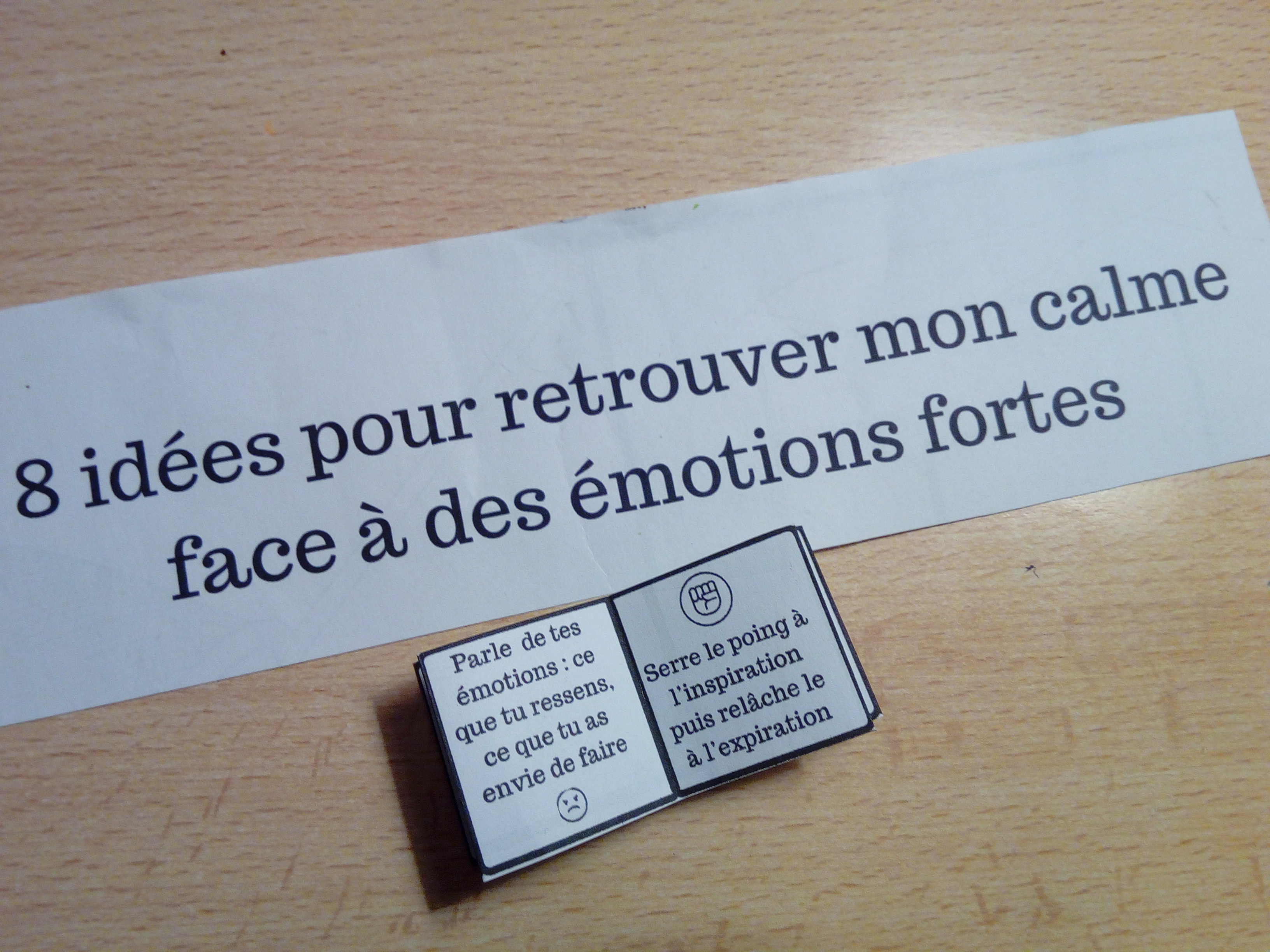
Print the booklet, cut it out, then fold it into an accordion shape. The finished object is small enough for a pocket or a pencil case, which matters because a child in the middle of a storm will not go looking for a folder on a shelf.
Keep the tone light when you introduce it. Explain that the booklet is a helper, not a rulebook, and let the child try each strategy at a calm moment so the moves feel familiar before they are needed. Practising when nothing is wrong builds the habit.
If your child is still very young, pair the booklet with the kind of hands-on play that builds focus and patience, such as the toys for babies that invite grasping and exploring. Older children may enjoy choosing a reward for practising their strategies, along the lines of these back to school toys.
| Strategy | Best for | How to introduce it |
|---|---|---|
| Ask for a cuddle | Children who seek closeness | Offer it at calm times first |
| Blow an imaginary feather | Quick, quiet regulation anywhere | Practise slow exhales together |
| Talk about emotions | Verbal children who need to name feelings | Ask what they feel and want to do |
| Squeeze and release fists | Tense, rigid children | Pair with the in and out breath |
| Count backwards from ten | Children who like order and numbers | Count aloud together at first |
| Breathe into each body part | Children who go quiet or withdrawn | Try lying down before bed |
| Sit on hands or pockets | Children who grab or hit | Explain it as a hand anchor |
| Jump, run, shout outside | Restless, high-energy children | Build it into outdoor play |
The Eight Calm Down Strategies
Ask for a cuddle. Physical contact is one of the fastest ways back to calm, and it gives the child an active request to make rather than a passive wait.
Breathe as if blowing an imaginary feather. A slow, gentle exhale is easy to picture and easy to repeat. Talk about your emotions: what you feel, what you want to do. Squeeze your fists on the in-breath and release them on the out-breath. Count backwards from ten to zero.
Close your eyes and breathe into each part of your body. Sit on your hands or put them in your pockets, a small anchor that stops the urge to grab or hit. Jump, run, shout outside.
Movement and the body
Several of these strategies use the body rather than words, which is why they suit children who go quiet or rigid when upset. Outdoor movement in particular pairs well with active play, and the backyard toys in your garden can become part of the routine. A child who is afraid of water may need a different route to calm, so the tips in child afraid can help you adapt physical strategies gently.
Choosing the Right Strategy for Your Child
Not every strategy suits every child. A cuddly child will reach for the hug; a restless one will head outside to jump and run. Watch which ones your child returns to and gently remind them of those, rather than pushing the full list.
Some children respond to calm, focused activities as well as movement. Building with small pieces can absorb anxious energy, and knowing how to organize LEGO means the tidy-up does not become a second source of stress. For younger children, the toys to encourage crawling stage is a good moment to start naming feelings during play.
Keep the booklet visible and neutral. If it only appears during conflict, it starts to feel like a punishment. Leave it in the pocket, mention it at calm times, and let the child own it.

Building Emotional Vocabulary Over Time
The booklet works best alongside everyday talk about feelings. Name your own emotions out loud, describe what your body is doing, and show your child that adults use strategies too. Children learn far more from what they see than from what they are told.
Family routines help here. A calm bedtime, predictable meals and shared play give a child a steadier baseline, which makes big emotions easier to manage when they arrive. Even small rituals, like crafts made together for Father's Day crafts, create the sense of connection that supports regulation.
If your child is going through a big transition, such as a new sibling, extra reassurance matters. Parents who are themselves exhausted may find the ideas in relieve fatigue after baby useful, since a calmer adult is a better co-regulator.
My hands-on take
I first tried a folded paper booklet like this with a child who went completely silent during upsets, and the surprise was which strategy stuck. It was not the breathing or the counting, but sitting on his hands, which gave him something physical to do when words failed.
What I would do differently is introduce it earlier. I waited until after a difficult week, so the booklet arrived loaded with tension. Now I would print it on a calm afternoon, let the child colour it, and try one strategy at a time over several days. I also learned to keep my own voice low and slow, because a child borrowing my calm needs me to actually have some to lend.
Frequently asked questions
At what age can a child use this booklet?
Children who can follow a simple instruction and recognise a feeling can use it, usually from around early school age. Younger children benefit most when an adult does the strategies alongside them rather than handing over the booklet.
Does using a calm down strategy teach children to suppress emotions?
No, provided the emotion is acknowledged first. The booklet is designed to follow recognition, not replace it, so the child names what they feel before choosing a tool.
What if my child refuses the booklet during a meltdown?
That is normal, because reasoning is hard mid-storm. Use the strategies yourself, stay nearby, and return to the booklet once things are calm, when it can be discussed without pressure.
Should I reward my child for using the strategies?
A light acknowledgement works better than a formal reward system. Praise the effort rather than the outcome, and keep the focus on the child noticing that the strategy helped them.
Product Reviews
 Best Toys for Dogs With High Prey Drive |
Best Outdoor Toys for 3-4 Year Olds |
Best Outdoor Toys for 6 Year Olds |
Best Harness for Poodle |
Best LEGO Sets for Adults |
Best Travel Toys for 4 Year Olds on Airplane |
Best Toy Stores in Washington DC |
Best Potty Training Toys |
Best Toys for Tripod Dogs |
Maillot equipe de france







