


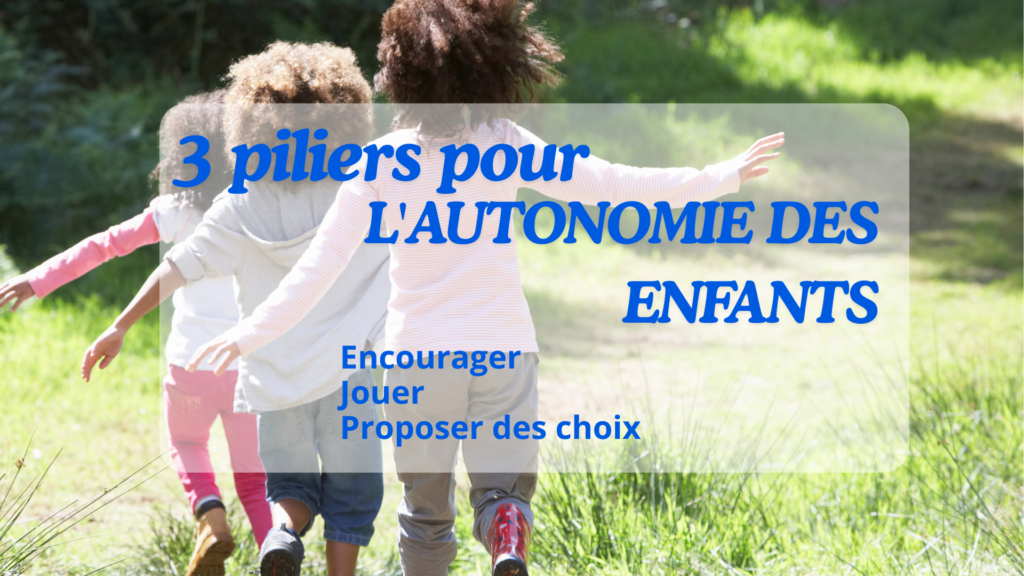
Building child independence rests on three simple pillars: encouragement, play and letting your child make real choices. None of them requires special equipment or a big budget; they mostly require a shift in how you talk, plan the day and share control.
An encouraged child dares to try alone. A playing child stays motivated long enough to master a tricky zip or a stubborn shoe. A child who chooses exercises judgment, personality and a sense of power over his little world, and even his mistakes become lessons rather than failures.

This article walks through each pillar in order, with concrete wording you can borrow today and practical adjustments for mornings, dressing and daily routines.
Quick takeaways
- Encourage the effort and describe what you see, not the result.
- Use play and costumes to make self-dressing genuinely appealing.
- Offer two acceptable choices instead of open questions.
- Let low-stakes mistakes happen; they teach faster than warnings.
- Set up hooks, stools and baskets so the child can act alone.
- Hand over one routine at a time and expect occasional regressions.
1. Reassure and encourage
A child gains confidence and gradually learns to do without adult help when his attempts at independence are encouraged. Encouragement works best when it targets the process and the effort rather than the result, and when it describes what you see instead of judging it as good or bad.
Compare a vague "good job" with something like: "You buttoned three buttons all by yourself." Or: "Getting both shoes on was hard, and you managed it." Or simply: "I see a child dressed in under five minutes with his coat, hat, scarf and gloves." Each sentence names the effort, so the child knows exactly what to repeat.
Describe instead of judging
Descriptive feedback also avoids the trap of praise that depends on the outcome. If the shoes end up on the wrong feet, you can still acknowledge the persistence, then quietly point out the label inside the heel. Parents who want more wording ideas can explore parenting phrases that build confidence rather than pressure, and keep in mind that food rewards tend to undermine this kind of internal motivation.
2. Play as the engine of independence
With strong motivation, doing something he genuinely enjoys, and a dose of enthusiasm, a child can tackle almost anything. Neurobiologists describe enthusiasm as a kind of fertiliser for the developing brain, and nothing is more enthusing for a child than play.
Dressing is a perfect example. A box of costumes turns a chore into a game: he practises zips, buttons and layers because the pirate outfit needs them. You can add a timer-free challenge, a mirror, or a small audience of stuffed animals. The same playful framing works for tidying, hand-washing and putting shoes away.
Keep the play load light
You do not need elaborate setups. A few props within reach and a playful tone are enough, and rotating toys keeps novelty high without spending. If you are choosing what to keep in the dressing-up corner, superhero toys and simple capes tend to get reused for years, while bath toys can carry the same playful independence into evening routines.
| Pillar | What it looks like | Example you can use |
|---|---|---|
| Encouragement | Descriptive, effort-focused feedback | "You buttoned three buttons by yourself." |
| Play | Turning routines into games | Costume box for practising zips |
| Choices | Two approved options | "Red jumper or blue jumper?" |
| Environment | Child-height storage and tools | Low hook, step stool, shoe basket |
| Mistakes | Low stakes, natural consequences | Wet feet after choosing low shoes |
3. Let your child make choices
When a child can make choices, he exercises his autonomy, his personality, his power over his environment and his thinking. The solution he finds will depend on the activity and the constraints of the moment, which is exactly the mental workout you want.
He may also make mistakes, such as picking low shoes when it is pouring outside. Those errors are not a failure of your parenting; they are how he learns to read the weather, the ground and his own comfort. Your job is to keep the stakes low and the options limited.
Offer two acceptable options
Instead of an open "what do you want to wear?", try "the red jumper or the blue one?" Both are weather-appropriate, and he still owns the decision. Some children need a visual cue, so laying both items on the bed helps. If your child is easily overwhelmed, gross motor skills activities and simple daily routines can build the same sense of competence before you widen the choices.
4. Match the approach to your child's stage
The three pillars look different at eighteen months and at six years. With a toddler, encouragement is mostly narration of what he is doing, play is the whole method, and choices should be between two items you have already approved. With an older child, you can hand over longer sequences, such as the whole morning routine, and let natural consequences do some of the teaching.
It also helps to know what is developmentally reasonable. A child who is still working on balance will need more help with stairs than with buttons, and a child recovering from illness may need the adult support back for a while. Reading up on premature babies or typical milestones reminds you that timelines vary widely and that regression is normal during stressful weeks.
Finally, watch your own energy. Independence takes longer than doing it yourself, so pick one routine to hand over at a time rather than all of them at once.

5. Build a home that supports autonomy
Environment does half the work. A low hook for the coat, a step stool by the sink, shoes stored at child height and a basket for hats all remove the need for an adult to intervene. When the setup invites the action, encouragement becomes a comment rather than an instruction.
Keep the number of items visible small, so choosing stays quick and calm. A capsule wardrobe of mix-and-match pieces also cuts morning friction, and a simple picture chart on the wall can replace repeated reminders. If you are stocking a playroom or a gift list, toys for newborns and open-ended basics tend to grow with the child rather than being outgrown in a month.
For families juggling several children, a shared visual routine helps everyone know the sequence, and the youngest learns by watching older siblings do it themselves.
6. What to do when independence stalls
Some days the child refuses everything, and pushing harder usually backfires. Step back, lower the demand and return to play: "Can you get your coat on before I count the spoons?" A playful reframe often restarts cooperation faster than a lecture.
It also helps to separate what is truly non-negotiable, like safety, from what is simply your preference. If a child cries at the doctor's office, that is a different kind of challenge from choosing shoes, and the same respectful tone still applies. Parents looking for gentler alternatives to pressure can read about greeting without kisses and how respect for a child's no builds trust in his own judgment.
Track progress loosely over weeks, not days. Small wins, repeated, are what turn a skill into a habit.


My hands-on take
In our house, the morning battle ended the day I stopped announcing "get dressed" and started laying out two outfits the night before. My youngest still picks the same striped jumper most days, and I have learned to let that go. What changed was the tone: instead of me managing him, he was running his own small operation.
The costume box was the other quiet winner. A superhero cape made zips interesting, and a pair of gloves became part of the game rather than an obstacle. I still catch myself saying "good job" out of habit, then I try to name the specific thing I saw. It takes more words, but the effect lasts longer, and honestly it has made me a calmer parent on school mornings.
Frequently asked questions
At what age can I start offering choices?
As soon as your child can point or reach, you can offer two options you have already approved. Keep the set small and the stakes low, and widen the range as language and judgment grow.
What if my child always picks the same thing?
That is normal and often comforting; repetition builds mastery. Rotate the options occasionally rather than forcing variety, and let the choice stay genuinely his.
Does encouragement mean never saying no?
No. Encouragement is about how you describe effort, not about removing limits. Clear, calm boundaries actually make it safer for a child to experiment inside them.
How do I stay patient when independence slows us down?
Choose one routine to hand over and build in extra time for it. On rushed days, do it together rather than taking over completely, so the skill keeps growing.
Product Reviews
 Best Toys for Dogs With High Prey Drive |
Best Outdoor Toys for 3-4 Year Olds |
Best Outdoor Toys for 6 Year Olds |
Best Harness for Poodle |
Best LEGO Sets for Adults |
Best Travel Toys for 4 Year Olds on Airplane |
Best Toy Stores in Washington DC |
Best Potty Training Toys |
Best Toys for Tripod Dogs |
Maillot equipe de france







