


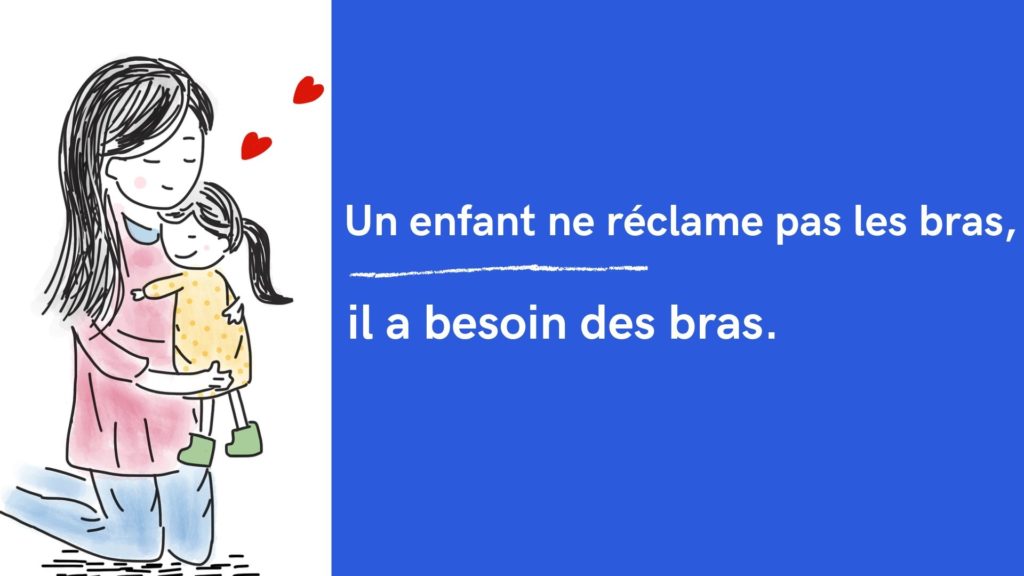
Physical closeness is not a reward a baby tries to earn; it is a basic need written into human biology. Babies arrive immature and entirely dependent on adults, and their cries, grasping reflex and constant search for contact are all part of an ancient system designed to keep them safe.
Understanding this changes how we read a child who reaches up and asks to be carried. It is not manipulation, laziness or a passing whim. It is a survival instinct that does not pass through conscious will, and knowing that can make those demanding moments far easier to handle.

Quick takeaways
- Babies are biologically wired to seek physical closeness for survival.
- Crying and grasping are instinctive tools, not manipulation or caprice.
- Responding to a baby's needs tends to build real autonomy, not dependence.
- Stress, crowds and separation intensify a child's need to be held.
- When carrying is impossible, touch and simple words still soothe.
- Keep visual or verbal contact when leaving a room so your child feels seen.
Why Babies Are Wired for Physical Closeness
Human babies are born immature, and biology is programmed so that they stay in physical contact with adults capable of keeping them alive. Newborns even arrive with a grasping reflex that makes them grip tightly whatever is placed in their hand; scientists believe this once helped babies cling to their mother to escape danger.
We are still governed by neurobiology inherited from distant ancestors. Babies no longer need to cling to avoid predators, but they still need physical proximity, and their cries are part of the same equipment for keeping an adult close. Our species is simply built for closeness, and babies will do everything to obtain it.
This is why a baby does not ask for arms out of caprice, laziness or simple desire. As the specialist literature puts it, physical proximity with the adult is one of the small human's fundamental needs, and survival depends on it. The same logic explains why breastfeeding after one year often remains such a comforting, contact-rich routine for both parent and child.
Will My Baby Get Used to Being Carried?
Many parents and professionals worry that carrying a child too often will spoil them and create endless demands for arms. Yet if the need is imperative, there is no reason to refuse it, and attachment theory shows the opposite effect: the more adults respond to babies' needs, the more real autonomy those babies develop.
French attachment specialist Nicole Guédeney describes parents as "aircraft carriers". Children need to feel that the adults caring for them are available so they can explore their environment with confidence. Attachment and exploration go together, and learning to speak flourishes in the same climate of security, just as regular check ups reassure parents in those early months.
The Aircraft Carrier Image
The carrier must always be available so the plane can land when needed. If it is no longer there, the plane hesitates to move away. In the same way, a child can risk exploring a room or playing with other children only if they sense the adult is ready to come to the rescue. Outdoors, practical know-how matters too, such as keeping a child warm in the car seat without a coat.
| Situation | What your child needs | Practical response |
|---|---|---|
| New place or crowd | Reassurance and closeness | Carry or hold hands until settled |
| You are busy or with another child | Confirmation you are available | Brief cuddle, then explain simply |
| You must leave the room | Proof they are not forgotten | Keep voice or eye contact |
| Carrying is not possible | Physical contact and words | Hand on shoulder, "I see you" |
| Child returns from play | A safe base to recharge | Welcome them, then let them go |
Why Stress Makes the Need Stronger
A stressful environment, whether a new place, a crowd, strangers or a separation from parents, doubles a child's need to be in an adult's arms. Reassuring arms allow the secretion of hormones that calm the child and switch off the emotional alarm system.
The same happens when the child's aircraft carrier is busy or caring for another child. That is precisely when a child asks for the most attention and closeness. It is not jealousy or play-acting but the expression of a survival instinct, and it can feel especially intense with twins parenting tricks where two children compete for the same lap.
At that point the child cannot hear reasoning or explanations, because the alarm is on and stress hormones block reflection, which is already fragile at this age. The best response is to pick the child up when they show the need and to hold them emotionally too, welcoming their feelings with affection and warmth.
What to Do When You Cannot Carry Your Child
Sometimes carrying is simply not possible, and physical contact still matters through touch: hand in hand, a hand on the head or shoulder. Simply saying "I see you" or "I understand" can soothe a child, and it helps to keep a connection even when leaving a room, maintaining visual or auditory contact so they know they are not forgotten.
These small gestures are worth practising during everyday transitions, from first night away to settling a child at nursery. A calm voice and a brief touch do more than a long explanation delivered from across the room, and the same steady presence helps at bedtime if your child takes hours.
Reading the Signals Early
Watch for the early signs, such as reaching up, clinging to your leg or a sudden whimper, and respond before the alarm escalates. A brief cuddle at the first signal is often shorter than the meltdown that follows a delay, and it teaches your child that help arrives reliably.

Building Security Through Everyday Contact
Carrying is not the only route to security. Everyday routines, songs and shared attention all reinforce the sense that an adult is present. Simple tools like baby sign language give a pre-verbal child another way to signal a need for closeness before tears take over.
Playtime on the floor counts too. Sitting nearby while your baby explores toys, and offering a hand when they look back, mirrors the aircraft carrier principle in miniature. Choosing open-ended items such as toys for 1 year old lets a child move between independent play and a quick return to your lap.
Outings and new experiences are another moment when contact matters. Preparing for a busy day, whether that means snow equipment children or a simple trip to the shops, helps you plan for moments when your child will want to be held. Keeping a carrier or a free hand ready makes those requests easier to meet.
Responding Without Guilt or Overwhelm
Knowing the need is real does not mean every request must be met instantly and perfectly. What matters is the pattern: a child who generally finds a warm, available adult learns that the world is safe. Occasional delays, handled with a calm word and a touch, do not undo that foundation.
It also helps to look after yourself. Carrying is physical work, and a parent who is touched-out or exhausted can still offer a hand on the shoulder, a shared song or a quiet moment side by side. Small, repeated gestures of availability build the same sense of security as a long cuddle, and they are sustainable over months and years.
My hands-on take
I learned this the hard way with my second child, who seemed to want arms the moment I started cooking or helping his older brother. For a while I tried explaining that he had to wait, and it never worked. What changed things was crouching down, putting a hand on his back and saying "I see you, I'll be there in a moment" before returning to the pan. He still fussed, but the edge went out of it.
I also started keeping a soft carrier by the door for busy mornings, and I stopped apologising for holding him when he asked. The surprise was how quickly he would push away to go and play once he had what he needed. Those few minutes of contact bought me far more freedom than the arguments ever did.
Frequently asked questions
Does carrying a baby too much spoil them?
No. Attachment research suggests the opposite: babies whose needs are met tend to become more confidently independent. The carrier stays available so the child dares to explore.
Why does my child demand arms most when I am busiest?
This is a survival instinct rather than jealousy. When the adult seems unavailable, the child's alarm system activates and they seek closeness to feel safe again.
What can I do when I physically cannot pick my child up?
Offer touch instead, such as holding hands or resting a hand on their shoulder, and name what you see. A simple "I understand" can calm a child when words are all you have to give.
Can a child hear explanations during a meltdown?
Usually not. Stress hormones block reasoning, so comfort first and talk later, once the alarm has settled and your child is calm enough to listen.
Product Reviews
 Best Toys for Dogs With High Prey Drive |
Best Outdoor Toys for 3-4 Year Olds |
Best Outdoor Toys for 6 Year Olds |
Best Harness for Poodle |
Best LEGO Sets for Adults |
Best Travel Toys for 4 Year Olds on Airplane |
Best Toy Stores in Washington DC |
Best Potty Training Toys |
Best Toys for Tripod Dogs |
Maillot equipe de france







