


Twist Délire is a word game that exercises reading speed, spelling and vowel recognition at the same time. Players roll two vowel dice, then race to spot cards whose words contain both letters.
The game earned a silver medal at the Concours Lépine in 2013 and is recommended from age seven. It works just as well as a playful literacy tool at home, and it can be adapted for children who are still learning to read.

Below you will find the full rules, the two ways a turn can play out, and several simplified versions for beginners.
Quick takeaways
- Twist Délire is a dice-and-card word game for reading speed, spelling and vowels.
- Roll two vowel dice, then race to tap a word containing both letters.
- Identical vowels send play to the harder picture-only interpretation version.
- Keep cards word-side up for beginners and ask them to read their choice aloud.
- Use one die, or spread all cards out, to make the game easier.
- The deck doubles as self-correcting spelling and vocabulary practice.
What is in the box and how a turn works
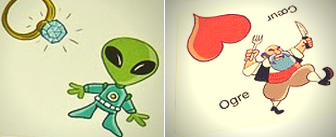
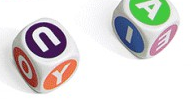
Twist Délire is built around a set of cards with two faces. The front shows pictures with the matching word written underneath, while the back shows only the illustrations. Two dice complete the set, and each face of each die carries a vowel.
Cards are spread out on the table, and on every turn a player rolls both dice. Everyone then scans the cards to find words that contain the two vowels showing. The first player to tap a valid card gets rid of one of their own cards, and the goal is to be the first to empty your hand.
Because the search depends on letters rather than pictures, children practise scanning words closely. That habit supports early reading skills in the same way that simple cause and effect toys reward a child for noticing what happens next.

The two possible outcomes of a roll
When the two vowels are different
The fastest player to tap a picture card whose word contains both vowels discards one card. This is the main engine of the game, and it keeps every player reading the words on the table.
When the two vowels are identical
The last player to tap the central Twist Délire card collects all the cards sitting underneath it. After that, the eight picture cards are turned over to their illustration-only side, and play switches to an interpretation version.
Players now see only images and must think of the word, picture how it is spelled, then check whether it contains the rolled vowels. Examples include parrot, bird or animal, depending on the dice. This variant demands solid reading and spelling, so it suits children who are already comfortable with both.
It also builds flexible thinking, much like open-ended play with LEGO building projects where children picture a result before making it. The same patience pays off when you collect Double VIP points on a future set.
| Element | Standard play | Beginner adaptation |
|---|---|---|
| Number of dice | Two vowel dice | One die |
| Card side | Words and pictures, then flipped | Words and pictures throughout |
| Cards on table | A limited spread | All cards laid out |
| Goal | Empty your hand first | Find at least one match |
| Reading demand | Read and spell mentally | Read the printed word aloud |
Playing it with beginners
With a child in first grade and a pupil in the next year up, keeping the cards word-side up was the right call. Turning them over would have required too many mental steps at once. Instead, both children enjoyed hunting for cards that matched the two rolled vowels.
That version forces them to compare the letters on the dice with the letters inside the written words. Asking them to read aloud the card they tapped adds another layer, and it is a natural way to revisit complex graphemes such as eau, in, ou, on and an.
The game also stretches vocabulary, with words like kayak, diadem and hieroglyph appearing on the cards. Short, focused sessions work best, and a calm routine around them helps, just as holiday excitement levels need a little structure to stay manageable.
Adaptations for younger children
The box says seven and up, but you can bend the rules well before that. One simple tweak is to lay out every card at once, so several cards can be valid on a single roll. That gives a beginner more time to find at least one match.
You can also use the cards as self-correcting reading material. Ask the child to spell or write the word for the blank picture side, then let them flip the card to check their answer. This turns the deck into a quiet solo activity rather than a race.
For the earliest readers, play with a single die instead of two. One vowel is far easier to hold in mind, which speeds up word finding and supports the first steps of decoding. Pairing this with short, rewarding sessions echoes the thinking behind rewarding good actions in a balanced way.

Why it earns a place on the shelf
Twist Délire packs reading, spelling and vocabulary into a fast, social format. The race element keeps attention high, and the two-face design lets the same deck serve beginners and confident readers. It sits comfortably alongside other literacy-friendly games rather than replacing structured practice.
If you are building a small collection of learning games, choose ones that invite conversation and repeat play, just like these cheapest family board games. The same principle applies when picking toys for a pet, as these beagle toy reviews show, and when choosing gifts that a child will actually use, much like these kindergarten graduation gifts.
For families who like to plan ahead, the game travels well and fits easily into a weekend routine, whether you are sorting out family plans for teenagers or keeping younger children happily busy at the table.

My hands-on take
I first played Twist Délire with a child just starting first grade and another a year ahead, and we kept every card word-side up. Turning them over felt like too much to hold in your head at once, and I would rather keep the mood light than push the harder variant too early.
What surprised me was how much they enjoyed the simple hunt for matching vowels. I asked each of them to read the card they tapped, which turned a quick race into a small reading check without anyone noticing. We played in short bursts, and the deck later became a quiet solo activity where they wrote a word and flipped the card to check it. That flexibility is what keeps it in our rotation.
Frequently asked questions
What age is Twist Délire for?
The game is recommended from age seven. Younger children can still join in with simplified rules, such as using a single die or keeping the word side of the cards face up.
What skills does the game practise?
It works on reading speed, spelling, vowel recognition and vocabulary. Players must compare the rolled vowels with the letters inside written words, and the harder version asks them to spell a word mentally from a picture.
Can a child who cannot read yet play?
Not with the full rules. They can, however, use the cards as matching or self-checking material, and a single-die version makes the search much more manageable for early readers.
How many players do you need?
It is designed as a group race, so it works best with two or more players. A single child can still use the deck for solo spelling and reading practice.
Product Reviews
 Best Toys for Dogs With High Prey Drive |
Best Outdoor Toys for 3-4 Year Olds |
Best Outdoor Toys for 6 Year Olds |
Best Harness for Poodle |
Best LEGO Sets for Adults |
Best Travel Toys for 4 Year Olds on Airplane |
Best Toy Stores in Washington DC |
Best Potty Training Toys |
Best Toys for Tripod Dogs |
Maillot equipe de france







