


Time pressure on children is one of the quietest forms of harm in family life, because it rarely looks like harm at all. It looks like a normal morning: shoes half on, toast in hand, a voice repeating hurry up, we are going to be late.
Yet a growing number of educators and psychologists argue that rushing children constantly is a form of maltreatment in its own right. Slowing down and thinking about slow education are inseparable from treating children well.

Quick takeaways
- Constant rushing is a recognised form of harm, sometimes called temporal maltreatment.
- Over-scheduled children lose the chance to organise their own time and activities.
- Rushing feeds stress, conflict, low confidence and fragile concentration.
- Children need moments without time: free reading, unhurried play, slow goodbyes.
- Family life needs quantity as well as quality, not just action time.
- Choose toys and activities that reward patience rather than speed.
Making Peace With Time as a Parent
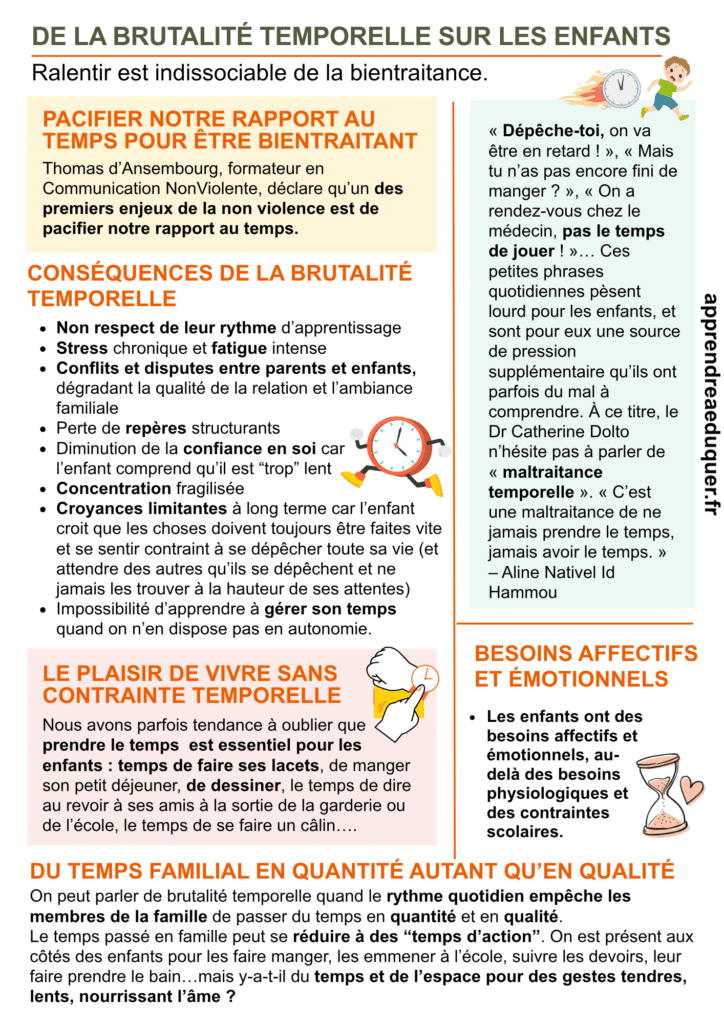
Thomas d'Ansembourg, a trainer in Nonviolent Communication, says one of the first challenges of nonviolence is to pacify our relationship with time. He adds that children are not actually named Hurry Up! That line stays with me, because it captures how often our own urgency, not our child's pace, sets the tone of the day.
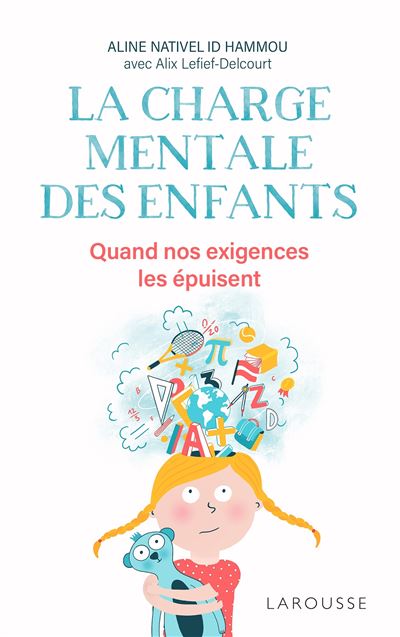
Small daily phrases carry real weight: hurry up, you still haven't finished eating, no time to play before the doctor. Children often cannot understand why the pressure exists, and they absorb it as their own failure. The mental load we carry as parents spills over onto them, and it is worth asking what we can put down instead of passing it on.
Naming the Problem
Dr Catherine Dolto does not hesitate to call this temporal maltreatment: never taking time, never having time. Naming it helps, because it turns a vague feeling of being overwhelmed into something concrete we can change.

What Constant Rushing Does to Children
We rarely realise we are placing this burden on our children, and it affects them on several levels at once. When adults over-plan a child's time, the child loses the chance to organise it and choose the activities they naturally need. This is the same lesson behind the controversy over painting a horse, where adult-led activity replaced the child's own initiative.
The consequences add up: chronic stress and deep fatigue, more conflict between parents and children that degrades the family atmosphere, and a loss of confidence as the child concludes they are too slow or not gifted enough. Concentration suffers too. Maria Montessori stressed the connections built in a child's brain during deep focus, and a child needs repetition to gain mastery, working alone without fear of interruption or criticism.
Long-Term Effects
Over time, limiting beliefs settle in: the child learns that things must always be done fast, and may spend a lifetime feeling compelled to rush, or expecting others to hurry and never finding them fast enough. Confusion about time itself can follow, since understanding time is a complex social construction built gradually and used every day, from knowing your birthday to estimating a duration or arriving on time. A child who is never given time cannot learn to manage it. If your child melts down when routines shift, read about child's fatigue and how to manage it, and for a gentle step toward independence, see your first night away.
| Situation | Rushed habit | Slower alternative |
|---|---|---|
| Morning routine | Repeated hurry up | Prep the night before, allow real time |
| Meals | Plate cleared fast | Let the child set the pace |
| Play | Activity switched often | Protect one long, uninterrupted block |
| School run | Quick goodbye | Time to say goodbye properly |
| Toys | Many, rotated fast | Few, used deeply |
| Evenings | Action time only | Space for cuddles and talk |
Education Needs Moments Without Time
We sometimes forget how essential it is to have time to tie your own shoelaces, eat breakfast, draw, walk without the pushchair, say goodbye to friends at the school gate, or simply have a cuddle. These are not luxuries; they are the raw material of childhood.
Education requires moments without time: reading for the simple pleasure of reading, not to fill in a worksheet or write a summary. Time does not always have to be organised, profitable, useful or educational. Moments that look unproductive are essential for consolidating learning and for simply living. Play works the same way, which is why open-ended play matters so much; see these open ended toys for toddlers as a starting point. The same care applies to everyday essentials, as these nipple cream tips show.
Protecting Unstructured Play
Unstructured play is where children rehearse, repeat and master. A toy that can become anything asks for patience rather than speed, and it rewards the child who is allowed to stay with it. If you are choosing gifts with this in mind, these toys for 1 year old support that slower kind of discovery.
Family Time in Quantity as Well as Quality
Time pressure also shows up when the daily rhythm stops family members from spending time together in quantity and in quality. Without care, family time shrinks to action time: we are present to feed, drive to school, supervise homework and run the bath, but is there space left for tender, slow gestures that feed the soul?
Magazines sometimes claim that quality matters more than quantity. Try transposing that to a couple's relationship: would you accept that ten minutes of conversation each evening is enough to fill your partner's emotional tank? Children have emotional needs beyond physiology and school demands. They need to simply be with their parents, doing nothing in particular, sharing, playing, laughing and talking about everything and nothing.
Making Room for Connection
That connection is what carries a child through harder days, such as a first night away from home, which is easier when the bond is well fed beforehand. It also shapes how we handle discipline: understanding why it is not good to slap starts with recognising that a rushed, reactive adult is more likely to lash out.

Rethinking the Toys and Screens That Fill the Day
Slow parenting does not mean buying nothing; it means choosing what earns its place in your home. Toys that demand to be operated quickly, or that do all the imagining for the child, tend to shorten attention rather than stretch it. A few well-chosen items used deeply beat a mountain of novelties.
The same logic applies to outings and gifts. A trip to a good independent shop, where you can handle things and choose deliberately, is itself a slow activity; these toy stores Houston are worth a browse, and so are the toy stores Columbus if you are nearby. For outdoor time, these outdoor toys toddlers encourage the kind of play that cannot be rushed.
When the Pressure Comes From Outside
Some time pressure is imposed by others, not by us. Classroom rewards and prizes can turn play into a race, so it is worth thinking critically about classroom prize toys in bulk. And when a supposedly pedagogical activity goes wrong, as in the controversy over a children's activity that consisted of painting a horse, it is a reminder to question anything that hurries children toward a predetermined result.
My hands-on take
I started paying attention to this after hearing myself say hurry up four times before eight in the morning. Nothing dramatic had happened; we simply had not left enough time. So I moved bedtime earlier by a little and laid out clothes the night before, and the phrase almost disappeared on its own.
The bigger change was protecting one block of the day with no goal attached. No worksheet, no lesson, no clock. My child often does something that looks like nothing, and then surprises me with what they have worked out. Slowing down did not make us less organised; it made the house calmer, and me noticeably less tired.
Frequently asked questions
Is time pressure really harmful, or just normal family life?
Some urgency is unavoidable, but constant rushing is different. When a child never has time, they lose confidence, focus and the chance to learn to manage time themselves.
Does slow parenting mean never saying hurry up?
No. It means noticing how often you say it and reducing it where you can. Preparing ahead and allowing realistic time removes most of the need.
How do I slow down when school and work set the schedule?
Protect small pockets: an unhurried breakfast, a proper goodbye, a bedtime cuddle. Consistency matters more than length.
What toys support slower play?
Open-ended toys that can become many things, plus simple outdoor equipment. Fewer toys used deeply work better than many used briefly.
Product Reviews
 Best Toys for Dogs With High Prey Drive |
Best Outdoor Toys for 3-4 Year Olds |
Best Outdoor Toys for 6 Year Olds |
Best Harness for Poodle |
Best LEGO Sets for Adults |
Best Travel Toys for 4 Year Olds on Airplane |
Best Toy Stores in Washington DC |
Best Potty Training Toys |
Best Toys for Tripod Dogs |
Maillot equipe de france







