


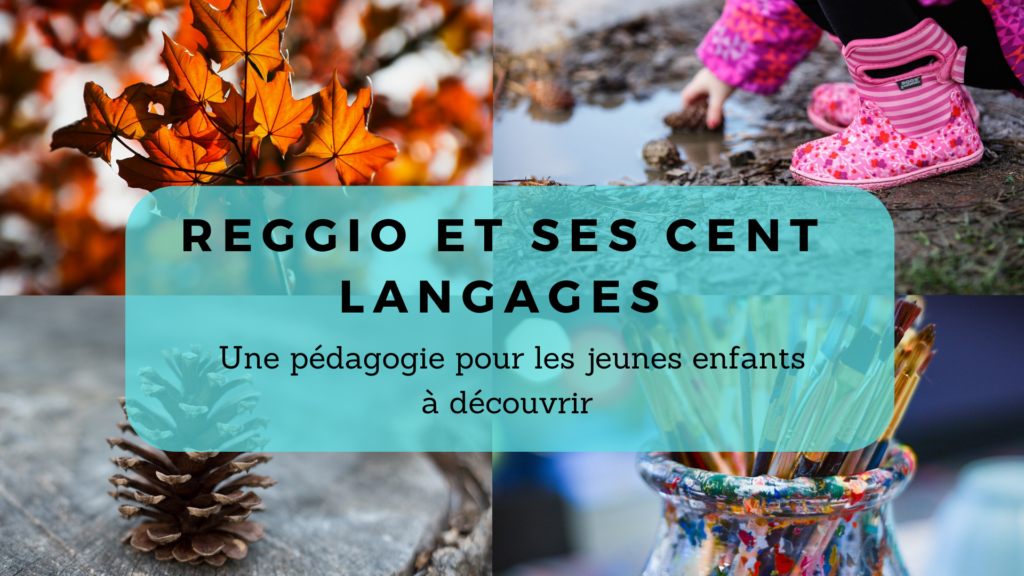
The Reggio Emilia approach is less a rigid method than a philosophy of childhood built on respect, and its best-known idea is that children have a hundred languages. These languages are all the ways a child expresses and communicates: speech, mime, visual arts, puppetry, dance, and even mathematical or scientific thinking.
Developed by Loris Malaguzzi in the Italian region of Reggio Emilia after the Second World War, the approach is especially suited to preschool and kindergarten-age children. It treats the environment as a third teacher, alongside the child and the adults, which means the way you arrange a space matters enormously.

Quick takeaways
- The Reggio Emilia approach is a philosophy, not a fixed curriculum, centred on respect for the child.
- The hundred languages are all the ways children express themselves: words, art, mime, dance, maths and more.
- The environment acts as a third teacher, so arrange spaces and materials deliberately.
- Malaguzzi's poem warns that traditional schooling steals ninety-nine of the hundred languages.
- Offer variety, rotate materials and follow the channel your child already uses.
- Document children's work to make their thinking visible and share it with other adults.
What the Reggio Emilia approach really is
The Reggio Emilia approach is often called a pedagogy, but it is closer to a philosophy: a way of seeing the child as capable, curious and full of potential rather than as an empty container to fill. It was shaped by Loris Malaguzzi in the Reggio Emilia region of Italy after the Second World War and is designed above all for young children in preschool and kindergarten years.
Its central pillar is the notion of the hundred languages. A language here is any means of expressing and communicating, whether that is words, mime, painting and modelling, puppetry, dance, or the language of mathematics and science. The goal is not to pick one channel but to let children move freely between many. If you want to see how a different but equally child-led philosophy frames this, our overview of the Montessori method pillars makes an interesting comparison. For families who like to learn through shared experiences, a motorhome route through Extremadura can offer plenty of real-world discovery.
Exposing children to other cultures and languages also cultivates respect for human diversity, promotes peace and opens minds, which fits naturally with a philosophy that values many voices.
The environment as the third teacher
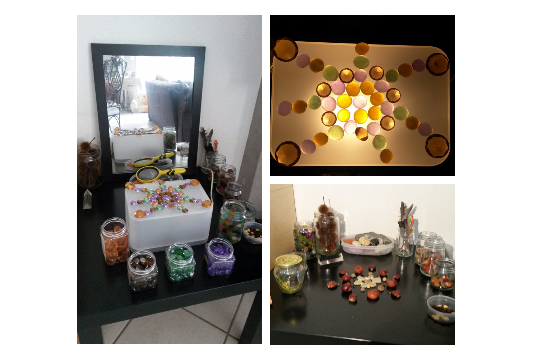
In Reggio-inspired thinking, the environment is considered the third teacher, in a triangular relationship between the child, the adults around them (parents and early childhood professionals) and the material space itself. Space is never neutral: it either invites exploration or shuts it down.
That is why settings that draw on this approach carefully arrange both indoor rooms and outdoor areas so children can actually use their hundred languages. The arrangements and invitations they create inspire nurseries, kindergartens, childminding networks, childminders and parents alike, and they pair well with learning to speak at home.
What an inviting space looks like
Natural light, accessible materials at child height, mirrors, plants, and open-ended objects that can become anything. A good test is whether a child can reach, choose and put things back without an adult. Open-ended playthings do much of this work, and our round-up of open ended toys gives concrete starting points. Just as the space adapts to family life, so can contraceptives after childbirth be chosen to fit your situation.
| Area | What to provide | Why it matters |
|---|---|---|
| Art corner | Paper, clay, paint, natural finds | Supports visual and tactile languages |
| Movement space | Clear floor, music, scarves | Feeds dance, mime and body language |
| Story nook | Books, puppets, cushions | Builds narrative and spoken language |
| Discovery shelf | Stones, shells, sorting trays | Encourages mathematical and scientific talk |
| Outdoor access | Sand, water, sticks, loose parts | Keeps exploration open-ended |
The hundred languages of children
Malaguzzi captured the idea in a poem: the child is made of one hundred, with a hundred languages, a hundred hands, a hundred thoughts, a hundred ways of thinking, playing and speaking. The child has a hundred ways of listening, of marvelling and of loving, a hundred joys for singing and understanding, a hundred worlds to discover, invent and dream.
Then comes the sting: the child has a hundred languages, but ninety-nine are taken away. School and culture separate the head from the body, the poem argues. The child is told to think without hands, to do without head, to listen without speaking, to understand without joy, to love and marvel only at Easter and Christmas.
The child is told to discover a world that already exists, and on a hundred, ninety-nine are stolen. The poem insists on the false divides we impose: play versus work, reality versus fantasy, science versus imagination, sky versus earth, reason versus dream. In short, the child is told the hundred does not exist, yet the child says it does.

How to bring the hundred languages home
You do not need a purpose-built studio. What you need is variety and permission: a corner for drawing and clay, a basket of fabrics for dressing up, a spot for dancing, a shelf of natural finds for sorting and counting. Rotate materials rather than piling everything out at once.
Watch how your child already communicates and feed that channel, then gently offer another. A child who builds constantly may enjoy telling a story about the build; a child who talks nonstop may love painting the scene instead. Understanding how children make sense of the world helps you follow their lead rather than force a direction, and our piece on how children understand that world is a useful companion.
Outdoors counts as a language too. Sand, water, sticks and stones are open invitations, and our list of outdoor toys toddlers can help you keep the garden interesting across seasons.

Documenting and sharing what children create
Reggio-inspired practice gives unusual weight to documentation: photographs, notes and displays of children's work that make their thinking visible to them, to you and to other adults. It is not decoration. It is a way of saying to a child, your ideas are worth recording.
Keep a simple folder or a wall strip where a drawing, a photo of a sculpture and a few words of your child's explanation sit side by side. Over months you will see the languages shift and combine, which is far more informative than any single finished piece.
Documentation also invites conversation between home and setting, so childminders, teachers and parents are working from the same observations rather than guessing.

Respect, diversity and the wider world
Because the approach treats every child as competent and every family as a holder of culture, it sits comfortably alongside everyday parenting challenges. A child who feels respected tends to need less correction, and our advice on helping a child control his aggression pairs well with a philosophy built on trust rather than punishment.
Bringing in other languages, songs and stories is part of the hundred languages, not an add-on. It widens a child's sense of what is normal and worth respecting.
If you are choosing toys that support this kind of expression, our selection of foam block toys and our guide to the infant development stages of the baby can help you match materials to what your child is actually ready for.
My hands-on take
When I first read about the hundred languages, I assumed it meant buying more art supplies. What changed things for me was subtraction: I cleared a low shelf, put out three things instead of fifteen, and moved a mirror to the floor. My child started narrating what she built, which she had never done before.
The other shift was keeping a folder of her drawings with a line or two of what she said about each one. Months later, flicking through it together, I could see her moving between drawing, talking and building in a way I would have missed entirely. It made me far less tempted to correct and far more inclined to watch.
Frequently asked questions
Is the Reggio Emilia approach suitable for babies and toddlers?
It was developed for preschool and kindergarten-age children, but its principles work from very early on. Offering varied materials and a reachable, calm environment suits even the youngest children.
Do I need special equipment to try it at home?
No. Everyday materials, natural objects and a little space for mess matter far more than bought kits. What counts is variety, accessibility and permission to explore.
What does "the environment as third teacher" mean in practice?
It means the child, the adults and the physical space form a triangle, and the space itself teaches. Light, order, accessible materials and open-ended objects all shape what a child can do.
How is this different from Montessori?
Both are child-led and respect the child, but Reggio places more emphasis on expressive arts and on documenting children's ideas. Montessori leans more on specific learning materials and sequences.
Product Reviews
 Best Toys for Dogs With High Prey Drive |
Best Outdoor Toys for 3-4 Year Olds |
Best Outdoor Toys for 6 Year Olds |
Best Harness for Poodle |
Best LEGO Sets for Adults |
Best Travel Toys for 4 Year Olds on Airplane |
Best Toy Stores in Washington DC |
Best Potty Training Toys |
Best Toys for Tripod Dogs |
Maillot equipe de france







