


Rainbow Tales is a collection of seven metaphorical stories designed to help children aged 5 to 10 activate their inner resources and reach emotional balance. The book follows twins Enzo and Lola and a gentle storytelling witch, Mirabella, through short tales written with words chosen for their positive effect on the unconscious mind.
The author, Lise Bartoli, is a clinical psychologist and hypnotherapist who specialises in perinatal care, and the illustrations are by Lucie Yonnet. The stated aim is simple: a general feeling of wellbeing that your child carries away after listening.

Quick takeaways
- Seven metaphorical tales for children aged 5 to 10
- Twins Enzo and Lola learn from the witch Eclaireuse
- Words and colours chosen to reach the unconscious
- "Respiplume" breathing to reach a calm state
- "Your Turn!" prompts for creating inner images
- Parent summaries of the resources activated
The wellbeing tales: what makes them different
These metaphorical stories aim to give children both psychological and emotional richness. Through their form and their content, they open a child to an inner journey that helps activate internal resources and reach emotional balance. Drawing on her hypnotherapy experience, the author uses words that reach the unconscious, particularly through colour.
The idea is that the unconscious can set up the changes a child needs by drawing on the solutions the characters find. Every story is meant to help a listening child overcome difficulties, gain new skills, or turn a failure into fertiliser for growing and learning. If you want to understand how early experiences shape this kind of learning, our guide to first three years explains why the early years matter so much.
Breathing first
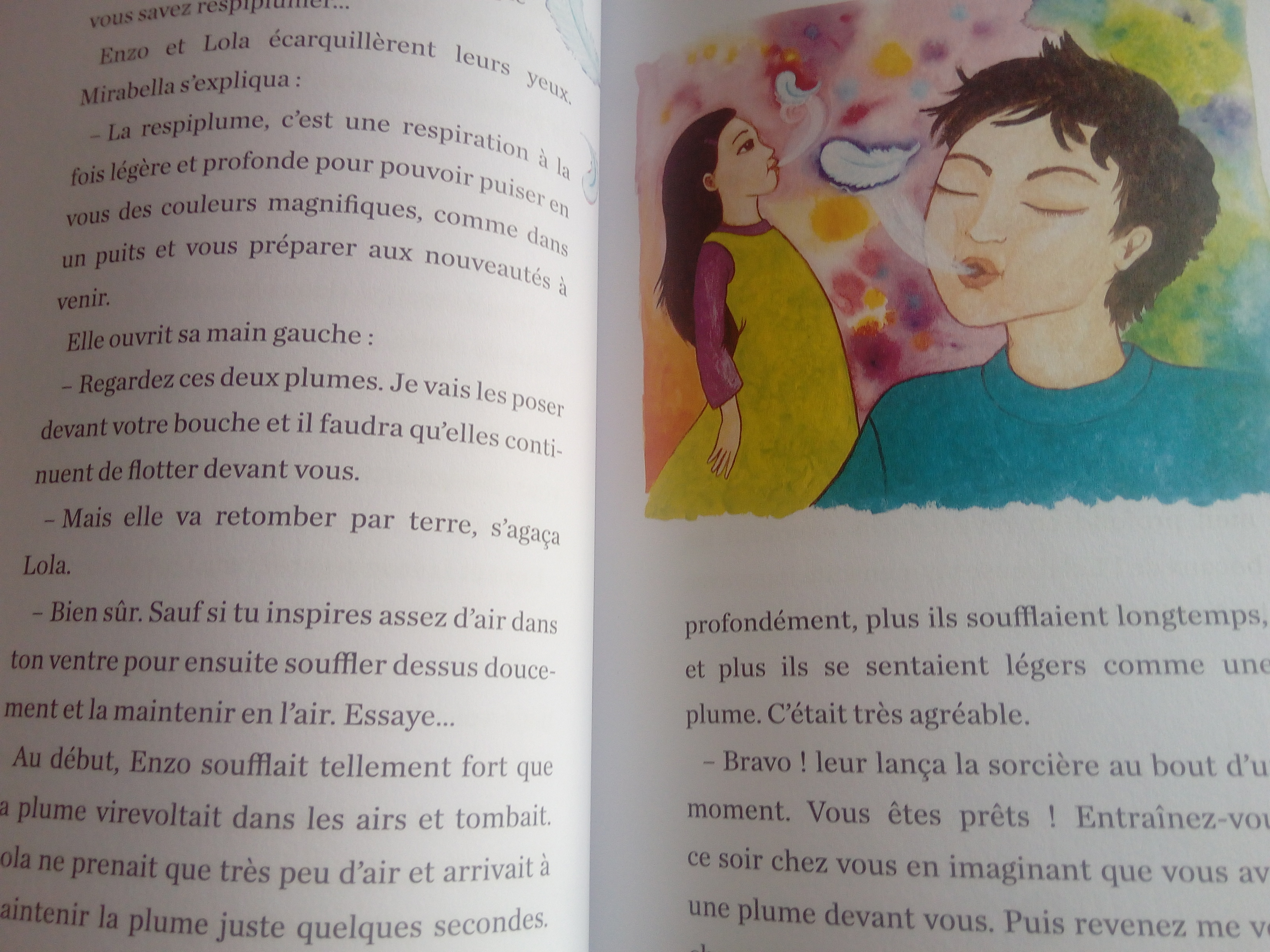
From the introductory tale, children are invited to learn to breathe to reach a state of calm. They can practise the "respiplume": blowing gently on an imaginary feather to keep it floating in front of them. It is a small, portable ritual that works well before homework, bedtime or a tense moment, and you can pair it with simple movement such as Tree Pose to anchor the calm in the body.

A "Your Turn!" section for inner images
Each tale includes a "Your Turn!" section that invites children to create their own inner images, symbols of the lesson and values carried by the story. This turns listening into a small creative act rather than a passive one.
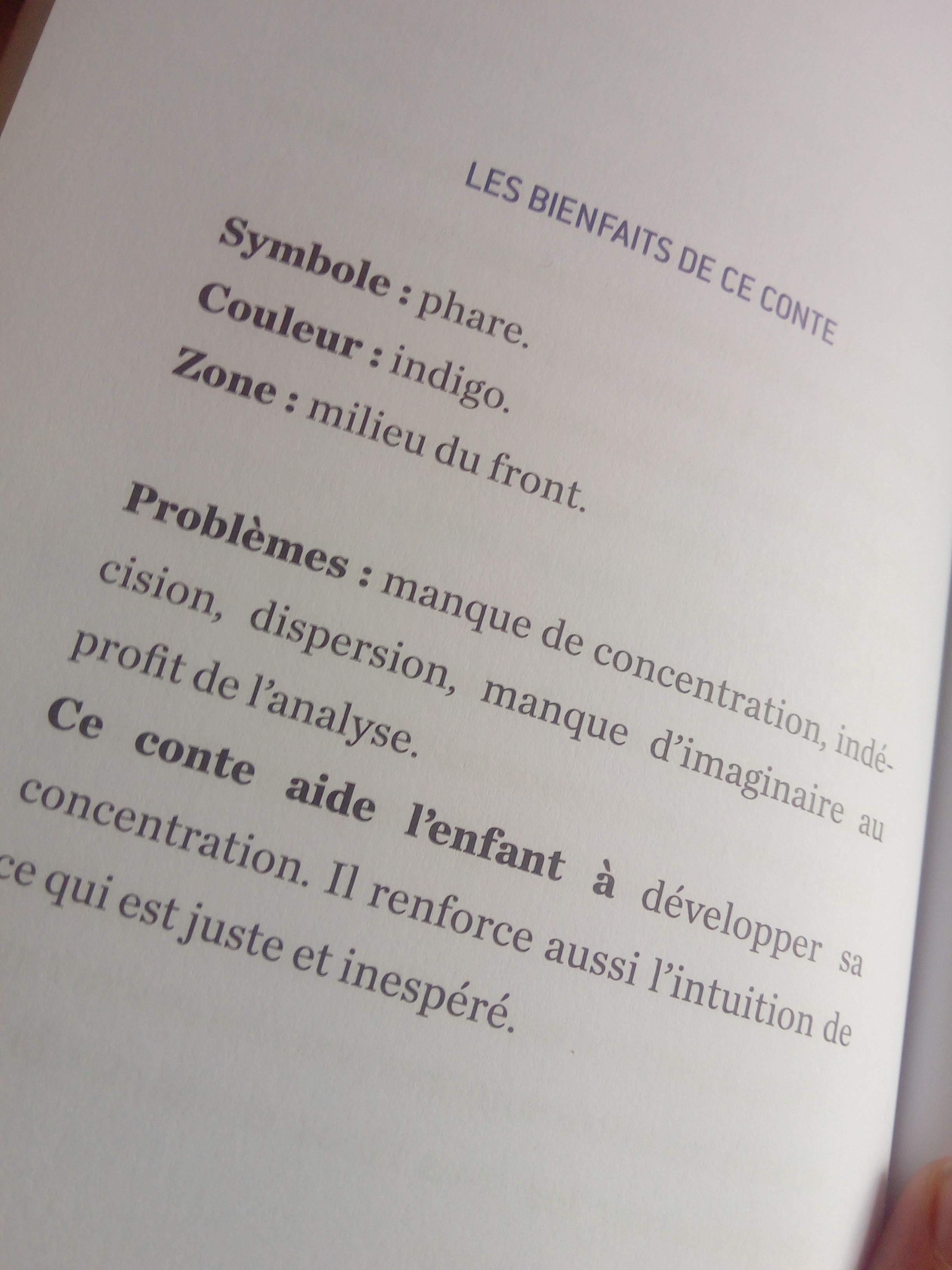
At the end of every tale, the benefits are summarised to help parents see which resources were activated for which difficulty: full presence when concentration is hard, pushing yourself when you hesitate, gaining self-esteem when you feel insecure or less good than others, and taming emotions. It is a useful bridge for talking about feelings at home, much like the everyday habits we describe in child behaviours that quietly shape how a child reacts.
| Tale | Theme | Resource activated |
|---|---|---|
| The Princess Who Scattered | Savouring the present | Drawing on energy |
| The Butterfly Who No Longer Dared | Moving forward | Courage to act |
| Little Bear Is Afraid of Being Mocked | Fear of ridicule | Self-confidence |
| Chloe Feels Sad and Neglected | Sadness | Taming and sharing emotions |
| The Bird Ashamed of Singing Off-Key | Shame | Expressing feelings |
| The Borders at the End of the World | Limited thinking | Believing in possibilities |
The seven tales and their lessons
The seven stories follow a thread with Enzo and Lola, twins who learn life lessons from the witch Eclaireuse. Each one targets a specific inner skill, which makes it easy to choose a story that matches the evening.
The Princess Who Scattered is about drawing energy to savour the present moment. The Butterfly Who No Longer Dared to Spread Its Wings encourages moving forward, while Little Bear Is Afraid of Being Mocked builds confidence so a child stops holding back. Chloe Feels Sad and Neglected helps tame emotions so they can be communicated, and The Bird Ashamed of Singing Off-Key is about expressing what sits on your heart.
The Borders at the End of the World invites children to see differently and believe in every possibility. Finally, In the Fairies' Secret is about stepping back for more inspiration. A child who struggles to put feelings into words may also benefit from the playful support in our speech therapy toys selection.

Why colours and metaphors work so well
Reading these rainbow tales lets children light up colours inside and feel their inner rainbow, described as a source of joy, creativity, confidence and love. Colour gives a child something concrete to hold on to when the message itself is abstract.
Metaphor does the same job: a butterfly or a shy bear can carry a difficult idea without the child feeling judged. This is why the stories sit comfortably alongside other calm, body-based routines, from prenatal yoga for parents to gentle rituals for children. If siblings compete for attention, the tale about feeling neglected can open a conversation, and our five-step approach to sibling fights is a practical companion.
Making it a habit
Choose one story, read it slowly, then let your child draw their inner image. Repeat the same tale for a week or two so the idea has time to settle.
How to use the collection at home
You do not need to read all seven in one go. Pick the tale that matches what your child is living through this week, and let them choose the colour they see in their mind afterwards.
The book is available in libraries, bookshops and online. For families building a calm evening routine, it pairs naturally with our tips on helping children sleep on Twelfth Night or with a quiet transition such as moving from a toddler bed without stress.


My hands-on take
I started using these stories at bedtime with my own child, and the feather breathing was the part that stuck. We now do three slow blows on an imaginary feather before lights out, and it has become a signal that the day is closing. What surprised me was how often my child came back to a story days later, describing the colour they had seen in their head.
My advice is to keep it slow and undramatic. Read one tale, pause, and ask what picture appeared rather than what the story meant. Some evenings we skip the story entirely and just do the breathing. The point is not to finish the book but to leave a child with a small tool they can use on their own.
Frequently asked questions
What age group is Rainbow Tales written for?
The collection is intended for children aged 5 to 10, which matches the length and vocabulary of the stories.
Do we need to read the tales in order?
No. The introductory tale sets up the breathing exercise, but each story stands alone and can be chosen to match a current difficulty.
What is the "respiplume"?
It is a breathing game where the child blows gently on an imaginary feather to keep it floating, which helps reach a calm state.
Who is the author?
Lise Bartoli is a clinical psychologist and hypnotherapist specialising in perinatal care, and the book is illustrated by Lucie Yonnet.
Product Reviews
 Best Toys for Dogs With High Prey Drive |
Best Outdoor Toys for 3-4 Year Olds |
Best Outdoor Toys for 6 Year Olds |
Best Harness for Poodle |
Best LEGO Sets for Adults |
Best Travel Toys for 4 Year Olds on Airplane |
Best Toy Stores in Washington DC |
Best Potty Training Toys |
Best Toys for Tripod Dogs |
Maillot equipe de france







