


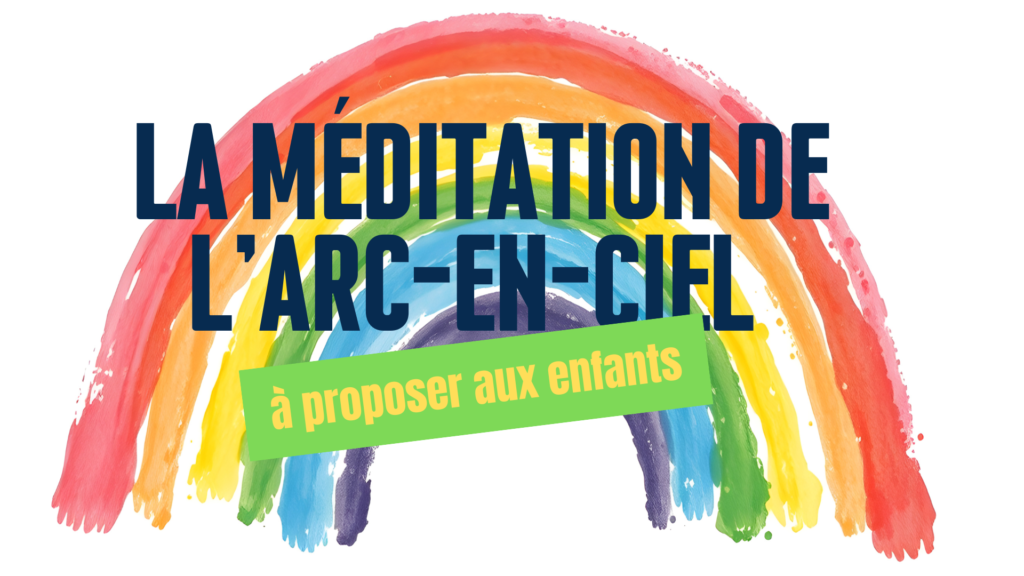
The rainbow meditation is a gentle relaxation exercise for children that uses the colors of the rainbow to spark positive inspiration and build self-confidence. Just as a rainbow appears like magic after the rain and brightens the sky with vivid color, this meditation invites your child to draw strength and good feelings from each hue.
The idea is simple: your child sits comfortably, closes their eyes, breathes deeply, and imagines being surrounded by one color at a time, breathing that light in and letting it fill them with a positive quality. It takes only a few minutes and needs nothing but a quiet spot.

You can offer it at bedtime, after a busy day, or whenever your child needs help settling. Below is the full script, plus tips for making it work at home.
Quick takeaways
- The rainbow meditation uses seven colors, each linked to a positive quality.
- Children sit comfortably, close their eyes and breathe slowly.
- Red brings energy, orange strength, yellow happiness, green friendship.
- Blue brings peace, indigo gentleness and violet love.
- The closing image sends that positive energy out to the wider world.
- Sessions can be short; consistency matters more than length.
How to Set the Scene for the Rainbow Meditation
Before you begin, help your child find a comfortable seat—cross-legged on a cushion, or lying down if you are doing this before sleep. Ask them to close their eyes and take a slow, deep breath in through the nose, then let it out gently, feeling the body soften. A calm, unhurried voice sets the tone; you might dim the lights or soften the room so the experience feels special.
There is no need to rush. If your child is restless, keep the first attempt short and simply walk through two or three colors. Consistency matters more than length, and a familiar routine can become a welcome ritual. For families who enjoy winding down together, pairing this with a quiet story works beautifully—our collection of great books offers plenty of gentle options.
A Note on Timing
Bedtime is a natural fit, but this exercise also helps after school or before homework. Some parents use it to ease the transition into quiet time, especially on days when children are overexcited.
The Rainbow Meditation Script, Color by Color
Read each step slowly, pausing between colors so your child has time to picture the light. Begin with red: ask your child to imagine being surrounded by red light, breathing it in and feeling it fill them with energy. Next comes orange light, breathed in to fill them with strength, followed by yellow light that brings happiness.
Then move to green light, which fills them with friendship, and blue light, which brings peace. Indigo light follows, filling them with gentleness, and finally violet light, which fills them with love. Each color carries its own quiet gift, and children often enjoy choosing a favorite.
If your child likes to move while they relax, a short stretch or wiggle between colors can help them stay engaged—much like the playful energy of outdoor toys on a sunny afternoon. Keep the pace calm and let them lead if they want to linger on a color. A calm, patient approach also echoes the gentle parenting guidance that helps children feel secure.
| Color | Quality Breathed In | Good Moment to Use |
|---|---|---|
| Red | Energy | Morning or after rest |
| Orange | Strength | Before a challenge |
| Yellow | Happiness | After a hard day |
| Green | Friendship | Before seeing friends |
| Blue | Peace | Bedtime |
| Indigo and violet | Gentleness and love | Winding down |
Sending the Rainbow Out Into the World
Once all seven colors have been explored, invite your child to imagine a brilliant rainbow carrying all of that energy, strength, happiness, friendship, peace, gentleness and love from their heart outward—to their home, their street, their town, their country, and out to the whole world. This closing image helps children feel connected to something larger than themselves.
Then ask them to let the rainbow slowly fade. Encourage slow breathing as they relax, and when they are ready, have them wiggle their toes and fingers and open their eyes. This gentle return helps them reorient without feeling jarred.
This sense of connection and kindness echoes the messages found in thoughtful stories about compassion and generosity. If your child enjoys imaginative journeys, activities like exploring animals in 3D can also feed their curiosity in a calm, focused way—see augmented reality animals.
Why Color Visualizations Help Children Relax
Visualizing color gives a wandering mind something simple and concrete to hold onto, which is often easier for young children than focusing on the breath alone. Each color is paired with a positive quality, so the exercise quietly reinforces self-confidence and emotional awareness without any pressure to perform.
Because it asks nothing of the child except imagination, it suits a wide range of temperaments. Shy or sensitive children may especially appreciate the private, inward nature of the practice. For children who prefer active outlets, balancing quiet moments with movement—such as team or individual sports—can support overall wellbeing; read about team sports versus individual activities. Parents dealing with skin concerns like molluscum may find calm routines especially reassuring, and families of multiples can adapt restful practices using twins sleep guidance.
Parents often notice that a short, regular practice becomes a comforting anchor. It is a small tool, but one that fits easily into family life.

Adapting the Meditation to Your Child
Every child is different, so feel free to shorten the script, repeat a favorite color, or add a gentle sound or soft music. Younger children may prefer to name the colors out loud or point to objects in the room before closing their eyes. Older children might enjoy writing down the quality they felt most strongly.
If your child has trouble sitting still, try the exercise lying down or during a quiet car ride—though if motion tends to bother them, see our explanation of car sickness in young children. Keep sessions brief and stop if your child loses interest; the goal is calm, not compliance.
Above all, model the relaxed tone yourself. When you breathe slowly and speak softly, your child is more likely to follow along.
Making It a Family Ritual
The rainbow meditation works well as a shared family moment, whether before bed or on a quiet weekend morning. Siblings can take turns choosing the next color, which adds a sense of play. Over time, the ritual becomes a familiar signal that it is time to slow down.
You might also pair it with other calming routines, such as reading together or a simple craft. Families who like to mark the seasons often weave in festive traditions—our Christmas carol lyrics, for example, can round off a cozy evening. The key is to keep it light and enjoyable.
With a little practice, this colorful exercise can become a treasured part of your child's day.

My hands-on take
I first tried this meditation with my daughter before sleep, and she took to it far more easily than I expected. She liked choosing which color she was "breathing in," and by the time we reached violet her voice had gone quiet and slow. What surprised me most was how she began asking for it on her own after busy days.
In practice, I keep the script loose. Some nights we only do three colors; other nights she wants to repeat green because it is her favorite. I have learned to follow her lead rather than sticking rigidly to the order. If you are new to this, start small, speak softly, and let the ritual grow naturally. It has become one of the calmest parts of our evenings.
Frequently asked questions
How long should the rainbow meditation last?
A full run-through takes only a few minutes, but you can shorten it to two or three colors for younger children. Consistency matters more than length, so a brief daily practice is often more effective than a long occasional one.
What age is this meditation suitable for?
It works well for children old enough to picture colors with their eyes closed, roughly the early school years and up. Younger children may enjoy naming colors aloud first, while older children can reflect on the qualities afterward.
Can we do it at times other than bedtime?
Yes. While bedtime is a natural fit, it also helps children settle after school, before homework or during a quiet weekend moment. Choose a calm time when your child is not hungry or overexcited.
What if my child will not close their eyes?
That is fine. Some children relax more easily with eyes open, focusing on a colorful object or a picture. Follow your child's comfort rather than insisting on a particular posture.
Product Reviews
 Best Toys for Dogs With High Prey Drive |
Best Outdoor Toys for 3-4 Year Olds |
Best Outdoor Toys for 6 Year Olds |
Best Harness for Poodle |
Best LEGO Sets for Adults |
Best Travel Toys for 4 Year Olds on Airplane |
Best Toy Stores in Washington DC |
Best Potty Training Toys |
Best Toys for Tripod Dogs |
Maillot equipe de france







