


The limits of punishment become clear the moment you ask what you actually want a child to learn. Most parents want cooperation, honesty and self-control, yet punishment often produces fear, resentment or clever hiding instead.
Marshall Rosenberg, who developed Nonviolent Communication, argued that punishing people rarely gets us the change we want. He suggested two simple questions to reveal why: what change do I want, and what motivation do I want behind it?

That second question is the one we skip. When children act only to avoid a reprisal or chase a reward, the lesson stays on the surface. This article walks through the drawbacks of punishment, the difference between protective and repressive force, and what to do instead.
Quick takeaways
- Ask what change you want and what motivation should drive it
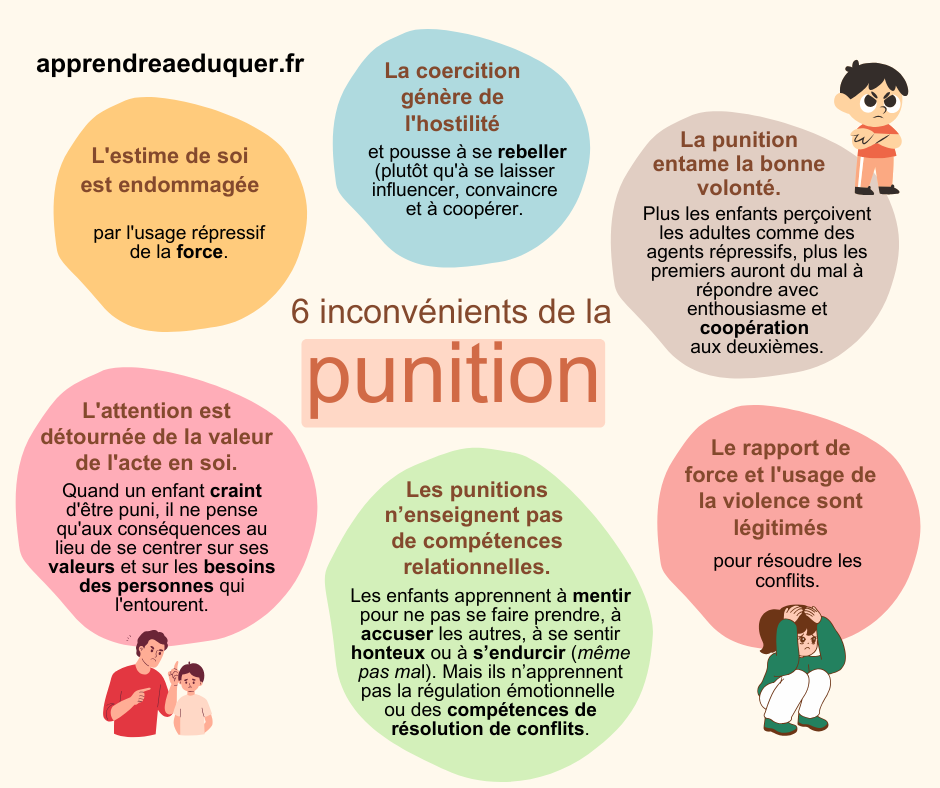
- Punishment shifts attention to consequences, not values
- Repressive force damages self-esteem and good will
- Coercion breeds hostility and rebellion rather than cooperation
- Punishment teaches lying and blaming, not conflict skills
- Protective force prevents harm; repressive force seeks to make someone suffer
Two Questions That Reveal the Limits of Punishment
Rosenberg proposes two questions to expose both the uselessness and the ineffectiveness of punishment. First: in what way would I like this person to change their behaviour? Second: what motivation would I like this person to have for doing what I ask?
We rarely ask the second question, yet children often act out of fear of punishment or in search of a reward. That means the behaviour changes only while someone is watching. If you are rethinking your overall approach, these educate children ideas about directing versus letting flow pair well with this reflection.
When the goal is genuine cooperation rather than compliance, the motivation behind the act matters more than the act itself. A child who understands why something matters can carry that reasoning into situations you never see.

Six Drawbacks of Punishment
Rosenberg identifies several concrete costs to relying on punishment. Attention shifts away from the value of the act itself: a child worried about consequences thinks only about the penalty, not about their own needs or the needs of people around them.
Self-esteem suffers under repressive force, and good will erodes. The more children see adults as repressive agents, the harder it is for them to respond with enthusiasm and cooperation. Coercion also breeds hostility and pushes children toward rebellion rather than being influenced or convinced.
What Punishment Fails to Teach
Punishment legitimises the use of force and violence as a way to solve conflict. It also teaches no relational skills: children learn to lie so they are not caught, to blame others, to feel ashamed or to harden themselves. They do not learn emotional regulation or peaceful conflict resolution. For a wider look at how environment shapes behaviour, consider this piece on rich child differences and what they reveal about upbringing. The same principle applies at home, as these thoughts on dog training show, and it is worth asking whether baby food for your child.
| Protective force | Repressive force |
|---|---|
| Aims to prevent harm or injustice | Aims to make someone suffer for a perceived fault |
| Example: catching a child running into the street | Example: a smack, a punishment, an accusation |
| Focus on safety, no blame | Focus on fault and remorse |
| Corrected through information and empathy | Corrected through pain and shame |
| Builds trust and cooperation | Breeds fear, hostility and rebellion |
Protective Force Versus Repressive Force
Rosenberg draws a clear line between two uses of force. Protective force aims to prevent physical harm or injustice, while repressive force aims to make people suffer for acts perceived as wrongdoing.
A protective example is catching a child who runs into the street to avoid a car. The only concern there is safety, not criticism or condemnation. Dangerous or inappropriate behaviour can then be corrected through information and empathy rather than repression. If you want to build cooperation without threats, this article on blackmail educate explains why bargaining with children tends to backfire.
Repressive force looks different: a smack, a punishment, an accusation such as “how can you be so stupid?” It assumes people do wrong because they are bad, and that the fix is to force remorse through enough pain.
Why Children Act Inappropriately
Most dangerous or inappropriate behaviour stems from a lack of awareness rather than malice. The child may not grasp the consequences of their actions, or may not see how to meet their own needs without harming others.
Sometimes a child is convinced they are entitled to inflict pain because someone deserves it. Other times they simply lack the physical, cognitive or emotional capacity for what is being asked. Recognising this changes the response: information and empathy correct behaviour far better than punishment. Parents who want to support development gently often find guidance in this baby for the early months and beyond.
Understanding the reason behind the behaviour also protects the relationship. A child who feels understood is more likely to listen than one who feels accused.

What to Do Instead of Punishing
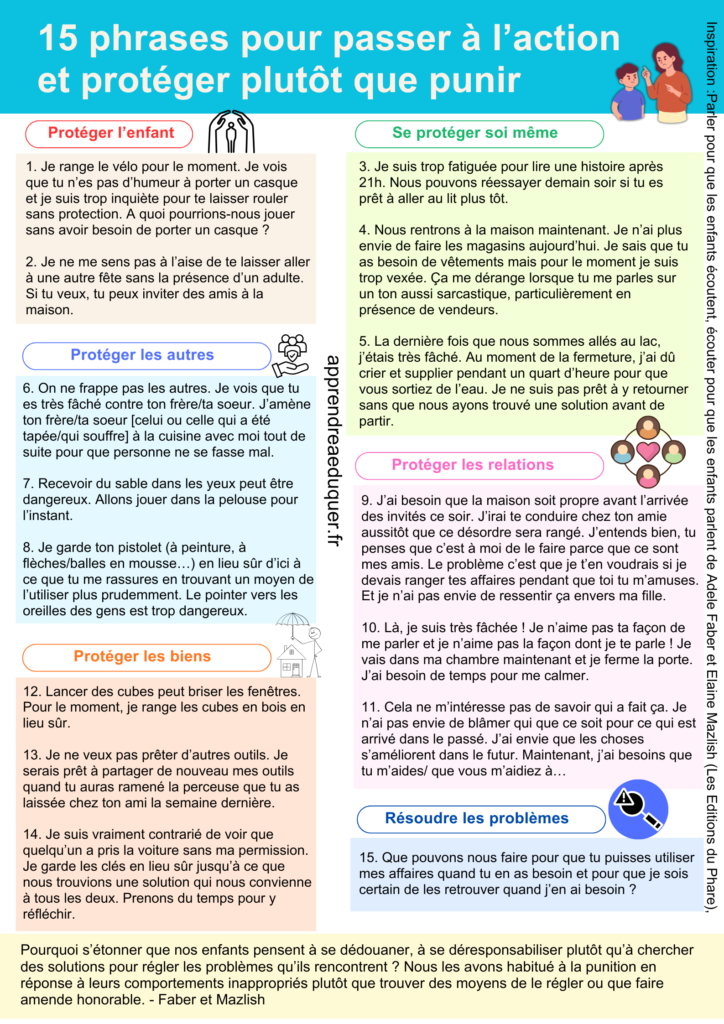
Replace punishment with information, empathy and clear limits. Explain consequences honestly, name the need behind the behaviour, and offer ways to meet it without harm. This builds the relational skills punishment never teaches.
Keep the focus on safety and repair rather than shame. When a child spills something or hurts a sibling, the useful question is what needs fixing and how, not who deserves to suffer. For families navigating everyday routines, these little ones tips on caring for growing bodies show how practical support beats pressure. The same patience applies when easy things feel difficult for a child.
Modelling matters too. Children learn conflict resolution by watching how adults handle frustration. If you want to see how a calmer approach plays out in education systems, these successful education keys from Finland offer useful perspective. Adults under strain also benefit from learning how to prevent unemployment from undermining a relationship.
Finally, remember that cooperation grows from connection. A child who feels respected is far more likely to respond with enthusiasm than one who is simply afraid.

My hands-on take
In my own home, the two questions changed how I react. When my child kept leaving toys everywhere, my first instinct was to take something away. Instead I asked what I actually wanted: a habit of tidying, not fear of losing a favourite thing.
So we talked about why the floor needs to be clear and practised putting things away together. It took longer than a threat would have, but the tidying now happens without me standing over anyone. That shift from control to understanding is the most useful thing I have taken from this approach.
Frequently asked questions
Does this mean children should never face consequences?
No. The point is that consequences should teach and protect rather than make a child suffer. Clear limits explained with empathy help children understand the effect of their actions.
Why do rewards also fail according to this view?
Rewards, like punishments, keep the focus on the external outcome rather than the value of the act. The child may act only while a reward is on offer.
What is protective force in practice?
It is any action taken to prevent immediate harm or injustice, such as stopping a child from running into traffic. The aim is safety, not blame or punishment.
How do I handle repeated misbehaviour without punishing?
Look for the unmet need or missing skill behind the behaviour, then offer information and alternatives. Consistency and connection matter more than severity.
Product Reviews
 Best Toys for Dogs With High Prey Drive |
Best Outdoor Toys for 3-4 Year Olds |
Best Outdoor Toys for 6 Year Olds |
Best Harness for Poodle |
Best LEGO Sets for Adults |
Best Travel Toys for 4 Year Olds on Airplane |
Best Toy Stores in Washington DC |
Best Potty Training Toys |
Best Toys for Tripod Dogs |
Maillot equipe de france







