


Gentle parenting can feel like it is failing when you are exhausted, unsupported and convinced that everyone else has it figured out. Many parents reach a point where all their efforts toward kindness seem to dissolve the moment a child refuses to cooperate, and the doubt creeps in fast.
That doubt is worth examining rather than silencing. The problem is rarely the philosophy itself; it is usually the expectation we attach to it, the lack of support around us, and the invisible weight of running a household alone.

Quick takeaways
- Gentleness is a mindset, not a set of tools with a fixed outcome
- Expecting obedient, always-calm children sets you up for disappointment
- Find a listening ear for yourself before fixing anyone else
- Ask for support in an honest, vulnerable voice
- Name the mental load so it can actually be shared
- Measure progress by repair, not by flawless days
What Gentle Parenting Actually Promises
Gentleness is a state of mind, a philosophy, long before it becomes a collection of tools and tricks. Saying this approach "doesn't work" assumes it has a single measurable goal, so it is worth asking what we actually expect from it. Obedient children because we spoke softly? Calm children who never get angry because we taught them breathing techniques? Parents who stay serene, never snap, and welcome every emotion with endless empathy?
None of that is the point. A real look at conscious parenting shows that inner work and a rethink of traditional parent-child relations come before any ready-made skill, however relevant that skill may be. The same confusion surrounds the word "benevolent": wanting someone's good is not the same as treating them well, which is exactly the trap behind "it's for your own good." That is why more parents now speak of conscious or respectful parenting, which carries the idea of respect without trying to make children happier, more empathetic or more high-performing.
The approach described here aims to respect human nature so children can unfold their potential. It is less about giving them something extra and more about letting them be who they are, without stripping away their joy through physical or emotional mistreatment. If you are still exploring the vocabulary, motherhood blogs can help you find voices that match your values.

Find a Listening Ear for Yourself
When gentle parenting seems to fail, what you need first is empathy and support, not another technique. Yes, raising children in a society that does little to support parents is hard. Yes, you are allowed to crack, because nobody is perfect and nobody is asking you to be. Yes, being a conscious, respectful parent is a heavy task, and sometimes kindness feels like wishful thinking when the kids should simply cooperate.
Catherine Dumonteil-Kremer, founder of the creative and conscious parenting network, opened a free SOS Parenting hotline, open from 2 pm to 5 pm every day except Sunday and public holidays. Trained professionals listen and suggest one or two ways to keep your head above water. Reaching out is not a sign of weakness; it is the same instinct that leads parents to read children's books on feelings with their kids, only turned toward themselves.
Why the Parent Needs Care Too
A supported parent is a more patient parent. Building a small circle of people who understand your choices, whether online or in your neighbourhood, protects you from the isolation that makes every hard evening feel like proof of failure.

| What you feel | What it usually means | What to try |
|---|---|---|
| Nothing is working | Unrealistic expectations | Redefine what success looks like |
| Nobody supports me | Isolation and mental load | Ask clearly for specific help |
| I keep losing patience | You are exhausted, not failing | Repair after the moment |
| My partner doesn't get it | Invisible work is unnamed | Share a visible task list |
| I want to run away | High stress, low support | Seek outside listening support |
Ask in an Authentic, Vulnerable Voice
If you feel overwhelmed by your children and misunderstood by your partner, and you are looking for support and recognition but receive little help or encouragement, nothing tells you that you are heading in the right direction. You lose heart, even though you know deep down that this path matches your values.
Try expressing your needs to your children and partner in an authentic, personal voice: "I am truly exhausted and discouraged, and I need support and trust." Ask yourself what concrete requests you could make of them in daily life and in the short term. This is not about performance or perfect phrasing; it is about letting people see the real you.
Children respond surprisingly well to honest, simple statements about how the family is doing, and it teaches them that feelings can be named out loud. If you want to go further in understanding how your own history shapes your reactions, a look at parenting approaches that focus on awareness can be a useful next step.

Name the Mental Load Out Loud
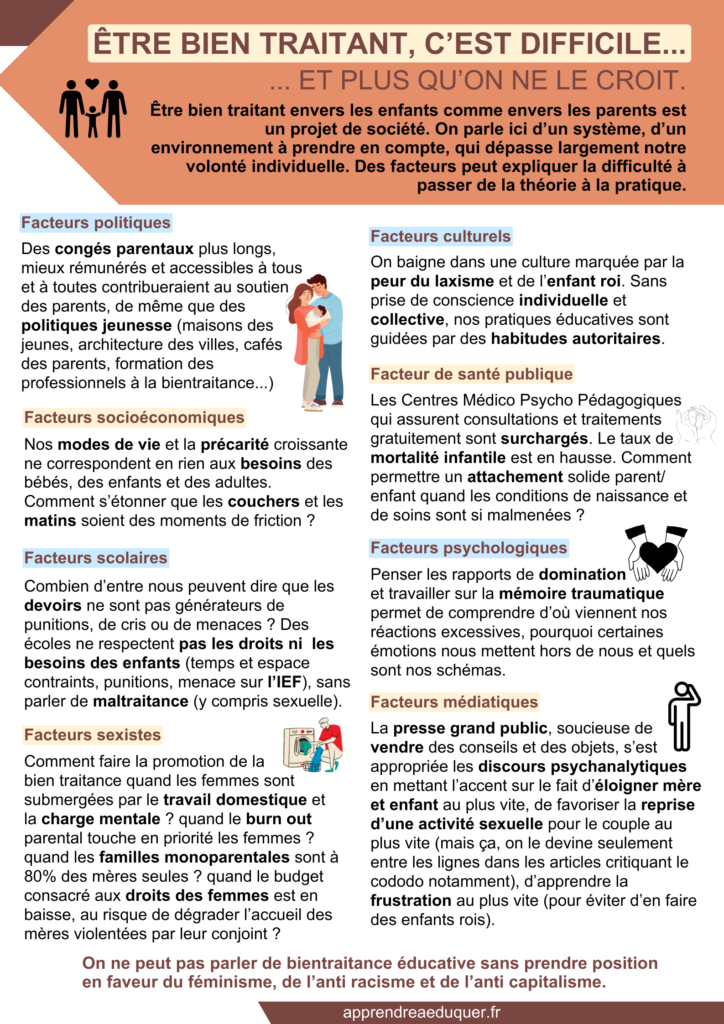
Mothers are more often affected by parental burnout than fathers, because household and child-rearing duties still rest mostly on their shoulders. Mental load means thinking of everything, all the time: organising and executing without a break, at work and at home. Rest moments get invaded by thoughts about the family, the house, groceries, chores, the daily schedule, extracurricular activities, medical appointments and holiday childcare.
This load exhausts many women, especially when positive parenting turns into one more burden. It matters to make the intensity of that distress understood by your partner, because invisible work cannot be shared until it is named. Sometimes a practical tool helps the conversation: a shared calendar, a visible list of tasks, or a simple weekly check-in where each person says what they are carrying.
When suffering runs very high and earlier attempts at communication have failed, only desperate initiatives seem left: leaving alone for a weekend or a week, or going on strike. These gestures are a last signal, not a strategy, and they usually mean the conversation needs a calmer, more structured setting. If you are also managing your child's health on top of everything, articles on topics like contagious skin conditions can at least remove one source of nightly worry.

Rebuild Your Everyday Support Network
Support rarely arrives on its own, so it helps to build it deliberately. Look for a local parents' group, a trusted friend who shares your values, or a professional who can listen without judging. Small, regular contact beats one dramatic conversation.
Practical relief matters too. Simplify meals, lower standards on tidying during hard weeks, and let children take on real tasks that lighten the household rather than adding another activity to supervise. Even choosing toys that keep children absorbed independently, such as sensory toys for younger ones, buys you a few minutes of breathing space. And when the week has been heavy, a slow kitchen session with a pretzel recipe can rebuild connection without demanding much conversation.
Lower the Bar, Keep the Direction
You do not need to be consistent every hour to be on the right path. Repair after a hard moment teaches more than a flawless day ever could.

What to Remember on Difficult Days
Progress in gentle parenting is measured in repair, not perfection. Your child does not need a parent who never loses patience; they need one who comes back, names what happened, and tries again. That pattern is what builds trust over years.
Keep your expectations realistic about what a single day can hold, and treat your own needs as part of the family system rather than an interruption of it. If you are planning family time or a break, resources like snow equipment guides or ideas for Christmas gifts can remove small logistical stresses so your energy goes where it matters.




My hands-on take
I remember a stretch of weeks when every bedtime turned into a negotiation and I was sure I was doing something wrong. What helped was not a new technique but a friend who let me say out loud, without shame, that I was exhausted and wanted to leave for a weekend. Naming it took some of the pressure off, and I started asking my family for specific things instead of hoping they would notice.
I also learned to lower the bar on hard days. A repaired moment after losing my patience did more for us than a perfectly calm evening I had forced myself through. If you are in that place right now, start with one honest sentence to one person who will listen.
Frequently asked questions
Does gentle parenting mean never getting angry?
No. It means treating your child with respect even when you are frustrated, and repairing the relationship when you lose your temper. Expecting yourself to never feel anger sets an impossible standard.
What if my partner does not support this approach?
Start with honest, personal statements about how you feel rather than arguments about philosophy. Concrete requests about daily tasks are usually easier to accept than abstract debates.
How do I know it is actually working?
Look at the relationship over months rather than individual bad evenings. Children who feel safe enough to express feelings and who come back to you after conflict are showing the approach is taking root.
When should I seek outside help?
When exhaustion becomes constant and earlier conversations have failed, reach out to a hotline, a professional or a trusted group. Support for the parent is part of parenting, not a luxury.
Product Reviews
 Best Toys for Dogs With High Prey Drive |
Best Outdoor Toys for 3-4 Year Olds |
Best Outdoor Toys for 6 Year Olds |
Best Harness for Poodle |
Best LEGO Sets for Adults |
Best Travel Toys for 4 Year Olds on Airplane |
Best Toy Stores in Washington DC |
Best Potty Training Toys |
Best Toys for Tripod Dogs |
Maillot equipe de france







