


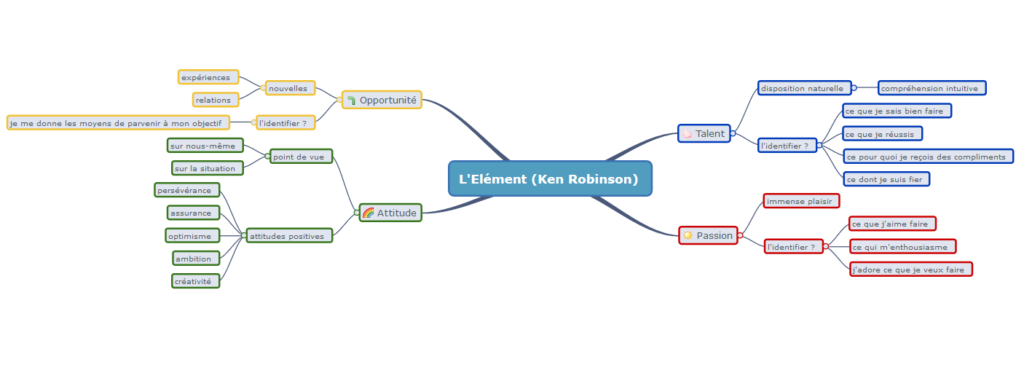
Finding your child's Element is one of the most rewarding things you can do together, and this simple star activity makes it concrete. Ken Robinson, in his book The Element, describes it as the meeting point between our talents and our passions. When we do something we love, we feel truly ourselves, time passes faster, we feel more alive, and we reconnect with our motivation.
This activity helps children and teenagers become aware of their qualities, their personality and their talents. Young people who know their Element can bring their gifts to the world and contribute to it, and they learn to see themselves in a positive light, both privately and publicly.

Quick takeaways
- The Element is the meeting point between talents and passions.
- Four components matter: talent, passion, attitude and opportunity.
- Five star branches give the activity a simple, repeatable structure.
- Self-knowledge is not arrogance; it supports informed life choices.
- Revisit the star regularly so it reflects growth and change.
- Ask how the child's talent could help others, adding solidarity.
Why the Element Matters for Confidence and Motivation
Robinson speaks of the Element in the singular, but the notion can cover several activities. Everyone can find their own Element, and it is personal and unique: no person on Earth is devoid of talent or passion. Helping children identify theirs allows them to flourish more fully and to feel confident when facing life's difficulties.
It also supports a high level of satisfaction and success, and encourages them to contribute to the community and to other people's lives. Robinson insists we must reconsider how important it is to nourish human talent, knowing that it expresses itself differently in each individual.
Knowing your Element is not about arrogance or pride. Self-knowledge should serve a better life and informed choices, and it is worth reminding young people that tastes and talents can evolve, change and improve over time.
The Four Components of the Element
Before starting the activity, it helps to understand what the Element is made of. Robinson identifies four main components: natural talent, passion, attitude and opportunity. Talent is what comes easily; passion is what you love; attitude is how you approach the world; opportunity is the chance to practice.
These four pieces rarely appear all at once, and that is normal. A child may show obvious talent but not yet have found the opportunity to use it, or may be full of passion but still developing the attitude that sustains effort. Naming the four components gives families a shared vocabulary and makes the conversation less abstract.
You can introduce them casually, perhaps while psychomotor skills are on display during play, or while discussing how a favourite hobby first began. The goal is not to test your child but to open a door. Real stories, like a baby's surprising growth or a mother's lesson, can make these ideas feel concrete.
| Branch | Question to ask | What it develops |
|---|---|---|
| Talent | What do you do easily? | Self-awareness |
| Passion | What do you love doing? | Motivation |
| Attitude | How do you approach challenges? | Resilience |
| Opportunity | Where could you practice? | Initiative |
| Contribution | How could this help someone? | Solidarity |
Setting Up the Five-Branch Star Activity
The idea is simple: children and teenagers answer five questions, each corresponding to one branch of a star. Draw a large star on paper, or cut one from card, and write one question at the tip of each branch. The questions invite them to name what they do well, what they love, what others appreciate in them, what they would like to learn, and how they could share it.
Keep the tone light and curious rather than evaluative. Younger children can dictate their answers or draw them, while teenagers may prefer to write privately first and share only what they choose. This respects the intimate side of self-definition while still making it visible and public in a safe way.
This way of defining themselves sits at the heart of the decisions we make throughout life, from school orientation to friendships and the goals we set. It pairs naturally with everyday confidence-building moments, such as food rewards handled thoughtfully rather than used as bargaining chips.
How to Guide the Conversation
Ask one branch at a time and give plenty of silence. If a child hesitates, offer gentle examples from their own week rather than answers for them. You might notice a pattern emerging, for instance that they light up when explaining something to a sibling, and reflect it back without judgement.
It is worth linking the exercise to real opportunities, since talent needs a place to grow. A child who loves building might enjoy bricks and building, while one who loves movement may thrive with outdoor toys or simple games at home. The point is to connect passion to practice.
Some families find it useful to revisit the star during calm routines, such as baby care moments with younger siblings, so that the habit of self-reflection becomes part of family life rather than a one-off task. As Marie Kondo's viral photo reminds us, small everyday moments can shape lasting habits.

Keeping the Star Alive Over Time
This exercise needs to be regularly reactivated. A star filled in once and forgotten becomes a decoration; revisited every few months, it becomes a record of growth. Children change, and so do their answers, which is exactly the lesson worth teaching.
This activity belongs to a broader educational approach that builds confidence on solid foundations. It works best alongside other reflective habits, such as talking about learning English progress or celebrating small steps in any skill. When children see that effort and interest matter, they are more willing to try new things.
You can also invite them to think about solidarity: how could this talent help someone else? That question turns self-knowledge into generosity and gives the star a purpose beyond the individual.
Common Pitfalls and Gentle Adjustments
Avoid turning the activity into a performance review. If a child feels judged, they will give the answers they think you want. Keep your own enthusiasm in check and let their words stand, even if they seem modest or surprising to you.
Some children will name a passion that changes next month, and that is fine. Others may struggle to see their own qualities, which is precisely where a parent's calm observation helps. You can also involve other trusted adults, much as you would when caregiver problems arise, to gather a wider, kinder view of the child.
Finally, remember that the star is a starting point, not a verdict. Its value lies in the conversation it opens and the confidence it quietly builds.

My hands-on take
I have used this star activity with my own children on quiet Sunday afternoons, and the most useful part was never the finished star. It was the silence after a question, when a child finally said something I had not expected. I learned to stop filling those pauses with my own suggestions.
My practical tip is to keep the star somewhere visible and add a small note whenever something new appears, a hobby, a compliment from a teacher, a moment of pride. Over a year it becomes a gentle record of growth, and revisiting it together has been far more motivating for my children than any single conversation about their future.
Frequently asked questions
What age is this activity suitable for?
It works with children old enough to reflect on their preferences and adapts easily for teenagers, who may prefer to write privately before sharing. Younger children can draw their answers or dictate them to an adult.
What if my child cannot name a single talent?
That is common and not a problem. Offer gentle observations from their week and let them confirm or reject your suggestions, which keeps the exercise theirs rather than yours.
How often should we repeat it?
Revisit the star every few months or at natural turning points. Regular reactivation lets children see how their tastes and talents evolve over time.
Is this about pushing a child toward a career?
No. The aim is self-knowledge and confidence, not early career planning. Choices about school and work come later and are better informed by this kind of reflection.
Product Reviews
 Best Toys for Dogs With High Prey Drive |
Best Outdoor Toys for 3-4 Year Olds |
Best Outdoor Toys for 6 Year Olds |
Best Harness for Poodle |
Best LEGO Sets for Adults |
Best Travel Toys for 4 Year Olds on Airplane |
Best Toy Stores in Washington DC |
Best Potty Training Toys |
Best Toys for Tripod Dogs |
Maillot equipe de france







