


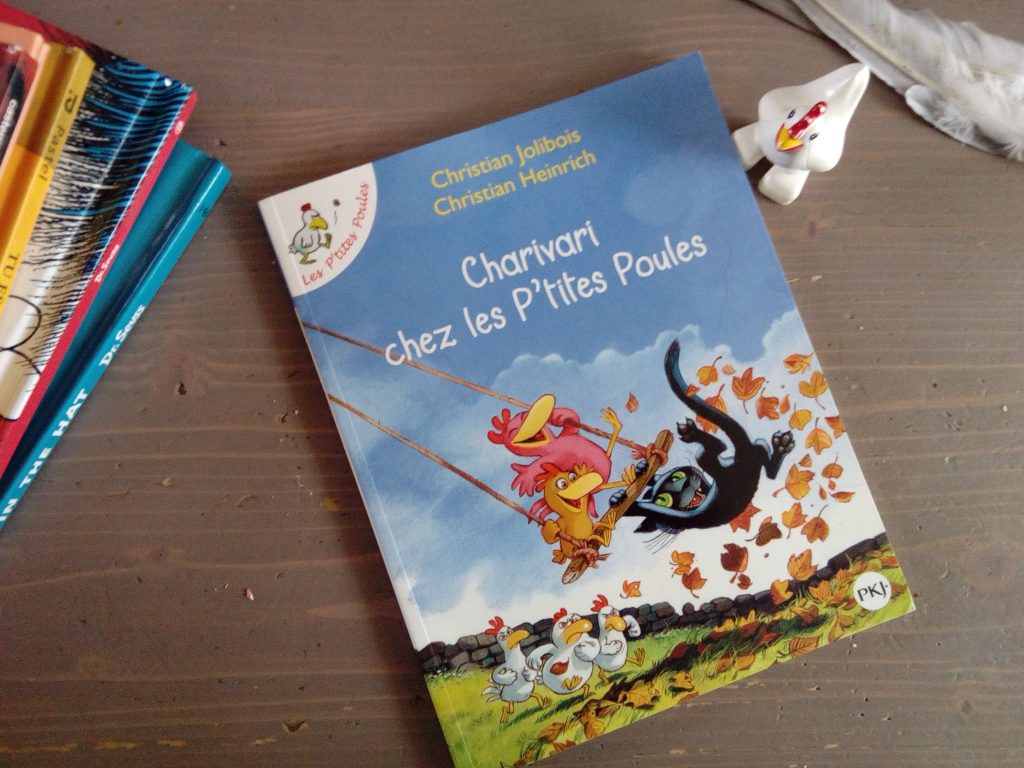
Charivari chez les P'tites Poules is a short, funny French chapter book that works beautifully as a first "read alone" title for children around seven. I bought it at a book fair at my daughter's school, on the recommendation of another mother whose daughter had devoured the whole series in her first year of primary school.
My daughter, who turned seven in December, enjoyed it a lot, and I was won over too. It is the kind of book that makes early independent reading feel like a treat rather than a chore, and it opens the door to a whole collection of titles about the same characters.

Quick takeaways
- A short, funny French chapter book for children reading alone from about age 7
- Colourful, expressive illustrations that carry the humour
- Simple text with everyday vocabulary and clever puns in the hens' names
- A clear message against superstition and judging by appearance
- A playful nod to Puss in Boots that children recognise
- Pocket format at €4.95, with many more titles in the same collection
What happens in Charivari chez les P'tites Poules
During a fishing trip, Carmen, the bold little hen, and her brother Carmélito rescue a small black kitten. The hens of the coop are horrified: isn't it said that black cats bring bad luck? As if to prove them right, a series of terrible calamities then falls on the henhouse.
The plot is simple enough for a beginner to follow without help, yet it moves quickly enough to keep a child turning the pages. It also gives young readers plenty to talk about afterwards, in the same way that books about democracy can open a conversation about fairness and standing up for others. Like the best educational toys, it turns playtime into learning.
Because the chapters are short, the book fits easily into a bedtime routine or a quiet ten minutes after school, and it is a good stepping stone before longer novels.
Why the drawings and the language work so well
The illustrations are colourful and very funny. The animals' expressions are explicit, and it is hard not to feel fond of this barnyard full of slightly crazy hens. That visual humour carries a lot of the story for a child who is still decoding words slowly.
The text is short without being babyish, which is exactly what beginning readers need. Children enjoy finding everyday vocabulary in it, along with clever puns, especially in the names of the little hens. The author has a gift for exaggeration ("thief! murderer!") and for creating rhythm in the action.
For families raising children with two languages, this kind of playful, repetitive text pairs well with English games online or simple reading games, because the humour gives children a reason to re-read a page rather than just finish it. It also fits nicely alongside the keys to help your child learn to speak, and even the medical check ups that mark a baby's early months.

| What to check | Why it matters | What to expect here |
|---|---|---|
| Reading stage | A book too hard can discourage | Short chapters, simple sentences |
| Sense of humour | Funny books get re-read | Exaggeration and visual gags |
| Pictures | Support comprehension | Colourful, expressive animals |
| Message | Opens family conversation | Against superstition and rejection |
| Budget | Low risk for a first try | Pocket format at €4.95 |
| Series potential | Builds reading fluency | Many P'tites Poules titles |
The message: colour does not make the worth of a person
The story carries a lovely message. Carmen and Carmélito hold firm against the teasing and the endless demands of the other hens, who want the unlucky black cat gone. They question the superstitions of the flock and stand by Charivari without ever letting him down.
In the end, the little hens realise they should not have rejected Charivari, and that the colour of his fur says nothing about his value. It is a gentle way to talk about prejudice and peer pressure, and it gives parents an opening for a real conversation rather than a lecture.
A wink at Puss in Boots
The story also nods to the tale of Puss in Boots: Charivari, the black cat, turns out to be the booted cat, and his boots came from the rats he robbed because they wanted to attack the henhouse. Children spot the reference, and it is a nice bridge to classic tales you may already have at home.

Reading level, price and where to find it
This is a pocket-format book at a very accessible price of €4.95, which makes it an easy gift or a low-risk first purchase. It is available in bookshops, in libraries and on the usual online retail sites.
If your child likes it, the advantage is that the P'tites Poules appear in many other titles in the collection, so you can build a small series at home. That continuity matters for fluency: children read faster when they already know the characters and the shape of the sentences.
For a seven-year-old who is just starting to read alone, it sits well alongside other screen-free options such as the screen free toys many families keep for quiet time, and it is worth checking out of a library first if you are unsure of the level. A child who is still building stamina may prefer to read a page aloud to you before trying a chapter alone, and pairing reading with rainy day activities can keep the habit going. Parents curious about other body changes can read about having your period while pregnant.

How to use this book at home
Try reading the first chapter together, then let your child take over while you stay nearby. Ask them to describe the animals' faces in the pictures, which builds comprehension without turning the session into a test.
You can also use the story to talk about superstitions in your own family, and about what to do when friends gang up on someone. Short, funny books like this one are a gentle entry point; if your child prefers factual reading, learning toys and non-fiction titles can sit alongside fiction on the shelf.
Finally, keep the book in a basket your child can reach, and let them choose when to return to it. Re-reading is not a waste of time at this age; it is how confidence grows.

My hands-on take
I bought this book almost by accident, standing at a school book fair while another mother told me her daughter had read the whole series in one go. I trusted her, and it paid off: my daughter laughed at the hens' names and asked to read "just one more page" more than once.
What I appreciated most was that the text never talked down to her. The sentences were short, but the jokes were real jokes, and the argument about the black cat gave us something to talk about at dinner. Since then, I have looked for other titles in the same collection, and I now treat short, funny chapter books as the best possible reward for a child who is just discovering that reading alone is a pleasure.
Frequently asked questions
What age is Charivari chez les P'tites Poules for?
It is aimed at children who are starting to read alone, around seven years old. A child in their second year of primary school can typically manage it with a little help at first.
Is the book suitable for a child who does not speak French at home?
It is written in simple, everyday French with short sentences, so it can work for a child learning the language. Reading it together the first time makes the puns and the story easier to follow.
Does the story deal with anything frightening?
No. The "calamities" are played for comedy, and the tone stays light throughout. The only slightly tense moments involve teasing between the hens, which resolves positively.
Is it worth buying the whole collection?
Start with one title to see whether your child enjoys the characters and the humour. If they do, the other books in the collection offer familiar vocabulary and a predictable format.
Product Reviews
 Best Toys for Dogs With High Prey Drive |
Best Outdoor Toys for 3-4 Year Olds |
Best Outdoor Toys for 6 Year Olds |
Best Harness for Poodle |
Best LEGO Sets for Adults |
Best Travel Toys for 4 Year Olds on Airplane |
Best Toy Stores in Washington DC |
Best Potty Training Toys |
Best Toys for Tripod Dogs |
Maillot equipe de france







